SHAH ALAM – The government’s decision to revoke the cabotage policy exemption given to foreign vessels is an opportunity for the country’s submarine cable installation and maintenance industry to produce highly skilled local workers in the field.
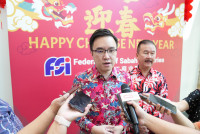
Optic Marine Services Sdn Bhd (OMS) chief executive Ronnie Lim Hai Liang said with the exemption, it was not possible for local companies to recruit new skilled manpower while accelerating the transfer of technology due to increased demand.
He said the cabotage policy will support local players and make Malaysia a hub for the installation and maintenance of submarine cables in the region.
“With the expertise established in this company, we will train local engineers and crew to realise the dream of making Malaysia the hub of this industry,” he told reporters here today.
He said OMS owns five cable-laying vessels, but only one is operating in Malaysia, with the rest in Indonesia and France.
“We are in the process of getting a 14,000-tonne vessel capable of installing and repairing submarine cables up to a depth of 8,000m.
“The new vessel will be equipped with suitable equipment to carry out new cable installation work on the seabed and cable maintenance in Malaysia, as well as at the regional level.”
He said the firm has conducted cable installation and maintenance in all Asean countries, adding that it just finished installation works in Argentina.
“The longest installation is almost 6,800km on the seabed of Papua New Guinea, and we have also provided installation services in Indonesia.”
OMS, in operation since 1983, has been active in the submarine cable installation and maintenance industry since 2008. It currently has 70 skilled workers in the field.
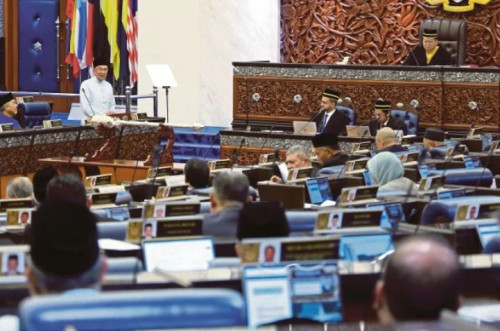
On Tuesday, Transport Minister Datuk Seri Wee Ka Siong told the Dewan Rakyat about the decision to revoke the cabotage exemption effective November 15, and the cabinet was informed of the matter two days earlier.
The decision was not made unilaterally, but after the ministry held discussions with various stakeholders, he said.
He said the move was made to reduce the outflow of foreign exchange in the form of freight or charter party payments, and minimise the country’s dependence on foreign vessels by increasing the involvement of local shipping firms. – Bernama, December 4, 2020