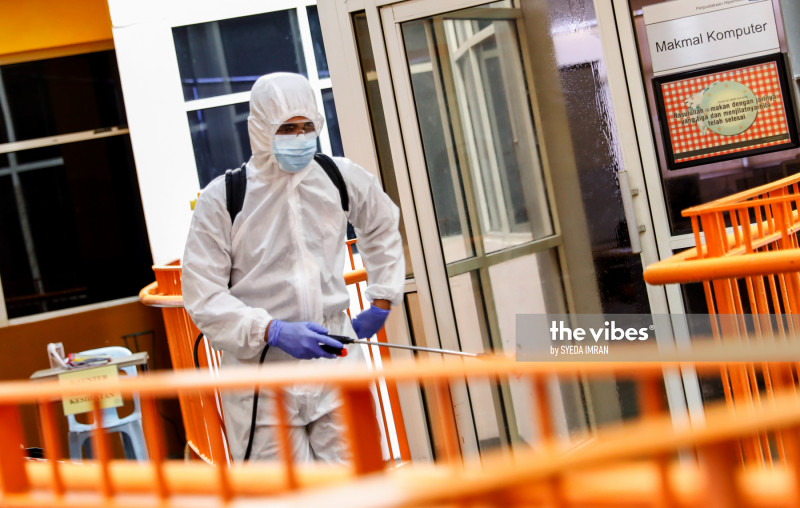

GEORGE TOWN – The two prison complexes here are super spreader sites for the third wave of the Covid-19 infection, contributing 1,130 out of the state’s 2,446 cases as of Friday.
The Penang Remand Prison cluster started in early October, when an 85-year-old inmate died of Covid-19. On Friday, this cluster had one new case.
Meanwhile, Seberang Prai Prison and its staff quarters recorded its last positive case on November 27, and the authorities had lifted its enhanced movement control order on Wednesday.
Extracting open source information from the Health Ministry’s portal, Penang made the statistics public through the office of state executive councillor Jagdeep Singh Deo yesterday.
Yesterday, the Health Ministry announced that Penang had 44 new Covid-19 cases, 32 of which were from existing clusters, 10 from close contact screening and two from other screening methods.
Although the state will have its conditional movement control order (CMCO) lifted today, the concerns of rapid infection rates remain.
There are currently two red zones in Mukim 12 and 13 on the island, involving Paya Terubong, Permatang Damar Laut, Batu Maung and Relau.
These sub-districts have more than 12,000 residents listed as high-risk as they are a combination of foreign and local working classes living in high-density areas.
There are currently 14 clusters in Penang contributing to cumulative cases, some shared with neighbouring Kedah.
Factories and small villages along the border of Penang and Kedah are also sites with high infection rates, with some cases tracing back to those returning from Sabah three months ago.
Spreaders are also surfacing from offices of small and medium enterprises.
A majority of cases tend to occur in confined working or living environments, from staff quarters and houses to high-rise apartments and co-working spaces (production lines), as well as learning centres.
Other notable clusters are Bayam Indah (258), which is believed to originate from factory workers working in Penang but living in Kedah; Beringin (221), which comprises production workers; and, Intan (207), which involves villagers living along the Kedah-Penang border.
Other clusters are Bayan (167), Damar Laut (158), Rengas (136), Permatang (85), while the clusters in residential areas are Seri Pasir (25), Assumption (20), Tembaga (16), Summer (12) and Rajawali (11).
A substantial number of the Covid-19 patients are also foreigners.
Jagdeep said that while the community infections have gained much attention, the virus' impact on the economy needs to be better mitigated, adding that emergency funds need to be disbursed to those under quarantine as they cannot work, such as hawkers and part-time workers.
Also, relief needs to be accorded to employers so they can offer upgraded housing to foreign workers, namely those in the manufacturing and construction sectors, he said.
Penang has inspected 2.4 million commercial and educational premises with a 99% compliance rate, even for high-rise residential buildings.
Also, four major foreign workers' housing areas were inspected, with a total of 6,238 people screened.
All tested negative except for 138, whose results are pending.
Some 36,230 people were also screened during the third wave of the pandemic, it was not disclosed how many were quarantined. – The Vibes, December 6, 2020