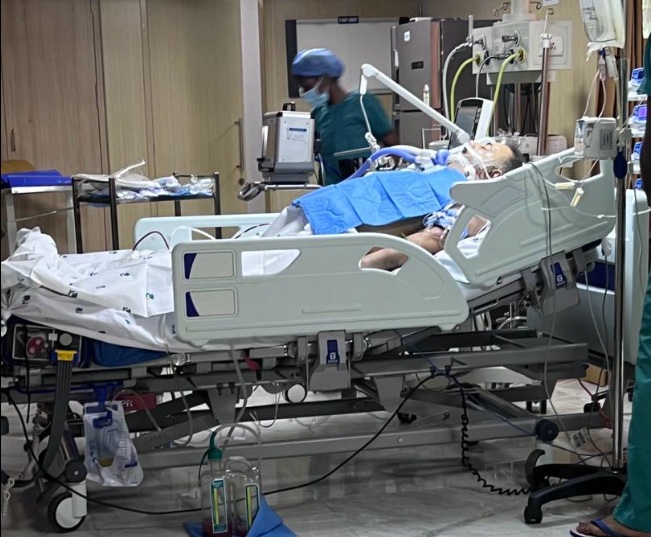
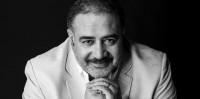
February 5 - exactly two years ago today, my life was not saved in the conventional sense.
It was restarted.
On 5 February 2024, I was given a second heart—an extraordinary gift of science, faith, and human generosity that very few people on this earth will ever fully comprehend unless they themselves have stood at that fragile intersection between life and departure.
Before the transplant, my heart was functioning at between eight and nine per cent ejection fraction. Medically, that is not considered a sustainable life. It is the body’s final negotiation with time. Every breath feels borrowed. Every step feels heavier than it should. Sleep becomes uncertain, between intermittent gasps, because the question quietly lingers—will you wake up again?
When I first collapsed, while dramatic as it was mid-air over the Indian Ocean, there was no drama in the theatrical sense. It was deeply internal, almost silent, yet profoundly definitive. My body was shutting down even as my mind remained alive with responsibilities, unfinished missions, and the stubborn refusal to accept that my time might be closing. It was my beautiful wife, Winy, who brought me back from the brink - three times over those two hours.
And so began the waiting
People often think transplantation is about surgical brilliance. In truth, the surgery is only one chapter. The longest chapter is waiting—waiting suspended between hope and heartbreak.
We had six attempts at finding a viable heart.
Six moments where we were mobilised emotionally and medically. Six instances where we prepared ourselves for life to begin again. With lines being inserted, blood being drawn for plasmapheresis. And six times where we were told, at the final threshold, that it would not work.
My immune system, which had always been a strength throughout my life, became the greatest barrier to survival. It was unusually strong, highly sensitised, carrying antibody profiles that rejected most potential donor matches. We were not searching for compatibility in the ordinary statistical range—we were searching for something close to one in millions.
Time, unfortunately, was not expanding to accommodate that search.
By the sixth failed attempt, hope itself had learned restraint. You stop celebrating early. You stop imagining outcomes. You simply move through the process quietly, conserving emotional energy for whatever verdict awaits.
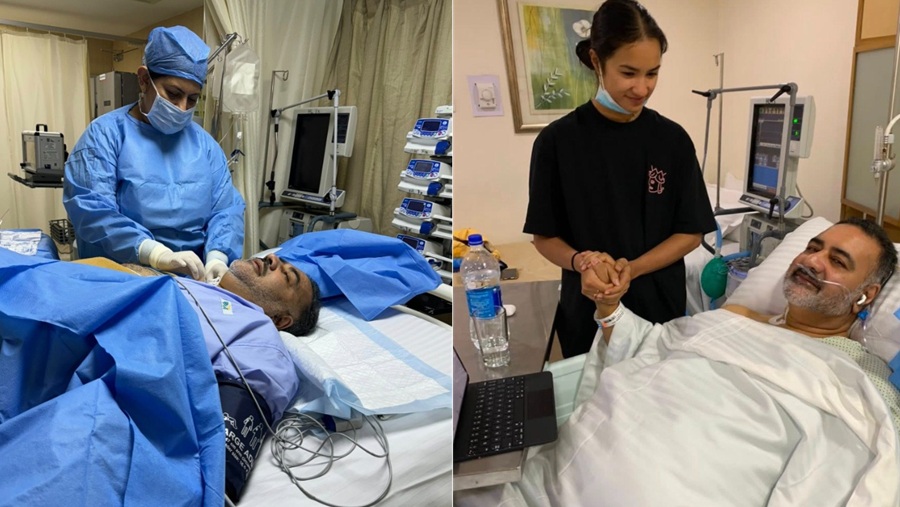
Then came the seventh call
Even then, there was caution. No assumptions. No declarations. Only silent prayer mixed with clinical assessment. But to be honest, in my head, I had already accepted it would fail. I was already preparing to leave Chennai and return. To leave this plain on my terms, in my homeland, Malaysia.
But this heart was different. A miracle, luck, divine intervention ... I don't know.
Against the odds, it carried the rare immunological profile that could coexist with mine. It did not trigger the same antibody alarms. It did not provoke the same immediate rejection risk. For the first time, science said “possible” with conviction.
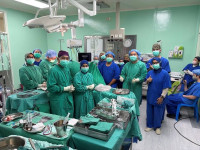
The surgery that followed was not routine—it was exceptionally complex given my immunological landscape. Yet through the brilliance of the surgeons, the precision of the medical teams, and what I can only describe as divine grace, it succeeded.
I woke up alive—with a new heart beating within me.
A stranger’s gift. A family’s loss. A responsibility transferred.
But survival after transplant is not a finish line. It is the beginning of a far more demanding journey.
The first year tested me in ways no professional battlefield ever had. There were three acute rejection episodes—three separate moments where my body attempted to fight the very organ that was keeping me alive. Each episode required aggressive medical intervention. Each episode reminded us that transplantation is not acceptance—it is negotiation.
Daily life became structured around medication. Steroids. Anti-rejection drugs. Immunosuppressants. An ocean of pills that both sustain life, weaken the body and chemically depress the mind simultaneously. You surrender your immune strength in exchange for survival. It is a paradox that transplant patients learn to live with every day.
But beyond the physical struggle, that year revealed something far more profound—it revealed human nature in its rawest form.
Illness has a way of removing the armour that success builds around you. When vulnerability replaces strength, you begin to see clearly who stands beside you out of genuine care and who stood near you merely because of circumstance, position, or power.
I witnessed the best and the worst sides of humanity in that period.
Some distanced themselves, unsure how to engage with mortality when it sat visibly in front of them, and others took advantage of the vulnerability of my wife and business to steal and enrich themselves. But there were many that stepped forward with a depth of compassion and loyalty that words will never fully capture.
And towering above all of it was my family. Winy, Petra and Tara.
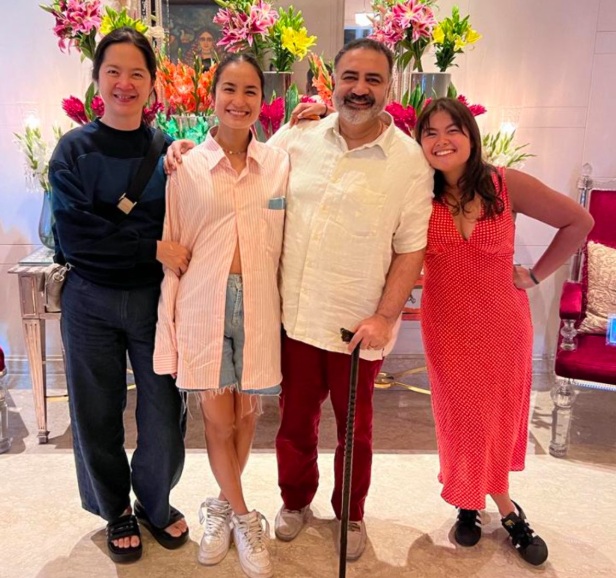
They did not simply support me—they fought for me
They became emotional life-support systems when my own will fluctuated. They projected strength into the room when mine was depleted. My wife’s quiet presence beside hospital beds at impossible hours, my children speaking about the future as though it were guaranteed, family and close friends forming an invisible shield of determination around me—these were not gestures. They were acts of defiance against despair.
If medicine rebuilt my heart, my family rebuilt my spirit.
Today marks two years since that surgery.
I am stronger now—but not in the way I once defined strength. It is no longer measured by the endurance of schedules or the scale of responsibilities I can carry in a day. It is measured by clarity of purpose, by gratitude, by emotional depth, by the understanding that time is not owned—it is entrusted.
I still take an excessive number of daily medications, and I will for the rest of my life. That is the covenant transplant patients accept. But my energy has returned. My optimism has deepened. And I have finally begun working properly again—not driven by habit, but guided by gratitude.
Living with a second heart reframes everything.
You are alive because someone else is not. That truth never fades into the background. It sits with you every morning, asking only one question:
What will you do with the time you have been given?
For me, the answer feels clearer now than at any other point in my life. To build not just enterprises but ecosystems of opportunity. To practice social capitalism not as rhetoric but as responsibility. To use influence in the service of others, not in celebration of self. Survival without contribution would be an unacceptable misuse of this gift. But most critically, to give my wife and children the husband and father they deserve. And the time and attention they should have had a long time ago.
People often tell me I was lucky that the seventh heart matched.
I do not see it as luck alone. I see it as a blessing intersecting with unfinished purpose. There must be a reason I was pulled back from the edge of eight per cent heart function… carried through six failed matches… granted a one-in-a-million compatibility… and guided through three rejection episodes into this second anniversary.
I feel that reason now more strongly than ever.
Today is not a celebration of personal endurance. It is a moment of gratitude—for the donor and their family whose gift I carry every second, for the surgeons and medical teams who refused statistical pessimism, for my family whose strength never wavered, and for friends who chose presence over convenience.
Two years on, I do not feel like a man who escaped death.
I feel like a man reassigned by life.
Because when your heart stops once, you learn that every beat thereafter must matter.
Blessed. Grateful. Driven.
Datuk Dr Vinod Sekhar is the publisher of The Vibes and Chairman of the Petra Group