THE Wildlife and National Parks Department (Perhilitan) under the National Resources and Environmental Sustainability Ministry (NRES) gives the impression that it is operating at an optimum level. At the same time, international syndicates continue to smuggle out Malaysia’s wildlife.
An arrest is made, and it is portrayed as a success story for the department.
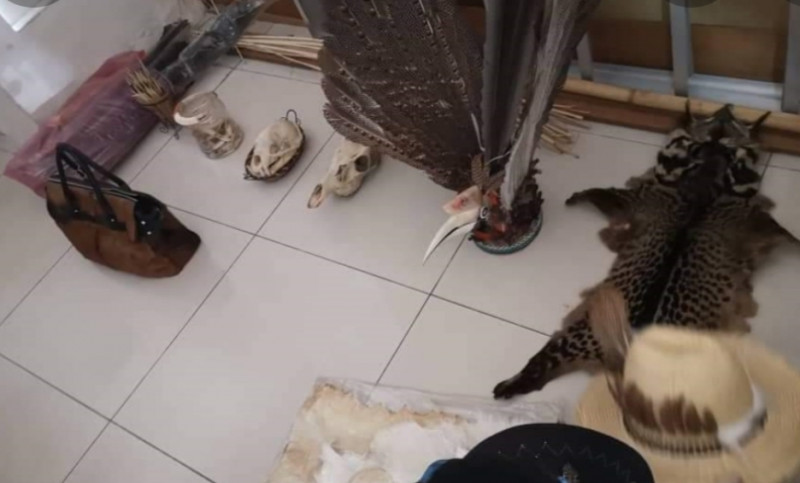
An example is the seizure of a black winged Kite bird worth RM100,000 in a raid at Taman Sungai Kapar Indah, Kapar, Selangor.
The raid was the result of a joint operation, Op Bersepadu Khazanah, by the Federal Reserve Unit (Intelligence) Branch in collaboration with Selangor Perhilitan.
The case was investigated under Section 68 of the Wildlife Conservation Act 2010 (Act 716).
There are many cases, such as the above, that are reported by the media.
There are also cases where legitimate pet shops and licensed exotic animal breeders are being harassed by the agencies under NRES.
While one may not come across media reports, it is discussed at length on social media sites such as Reddit. Legitimate industry players are frustrated with the heavy-handed action by Perhilitan and related agencies.
Under the circumstances, Perhilitan’s success stories serve as a pathetic public relations stunt since the department is going after small timers while giving a blind eye to the bigger players who are involved in wildlife trafficking.
NRES received a budget of RM2.38 billion under Budget 2026. Out of that, RM250 million was allocated for ecological fiscal transfer (EFT), and RM50 million was given to the state governments. For the rangers, the ministry allocated RM80 million to hire 2,500 community rangers.
The annual allocation that is used to beef up enforcement teams and resources is taxpayers’ money, which is wasted when agencies like Perhilitan go after ikan bilis instead of the sharks in the wildlife smuggling.
It is a bitter pill to swallow, but Malaysia remains a key transit hub for illegal wildlife trade due to several factors.
Logistics hurdle
Traffic Southeast Asia director Kanitha Krishnasamy said that Malaysia is both a source and transit hub for wildlife trafficking.
She pointed out that masterminds are hardly detained, let alone prosecuted.
This means Malaysia remains a central global transit hub for the illegal wildlife trade for Southeast Asia and Africa. There is also a massive consumer market in East and South Asia.
Our aviation hub, Kuala Lumpur International Airport is targeted due to the massive passenger volume and global route connectivity.
Where maritime is concerned, Port Klang is among the top 10 global ports that also contribute to maritime blind spots.
Syndicates have been packing multi-tonne maritime shipments with exotic animal products such as pangolin scales, ivory and rhino horns.
Structural Weakness
Another structural weakness in protecting Malaysian wildlife is the lack of a single federal wildlife protection body. Perhilitan only functions in Peninsular Malaysia.
The Sarawak Forestry Commission is in charge of the largest Malaysian state, whereas the Sabah Wildlife Department is managed by the Sabah state.
Having multiple agencies hamper cross border coordination and investigation.
Syndicates advantage
Syndicates have also adapted their marketing by migrating their markets to open internet platforms. According to Global Monitoring Data, 74% online wildlife trade advertisements are on social media channels.
Transnational criminal syndicates have been found to manage local stockpiles here, and Malaysia has been serving as a foreign wildlife consolidation zone.
Perhilitan’s hand-in-glove game
While syndicates have been exploiting the structural weaknesses, Perhilitan appears to be working hand in glove with them based on the following cases.
In the culling of dusky leaf monkeys in Port Dickson in 2021, the Court of Appeal ruled that Perhilitan's action was disproportionate and unlawful.
Instead of conserving the monkeys, Perhilitan turned killers.
The second case involved three elephants - called Dara, Amoi, and Kelat that were transferred from Taiping Zoo, Perak to Tennoji Zoo, Osaka Japan in April.
What was perplexing was that the approval for the elephants was given by Perhilitan Pahang, not Perak.
Even worse, there are allegations that approximately RM50 million in transfer payments were made to individuals, not the government.
As of last month, the Malaysian Anti-Corruption Commission (MACC) is investigating the elephant transfer.
This is tantamount to state-sponsored trafficking.
MACC Action
As mentioned previously, Malaysia is a well-known wildlife smuggling hub, both as source and transit.
NRES agencies such as Perhilitan are merely fooling around without taking action against international organised syndicates that move endangered animals through our ports and airports.
Why is this the case? Sheer incompetence or working hand in glove?
Perhaps there is a wildlife mafia rising within the government department.
They have been heavy-handed against domestic cases and complicit in the international ones.
It is time the MACC conducted a thorough probe into all wildlife and environment enforcement agencies, just as it had done on the immigration and customs scandals.
Annual budgets provided for the relevant departments appear to be used against small players, while the reputation of this nation is at stake.
Comparing the present and past administrations
Interestingly, in 2017, a study based on the IUCN findings resulted in the Red List of Mammals for Peninsular Malaysia.
Published by Perhilitan, the study classified 223 species and concluded the following:
* 1 was classified as extinct (EX),
* 4 as critically endangered (CR),
* 12 as endangered (EN),
* 14 as vulnerable (VU),
* 33 as near threatened (NT),
* 83 as least concern (LC). and the remaining
* 76 as being of data deficient (DD)
The report was published under the Najib Razak administration.
Surely Perhilitan under the Madani government, led by Anwar Ibrahim, can do more instead of its current mediocre performance.
K. Pragalath is a freelance journalist
The observations reflect the writer's personal insights and do not necessarily represent the official stance of The Vibes.com