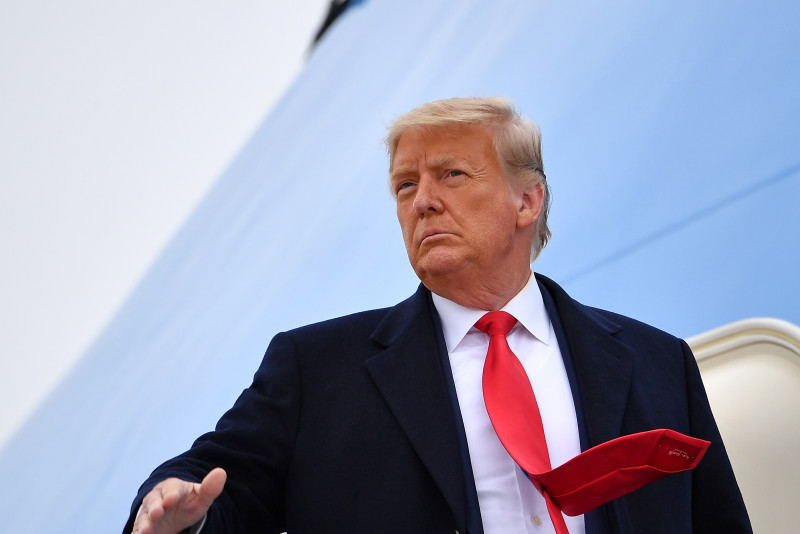
US President Donald Trump has revealed that both Russian President Vladimir Putin and Ukrainian President Volodymyr Zelenskiy expressed a desire for peace in separate phone calls he held with them on Wednesday.
Following these discussions, Trump instructed senior U.S. officials to initiate talks aimed at ending the ongoing war in Ukraine, which has now entered its third year.
The calls came just days after Trump’s defense secretary, Pete Hegseth, suggested a significant shift in U.S. policy, indicating that Ukraine may have to relinquish its longstanding ambitions of joining NATO and reclaiming all territories lost to Russian occupation.
This marks a dramatic change in Washington's stance on the conflict.
Reuters reported, during a more than hour-long conversation with Putin, Trump said the Russian leader expressed a clear wish for the war to end. Trump shared that they had discussed the possibility of negotiating a ceasefire “in the not-too-distant future.”
According to Trump, Putin does not want to see the conflict continue, nor does he desire a temporary peace that would lead to further fighting in the future.
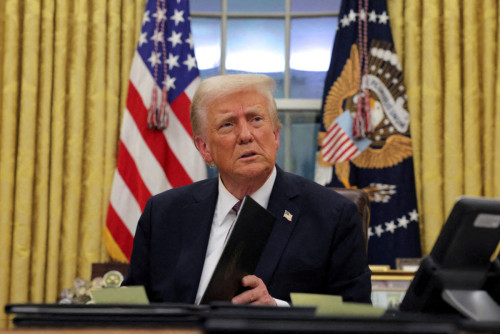
“He wants it to end,” Trump remarked to reporters in the Oval Office. “I think we're on the way to getting peace. I think President Putin wants peace, President Zelenskiy wants peace, and I want peace. I just want to see people stop getting killed.”
Trump has repeatedly stated that, if re-elected, he would find a way to end the war in Ukraine, though he has not detailed the specifics of how he plans to do so.
Following his conversation with Putin, Trump also spoke with President Zelenskiy, with the two leaders engaging in a discussion lasting about an hour.
Zelenskiy later confirmed the call, stating on social media, “We talked about opportunities to achieve peace, discussed our readiness to work together... and Ukraine's technological capabilities, including drones and other advanced industries.”
These calls are the first known direct conversations between the U.S. and Russian leaders on the matter since the early stages of the conflict.
The war, which began in 2022, has devastated Ukraine, with Russia occupying approximately 20% of Ukrainian territory.
The United States, under President Joe Biden’s administration, has provided Ukraine with significant military and financial aid, although Biden has refrained from direct communication with Putin.
Russia, meanwhile, has made it clear that it demands Ukraine cede more territory and declare itself permanently neutral in any peace agreement.
Conversely, Ukraine insists that any deal must involve Russia withdrawing from all captured territories and providing NATO-style security guarantees to prevent future aggression.
European powers, including Britain, France, and Germany, have also weighed in, asserting that they must be part of any peace talks involving Ukraine’s future.
They emphasised that a lasting peace can only be achieved with fair security guarantees for Ukraine. These countries also pledged to continue bolstering Ukraine’s position, ensuring that it remains strong on the world stage.
In a noteworthy shift in U.S. policy, Hegseth remarked that Ukraine's goal of returning to its pre-2014 borders, which included Crimea—a region annexed by Russia in 2014—was no longer seen as a viable objective.
Speaking at NATO headquarters in Brussels, Hegseth warned that pursuing this “illusionary goal” would only prolong the war and lead to further suffering. He reiterated that any sustainable peace would require robust security guarantees for Ukraine, though he made it clear that U.S. troops would not be involved in enforcing such guarantees.
As part of broader diplomatic efforts, Zelenskiy has proposed a deal under which the U.S. could invest in Ukraine's mineral resources, potentially serving as a "security shield" for the country once the war concludes.
Trump’s Treasury Secretary, Scott Bessent, who visited Kyiv on Wednesday—the first visit by a senior member of Trump’s cabinet—indicated that such an investment could help stabilize Ukraine’s economy in the post-conflict era.
Further negotiations are planned, with Secretary of State Marco Rubio, CIA Director John Ratcliffe, National Security Adviser Michael Waltz, and Middle East envoy Steve Witkoff set to lead talks aimed at a resolution.
Additionally, Rubio and Vice President JD Vance are scheduled to hold discussions on Friday at the Munich Security Conference, where Ukrainian officials will also be in attendance.
In another development, the U.S. and Russia engaged in a prisoner swap on Tuesday, with Russia releasing American schoolteacher Marc Fogel, who had been serving a 14-year sentence in Russia for drug possession.
In return, the U.S. freed a Russian cybercrime leader. The Kremlin has suggested that the swap could help build trust between the two nations, potentially paving the way for further diplomatic engagements.
As the war rages on, the growing efforts toward diplomacy reflect a shift in how both sides and the U.S. perceive the path to peace, although many obstacles remain on the road to a resolution. – February 13, 2025