THE Director General of the International Atomic Energy Agency (IAEA), Rafael Grossi, has called on Iran to resume full cooperation with nuclear inspectors following the ceasefire with Israel, according to a statement issued on Tuesday and reported by the German news agency dpa.
“Resuming cooperation with the IAEA is key to a successful diplomatic agreement to finally resolve the dispute over Iran’s nuclear activities,” Grossi said, adding, “I’ve written to Foreign Minister [Abbas] Araghchi stressing the importance of us working together and proposing to meet soon,” Bernama-dpa quoted him as saying.
Although inspectors remained in Iran throughout the conflict, their access to key nuclear sites was suspended following Israeli airstrikes that began on 13 June.
Grossi confirmed that IAEA teams stand ready to verify Iran’s nuclear stockpiles, which include over 400 kilogrammes of uranium enriched up to 60 per cent – a level approaching weapons-grade.
The extent of damage to Iranian nuclear facilities from recent Israeli and American strikes remains unconfirmed. Despite this, Foreign Minister Araghchi has reaffirmed Iran’s intention to continue its nuclear programme, even as senior Iranian officials in recent weeks hinted at a potential suspension of cooperation with the Vienna-based agency.
Meanwhile, the BRICS nations have issued a collective call for the establishment of a zone free of nuclear and other weapons of mass destruction in the Middle East. In a joint communiqué released by Brazil’s Ministry of Foreign Affairs and reported by Bernama-Sputnik and RIA Novosti, BRICS reaffirmed its commitment to peace, security, and the primacy of diplomatic solutions.
“Guided by the principles enshrined in the United Nations Charter, BRICS remains committed to promoting international peace and security and to fostering diplomacy and peaceful dialogue as the only sustainable path toward long-term stability in the region,” the statement read.
“In this regard, we also reaffirm the necessity of establishing a zone free of nuclear weapons and other weapons of mass destruction in the Middle East, in line with relevant international resolutions.”
The BRICS grouping also condemned Israel’s airstrikes on Iran beginning 13 June, calling them violations of international law and the UN Charter. “In the face of rising tensions with unpredictable consequences for international peace and security, as well as for the world economy, we underscore the urgent need to break the cycle of violence and restore peace,” the statement said.
The joint communique also stressed that civilian infrastructure, peaceful nuclear sites, and lives must be protected at all times under international humanitarian law. “We express serious concern over any attacks against peaceful nuclear installations that are carried out in violation of international law and relevant resolutions of the International Atomic Energy Agency.”
“Nuclear safeguards, safety, and security must always be upheld, including in armed conflicts, to protect people and the environment from harm. In this context, we reiterate our support for diplomatic initiatives aimed at addressing regional challenges.”
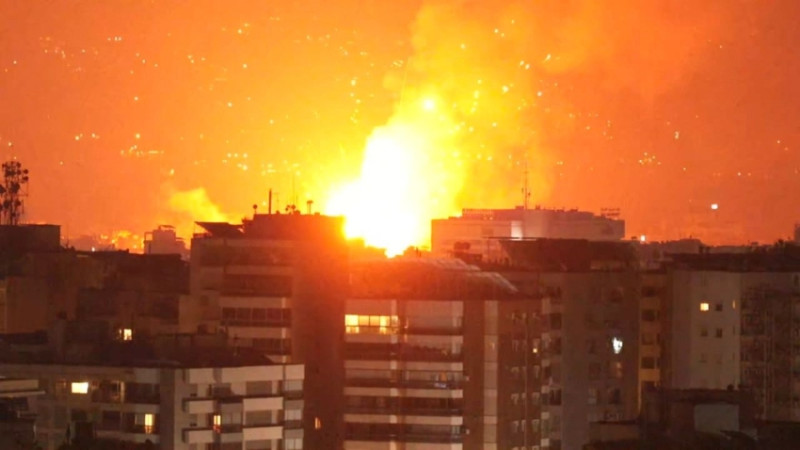
The conflict saw Israel launch a widespread aerial campaign across Iran, including strikes on key nuclear sites such as Natanz and Fordow, resulting in the deaths of several senior military and nuclear officials. Iran responded with Operation True Promise 3 on 13 June, targeting military sites in Israel.
Despite Israel’s accusations, Iran denies any military dimension to its nuclear programme. Grossi stated on 18 June that the IAEA had seen no concrete evidence of Iran actively pursuing nuclear weapons. US intelligence, according to CNN, reached similar conclusions.
Tensions escalated further on 22 June when the United States struck Iranian nuclear sites, including Isfahan, in support of Israeli operations. Iran retaliated on Monday with a missile strike on the US Al Udeid Air Base in Qatar. No casualties were reported, with all but one missile intercepted.
A ceasefire between Israel and Iran was declared late Monday and confirmed by US President Donald Trump on Tuesday, bringing an end to 12 days of intense hostilities. - June 25, 2025