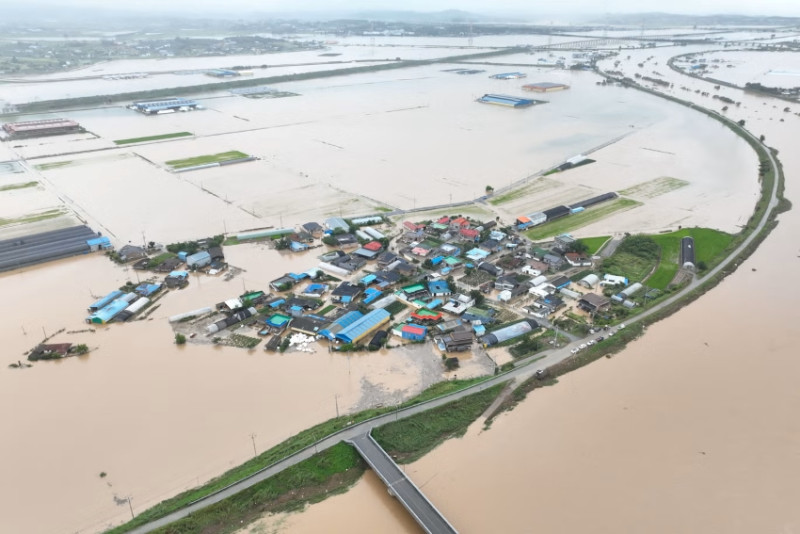
TORRENTIAL rain continued to lash South Korea for a third consecutive day on Friday, forcing more than 5,000 people into shelters and killing at least four, while in Pakistan’s Punjab province, flash floods prompted authorities to declare a state of emergency after 63 people died in 24 hours.
Reuters reportred on Friday that in South Korea, the Ministry of the Interior and Safety reported extensive damage to infrastructure and property across western and southern regions, with rainfall exceeding 400mm in parts of Gwangju over the past day.
Torrential rain warnings remain in place, and the Korea Meteorological Administration has urged the public to remain alert for further risks of landslides and flash floods through Saturday.
The ministry confirmed four fatalities, including two people trapped in submerged vehicles and one person found drowned in a basement in South Chungcheong Province.
Another victim was killed in Osan when a 10-metre-high roadside wall collapsed onto a moving vehicle.
President Lee Jae Myung, who has called for stronger disaster preparedness measures, stressed that while natural disasters are difficult to prevent, “more can be done to anticipate damage and warn the public.”
Meanwhile in Pakistan, Chief Minister of Punjab Maryam Nawaz Sharif declared a disaster emergency across multiple districts, including Rawalpindi and Chakwal, as heavy rains unleashed deadly flash floods and triggered landslides.
AFP cited that authorities ordered evacuations in high-risk areas amid rapidly rising water levels.
The flooding has destroyed buildings and infrastructure, and some deaths were attributed to electric shocks and collapsing structures.
Military helicopters were deployed to airlift stranded residents in hard-hit areas.
The Pakistan Meteorological Department warned that the intense monsoon rains are expected to continue through the day.
These back-to-back crises underscore the growing challenge of extreme weather events across Asia, with both governments pledging expanded emergency efforts as climate risks intensify. - July 18, 2025