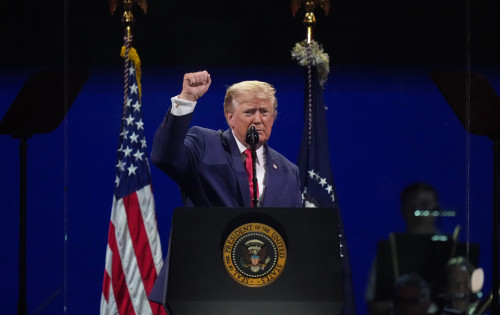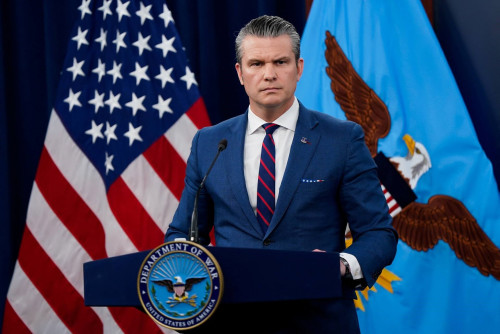
U.S. President Donald Trump announced on Thursday that he has instructed the Department of Defense to immediately begin testing nuclear weapons, citing the programmes of other countries.
“Because of other countries testing programs, I have instructed the Department of War to start testing our Nuclear Weapons on an equal basis,” Reuters cited Trump saying on Truth Social ahead of a meeting with Chinese President Xi Jinping in South Korea.
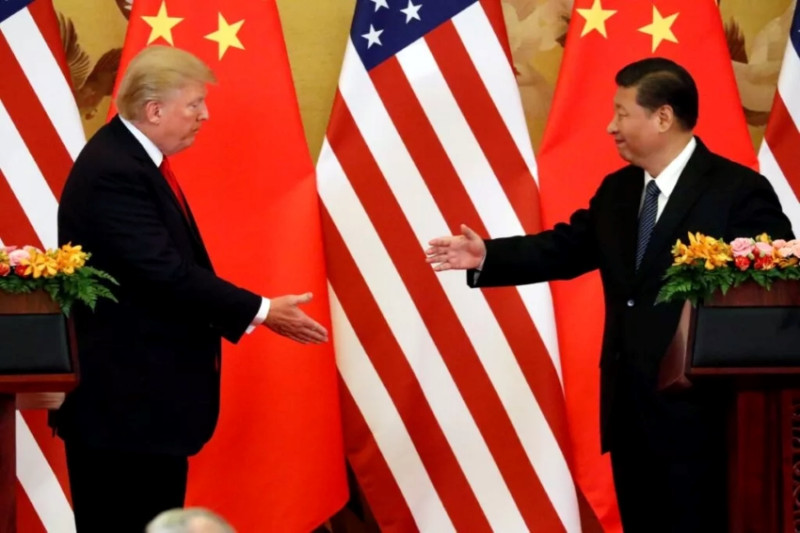
The summit, the first between the two leaders since Trump returned to office in January, is taking place at 11 a.m. local time (0200 GMT) on the sidelines of the Asia-Pacific Economic Cooperation (APEC) forum in Busan, capping off the U.S. president’s five-day Asia tour.
Trump has expressed optimism about reaching an agreement with Xi, following a breakthrough in trade talks with South Korea on Wednesday.
Nonetheless, both nations have escalated economic and geopolitical posturing, raising uncertainty over the durability of any trade truce.
The trade war reignited earlier this month after Beijing proposed sweeping restrictions on rare-earth mineral exports, vital for high-tech manufacturing.
Trump warned of retaliatory measures, including additional 100% tariffs on Chinese exports and potential restrictions on U.S. software used in China. “THE G2 WILL BE CONVENING SHORTLY,” he posted on Truth Social before landing in Busan, reiterating his plans to expand nuclear testing in response to China’s growing arsenal.
U.S. Treasury Secretary Scott Bessent indicated that Beijing is expected to delay rare-earth export controls for a year and resume U.S. soybean purchases, part of a “substantial framework” to be discussed by the leaders. Ahead of the summit, China bought its first cargoes of U.S. soybeans in several months.
Trump has also pressed for rapid progress on fentanyl controls, seeking to reduce U.S. tariffs on Chinese goods in exchange for Beijing curbing the flow of precursor chemicals for the opioid, which is the leading cause of overdose deaths in the United States.
He has raised the possibility of a final agreement on TikTok, a social media platform facing a U.S. ban unless its Chinese owners divest U.S. operations. Beijing has expressed willingness to pursue “positive results,” according to foreign ministry spokesperson Guo Jiakun.
Previous agreements that reduced retaliatory tariffs and allowed the flow of rare-earth magnets from China are set to expire on November 10. Bessent confirmed China had pledged to curb fentanyl precursors, but did not clarify any U.S. concessions.
Beijing has requested tariff relief, eased export controls on sensitive technology, and a rollback of U.S. port fees targeting Chinese vessels.
Strategic tensions over Taiwan overshadow the summit, with Chinese H-6K bombers recently conducting “confrontation drills” near the island. U.S. Secretary of State Marco Rubio reassured that Washington’s commitments to Taiwan’s self-defence remain intact, despite speculation that Trump could offer concessions. - October 30, 2025