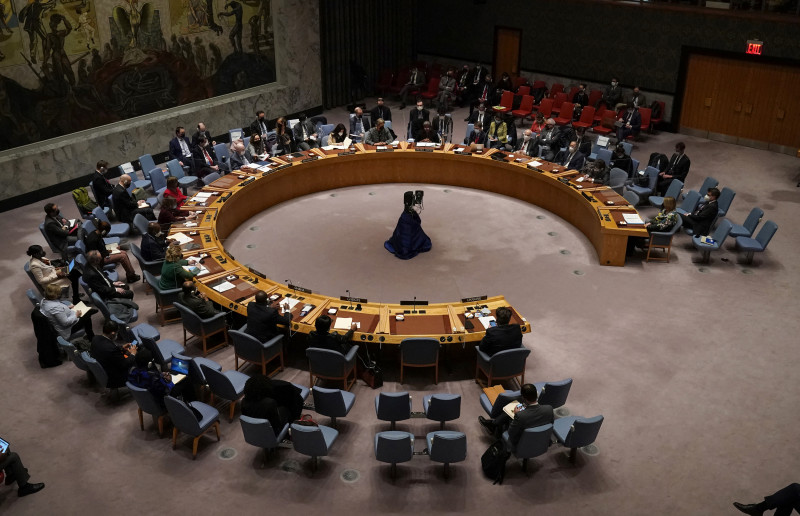
THE United States’ plan to secure a United Nations mandate for an international stabilisation force in Gaza is meeting stiff opposition from Russia, China and some Arab countries, who have raised concerns over a proposed temporary governing body and the lack of a defined role for the Palestinian Authority.
AP reported on Friday that two veto-wielding members of the UN Security Council, Russia and China, have reportedly called for the “Board of Peace” envisaged under President Donald Trump’s ceasefire plan to be removed from the resolution entirely, according to four diplomats briefed on the discussions who spoke on condition of anonymity.
In the latest draft obtained by The Associated Press, the United States retains language regarding the board while adding a reference to Palestinian self-determination, though observers note the language remains weak.
“The attempts to sow discord have grave, tangible and entirely avoidable consequences for Palestinians in Gaza,” the U.S. mission to the UN said in a statement on Thursday, urging council members to unite and pass the resolution.
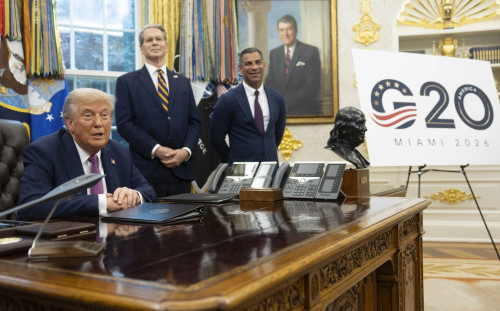
U.S. Secretary of State Marco Rubio also called for swift adoption of the resolution. “I think we’re making good progress on the language of the resolution, and hopefully we’ll have action on it very soon,” he told reporters on Wednesday. “We don’t want to lose momentum on this.”
The draft resolution, first circulated last week, would grant a broad mandate to the stabilisation force to provide security in Gaza until the end of 2027, working alongside the yet-to-be-established Board of Peace. Countries expressing interest in contributing troops have indicated such a mandate is necessary.
Russia, China and Algeria opposed the draft, while other Security Council members submitted amendments, highlighting disputes over the path to an independent Palestinian state and Israel’s withdrawal timeline.
The new draft notes that, after reforms and redevelopment, conditions “may be in place for a credible pathway to Palestinian self-determination and statehood,” and that the United States will facilitate dialogue between Israel and the Palestinians for “peaceful and prosperous coexistence.”
The resolution also links the withdrawal of Israeli forces to benchmarks including demilitarisation and agreed standards. Yet some allies, such as the United Arab Emirates, have said the current framework is insufficient for participation.
Israeli Prime Minister Benjamin Netanyahu opposes Palestinian statehood and Gaza governance by the Palestinian Authority, though the draft language appears to encourage a future role for a Palestinian state.
Diplomats say some council members favour swift action to preserve momentum, while the United States could opt to proceed unilaterally with willing nations if consensus is not reached.
Options include accepting limited amendments, seeking a Security Council vote requiring nine votes and no vetoes from permanent members, or forming a “coalition of the willing” outside the UN framework.
The draft specifies that the stabilisation force would support demilitarisation, secure border areas in coordination with a vetted Palestinian police force, and facilitate humanitarian aid alongside Egypt and Israel.
It also calls for the “full resumption” of UN and Red Cross aid to Gaza, ensuring supplies reach those in need. - November 14, 2025