


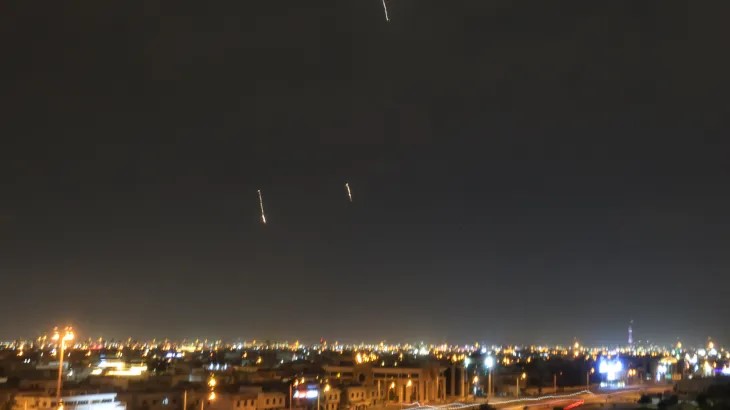
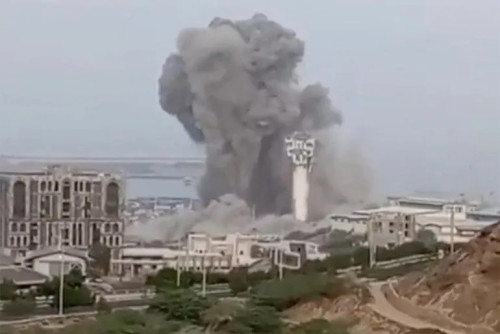
FIVE people were wounded in a rocket attack on Baghdad International Airport on Sunday, Iraqi authorities said, as tensions across the Gulf intensified following Iranian warnings for the evacuation of major ports in the United Arab Emirates.
The airport complex includes a United States diplomatic facility and has previously been a focal point for attacks during periods of heightened regional conflict.
France 24 reported on Monday that the incident came as Gulf Arab states reported additional attacks hours after Iran urged the evacuation of three major ports in the UAE, marking the first time Tehran has openly threatened non-US assets in a neighbouring country during the ongoing war.
Iran accused the United States of launching strikes on Kharg Island, home to the country’s principal oil export terminal, using “ports, docks and hideouts” in the UAE, although no evidence was provided to support the claim.
The conflict has continued to widen diplomatically and militarily. Israel’s military said it had begun “wide-scale” strikes against targets in western Iran, while Iranian authorities announced the arrest of 20 individuals accused of acting as informants for Israel, according to the Tasnim news agency.
Meanwhile, Iran’s Revolutionary Guards issued a stark warning that they would “pursue and kill” Israeli Prime Minister Benjamin Netanyahu.
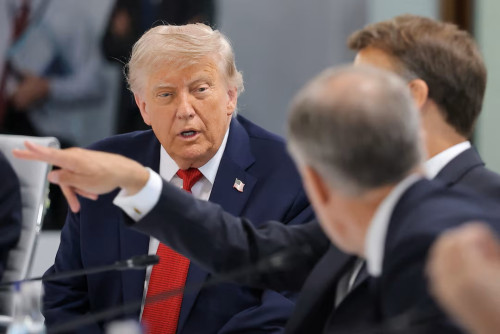
The diplomatic outlook also remains uncertain. United States President Donald Trump said Washington remains in contact with Iran but questioned whether Tehran is prepared to negotiate an end to the conflict.
Speaking to reporters aboard Air Force One, Trump said his administration is communicating with Iranian officials but added, “but I don’t think they are ready.”
The US president also revealed that Washington is attempting to assemble an international maritime coalition to secure the Strait of Hormuz, through which roughly one-fifth of the world’s traded oil passes.
Trump said he had asked approximately seven countries heavily dependent on Middle Eastern energy supplies to deploy naval forces to help safeguard the vital shipping corridor, though he acknowledged that no firm commitments had yet been secured.
“I’m demanding that these countries come in and protect their own territory, because it is their own territory,” he said, arguing that the United States itself does not rely on the strait due to its domestic oil resources.
Trump also warned that the future of the North Atlantic Treaty Organization could be jeopardised if allies fail to support efforts to reopen the waterway, which has been effectively shut during the conflict.
“If there's no response or if it's a negative response I think it will be very bad for the future of NATO,” he told the Financial Times.
At the same time, Israel’s foreign minister said there were currently no plans for talks with the Lebanese government, even as cross-border tensions remain high.
Iran’s foreign minister has also urged Western governments, including France, to avoid actions that could further escalate the war.
The developments underscore the growing risk that the conflict could draw in more countries across the Middle East and beyond, particularly as attacks spread to strategic infrastructure and global energy routes. - March 16, 2026

_leader__Sanae_Takaichi.jpg)
