TWO months into its war with the United States and Israel, Iran is operating without a single, undisputed clerical authority at its apex, marking a profound rupture in the Islamic Republic’s post-1979 power structure.
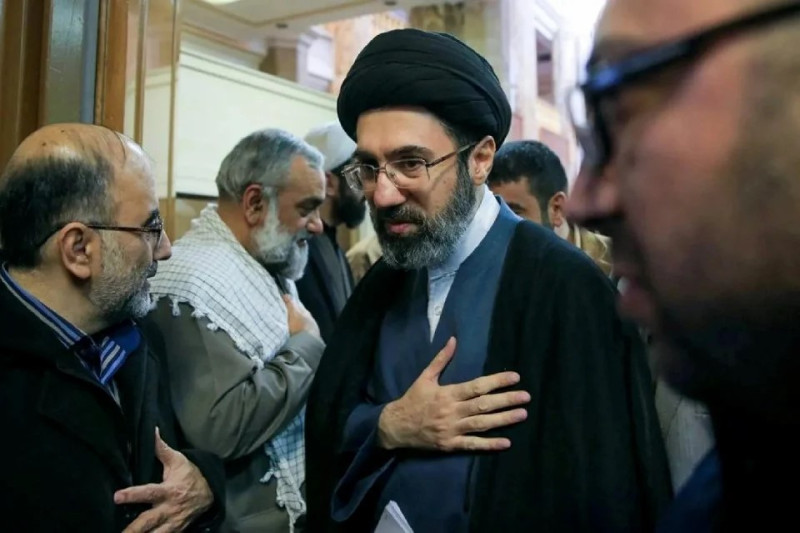
With Ayatollah Ali Khamenei killed in the opening phase of the conflict and his son Mojtaba elevated under constrained circumstances, authority has shifted toward a collective security leadership dominated by the Islamic Revolutionary Guard Corps (IRGC), officials and analysts say.
Since the Islamic Republic’s founding, ultimate authority rested with a supreme leader whose decisions were final across state affairs.
Reuters reported on Wednesday that such a model has now been replaced, at least in practice, by a decentralised but tightly controlled wartime structure centred on the Supreme National Security Council, the Supreme Leader’s office apparatus, and senior IRGC commanders.
Mojtaba Khamenei remains formally at the apex of the system, but three individuals familiar with internal deliberations say his role is largely to endorse decisions already shaped by military and security elites rather than to set direction himself.
He was severely injured in the opening strikes of the war and has not appeared publicly, communicating instead through IRGC intermediaries or restricted audio channels, according to two people close to his circle.
“The Iranians are painfully slow in their response,” said a senior Pakistani government official briefed on mediation efforts between Tehran and Washington.
“There is apparently no one decision-making command structure. At times, it takes them 2 to 3 days to respond.”
Analysts say the central constraint on diplomacy is not internal factional infighting, but the widening gap between what Washington is willing to offer and what Iran’s hardline security establishment is prepared to accept.
Foreign Minister Abbas Araqchi has served as Tehran’s principal diplomatic representative in indirect talks with the United States, later joined by parliament speaker Mohammed Baqer Qalibaf, a former IRGC commander and presidential candidate who now acts as a conduit between political, clerical and security elites.
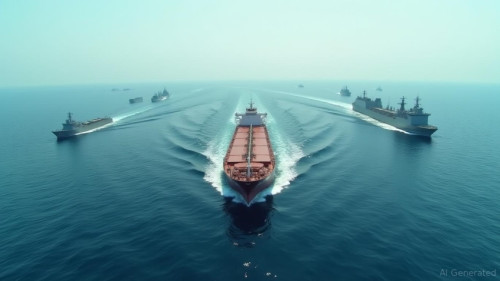
On the ground, however, multiple sources identify IRGC commander Ahmad Vahidi as a pivotal operational figure in wartime decision-making, including during the announcement of a ceasefire.
Iran recently submitted a new proposal to Washington, according to senior Iranian sources, which envisages phased negotiations in which nuclear discussions would be deferred until after the cessation of hostilities and resolution of disputes over Gulf shipping.
Washington, by contrast, insists the nuclear file must be addressed from the outset.
“Neither side wants to negotiate,” said Alan Eyre, a former U.S. diplomat and Iran analyst. He added that both sides believe time will shift leverage in their favour, with Iran relying on strategic pressure over the Strait of Hormuz and Washington on economic and political coercion.
For now, neither side appears able to compromise. Eyre said Iran’s IRGC is unwilling to appear weak, while U.S. President Donald Trump faces domestic electoral constraints that limit flexibility.
That dynamic reflects a deeper transformation inside Iran’s power structure.
While Mojtaba Khamenei is formally recognised as the highest authority, insiders describe him as a legitimising figure rather than an executive decision-maker, with real authority consolidated in the wartime security apparatus.
“Important deals probably pass through him,” said Iranian analyst Arash Azizi, “but I can’t see him overruling the National Security Council. How could he go against those running the war effort?”
Hardline political figures, including former nuclear negotiator Saeed Jalili, have increased their visibility during the conflict, but analysts say they lack institutional power to shape strategic outcomes.
Mojtaba’s elevation is widely attributed to the IRGC, which reportedly sidelined more pragmatic factions in favour of a leadership aligned with its hardline strategic worldview.
Analysts say this has further strengthened the Guards’ dominance over both foreign policy and domestic security.
Driven by a revolutionary ideological framework and a security-first doctrine, the IRGC prioritises regime preservation, deterrence projection and centralised control, particularly on nuclear policy and regional influence.
“We’ve gone from divine power to hard power,” said Aaron David Miller, a former U.S. negotiator. “From the influence of the clerics to the influence of the Revolutionary Guard Corps. This is how Iran is being governed.”
Alex Vatanka, senior fellow at the Middle East Institute, said decision-making has now coalesced around security institutions, with Mojtaba functioning as a coordinating figure rather than a sole authority.
Despite sustained military and economic pressure from the United States and Israel, Iran has shown no visible signs of internal fracture or political capitulation. Analysts say this cohesion reflects a consolidated wartime doctrine rather than ideological moderation.
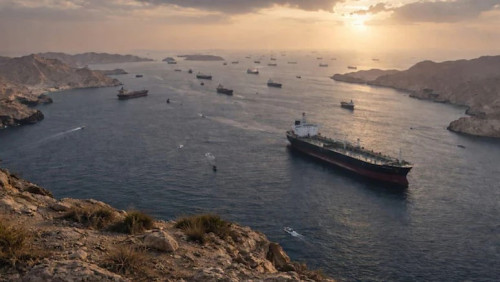
Strategic consensus within the leadership appears to prioritise avoiding full-scale escalation while preserving leverage, particularly over the Strait of Hormuz, and emerging from the conflict in a stronger political and military position. - April 29, 2026





.jpg)