MORE than half of a projected US$300 billion investment fund designed to revitalise the economy of Iran has already been committed by global private corporations, representing a massive financial incentive to secure a final peace agreement to end the conflict.
Reuters, on Wednesday, reported that the proposed mechanism, known as the Reconstruction and Development Fund, is entirely independent of government finance or state grants, and serves as a pivotal economic pillar within the broader United States and Iran framework agreement reached following a devastating three-month conflict that triggered a global energy shock.
A source with direct knowledge of the negotiations confirmed that companies across the United States, the Gulf Arab states, Asia, South America, and Africa have pledged financing spanning the energy, logistics, manufacturing, and transport sectors, though the vehicle will only become operational after a final accord is formally executed.
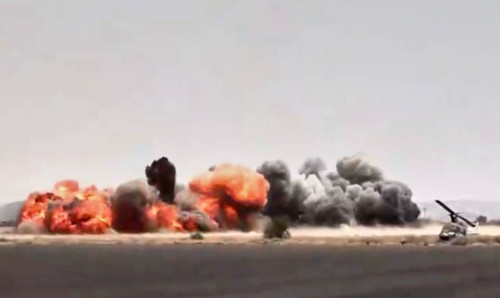
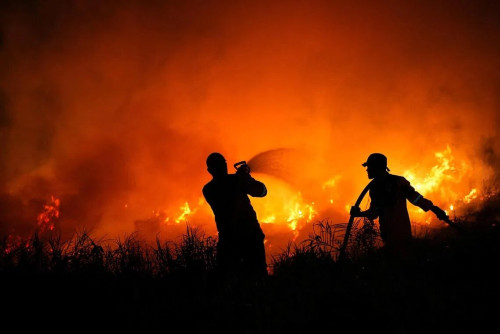
The blueprint emerged after Washington flatly rejected an initial demand from Tehran for four hundred billion dollars in direct war reparations. Instead, regional and international corporate actors will drive capital into infrastructure damaged during the conflict, including the Mobarakeh Steel complex, domestic refineries, and major airports.
The investment vehicle is structurally distinct from parallel diplomatic tracks focused on dismantling the United States blockade, reopening the strategic Strait of Hormuz, lifting long-standing international sanctions, and releasing frozen Iranian sovereign assets held abroad.
The strategy aims to unlock the substantial economic potential of Iran, which possesses the world's second-largest proven natural gas reserves, the fourth-largest proven oil reserves, and a diversified industrial base supported by a population of ninety-two million people that has been starved of foreign direct investment for nearly forty years.
A sixty-day memorandum of understanding, scheduled for signing this Friday, will establish a transitional window for fund administrators to collaborate with international investors and Iranian authorities to scope specific industrial projects.
A source familiar with the matter said that corporations from South Korea, Japan, Singapore, Malaysia, and the United States are among the early participants.
“It'll only be created once the final deal is signed,” the source noted, emphasising the conditional nature of the private-sector funding.
During these sixty days the fund administrators will work with Iranians and investors to plan and scope projects.
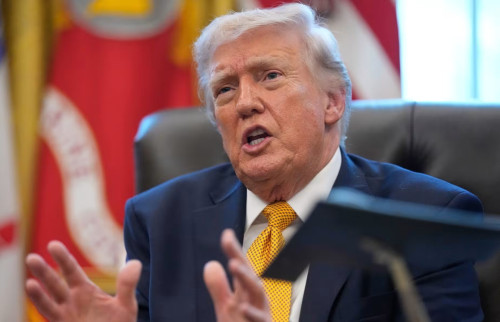
The diplomatic framework faces rigorous enforcement parameters, with the White House pointing to recent statements by United States Vice President JD Vance indicating that access to the US$300 billion reconstruction fund remains explicitly contingent upon Tehran completely dismantling its nuclear programme, eliminating its entire stockpile of enriched material, and accepting an uncompromising international inspection regime.
The multi-lateral effort has been heavily assisted by diplomatic mediation from Pakistan, whilst negotiators from both primary nations prepare to hash out the administrative, nuclear, and regional security components of the treaty during the upcoming sixty-day framework window. - June 17, 2026