By Murray Hunter
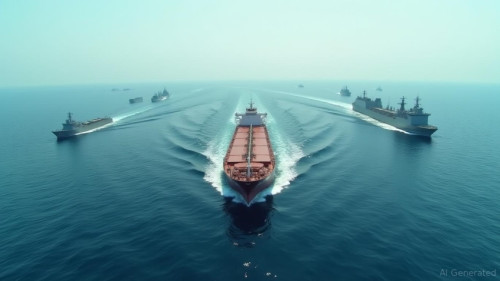
IN the shifting currents of a fragmenting world order, where traditional maritime chokepoints are increasingly weaponised amid what many call a new Cold War, Russia is betting heavily on the Arctic.
The Northern Sea Route (NSR) along its northern coastline is no longer just a seasonal passage for hardy adventurers or resource hauliers.
It is being reimagined as a strategic lifeline, a Trans-Arctic Transport Corridor that promises to reroute global trade, secure energy exports, and anchor Moscow’s “pivot to the East.”
This is classic great-power adaptation: when southern routes become fraught with disruption, look north where ice is melting, and opportunities (and risks) are opening.
The need for Russia is compelling.
The NSR can slash distances between major Asian and European ports by up to 40%, saving thousands of kilometres and up to two weeks compared to the Suez Canal.
In an era of Houthi disruptions in the Red Sea, potential blockades in the Strait of Hormuz, tensions in the Strait of Malacca, and US naval presence in contested waters like the South China Sea, a route hugging the Russian Arctic coast offers a tantalising alternative.
Shipping around the Cape of Good Hope is simply too long and costly.
For a sanctioned Russia seeking to export oil, liquefied natural gas (LNG), and other resources to hungry Asian markets, this northern highway bypasses vulnerable southern bottlenecks.
Economic and Strategic Imperatives
Russia’s push is multifaceted. Domestically, it aligns with the urgent need to develop Siberia and the Russian Far East.
These vast territories, rich in diamonds, gold, tin, fish, nickel, copper, and hydrocarbons, represent both opportunity and vulnerability.
Low population density creates labour shortages, while harsh permafrost, extreme cold, and vast distances challenge infrastructure.
Yet the “pivot to the East” is a national priority to reorient trade toward China, India, and Southeast Asia to offset Western sanctions, stimulate special economic zones like Advanced Special Economic Zones and the Vladivostok Free Port, and extract resources that fuel the economy.
The NSR is central to this. Backed by massive investments, which include around 1.8 trillion rubles (roughly USD $20-24 billion) until 2035 for infrastructure, plus broader megaprojects like those on the Taimyr Peninsula, the route is primarily a resource export artery.
Over 80% of recent cargo has been Russian crude and LNG. Projects like Novatek’s Yamal LNG and Arctic LNG 2, alongside Rosneft’s Vostok Oil ambitions, drive much of the traffic.
Cargo volumes hit records around 37-38 million tons in 2024-2025, though far below earlier ambitious targets of 80 million by 2024.
Transit remains modest (a few million tons), dominated by Russian or Russia-China flows.
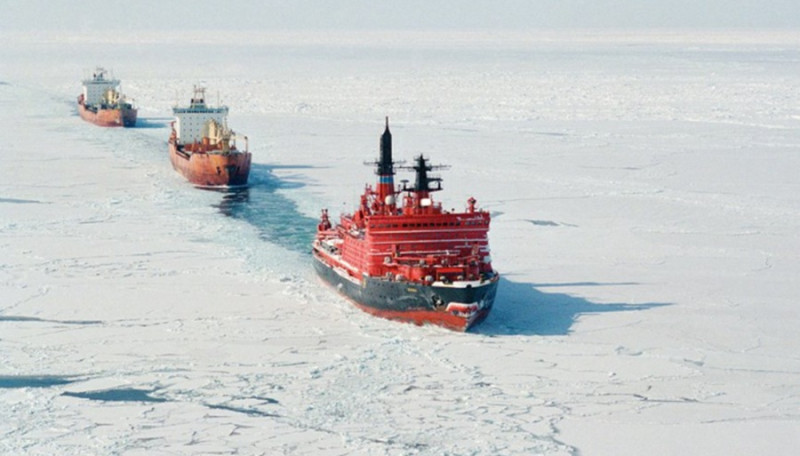
Russia’s nuclear icebreaker fleet, which is unique in the world, has plans to expand to 11 or more vessels to provide the critical escort capability.
Nuclear-powered ships like those from Project 22220 enable operations in ice-choked waters.
Partnerships with China, framed under the “Polar Silk Road,” add another layer.
Joint coordination aims for multi-season reliability by the 2030s, with Chinese shipping lines testing routes and considering container services.
South Korea has signalled interest in test voyages. Yet engagement often appears more political than purely commercial.
Challenges on Thin Ice
Reality bites really hard in the Arctic, where extreme conditions, sub-zero temperatures, shifting permafrost, polar nights, and unpredictable ice complicate construction and operations.
Despite climate change extending the navigable season (now several months, with hopes for longer), the ice remains a hazard. Most vessels still require icebreaker escorts, driving up costs.
Russia mandates permits, ice-class ships, and fees, while enforcing controls that raise sovereignty questions for international users.
Global shipping giants hesitate because of the high insurance premiums, environmental risks (including potential spills in fragile ecosystems), a lack of robust emergency infrastructure, and geopolitical tensions that deter major commitments.
Sanctions following the Ukraine conflict have slowed projects, restricted technology and financing, and complicated shipbuilding.
Ambitious targets have been repeatedly scaled back.
Bellona and other observers note that economics do not yet match the promotional rhetoric; the route remains niche, heavily domestic, and dependent on Russian hydrocarbons.
Demographic and logistical hurdles in the east persist, where expanding the Trans-Siberian Railway and Baikal-Amur Mainline is essential but capital-intensive.
Labour shortages and outmigration undermine development goals.
Moreover, heightened activity raises tensions in the Bering Strait, where retreating ice opens new lanes amid increased Russian, US, and joint Russia-China patrols.
This narrow chokepoint between Russia and Alaska symbolises emerging great-power competition in the Arctic.
The Broader Geopolitical Canvas
Russia’s NSR strategy cannot be divorced from the wider multipolar shift.
Sanctions and Western isolation have accelerated eastward reorientation, deepening ties with China as a buyer, investor, and partner.
Yet this relationship is asymmetric, as China seeks control or influence rather than allowing dependency on Russian-administered infrastructure.
Beijing hedges with multiple options, viewing the NSR as one corridor among many.
India and others show interest but move cautiously.
Russia is leveraging geography by promoting the NSR (and broader Trans-Arctic concepts linking to inland waterways).
Moscow is now positioning itself as a maritime power bridging Europe and Asia on its terms.
Climate change, often framed negatively elsewhere, is an asset here, where melting ice is a strategic gift.
Yet over-reliance on China carries long-term risks, including subtle demographic and economic encroachment in the Far East.
The Iran-related disruptions and Red Sea issues have sharpened focus on alternatives, with Russian officials highlighting the NSR’s safety and efficiency. However, true year-round viability remains distant.
Investment shortfalls, ship shortages (especially Arc7 ice-class vessels), and sanctions bite. Progress is incremental, relying more on domestic resource flows, selective Asian partnerships, and infrastructure upgrades.
Future Horizons
The NSR embodies Russia’s adaptation to isolation and ambition.
Success hinges on balancing massive infrastructure needs with fiscal realities, navigating environmental and international hesitations, and managing great-power rivalry in the Arctic.
For Russia, it secures export pathways and eastern development.
For partners like China, it offers diversification.
For the world, it signals a potential new artery in global trade, if ice, economics, and geopolitics can align in a new multi-polar world.
In a world of contested chokepoints, the route through the ice represents more than shipping lanes.
This sheds light on why US President Trump had so much interest in Greenland.
It is a statement of strategic autonomy, a hedge against southern vulnerabilities, and a high-stakes gamble on the melting north. Whether it becomes a transformative corridor or remains a specialised resource route will shape Russia’s place in the emerging order, one where Arctic mastery could define influence for decades.
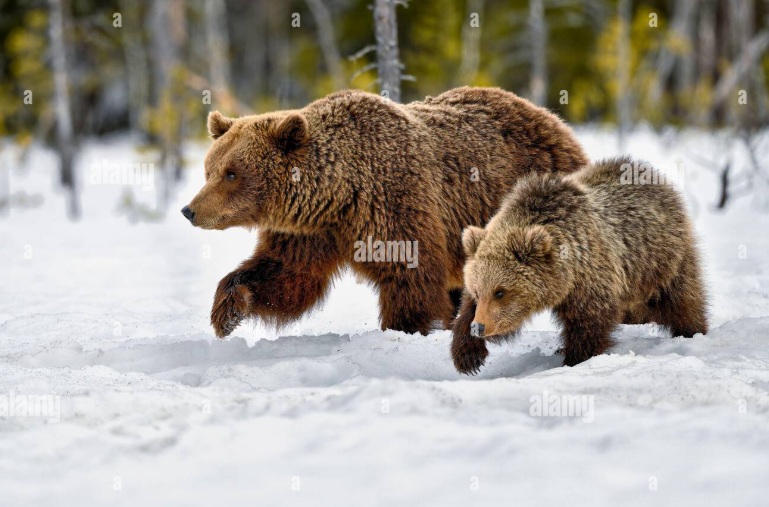
The bear is moving north, and the world is watching. – July 31, 2026








.jpg)