TAPOVAN – Indian rescue workers battled through tonnes of rock and mud today searching for survivors in a choked Himalayan tunnel after a deadly flood – apparently triggered by a glacial burst – smashed through two mountain dam projects.
More than 170 people were still missing, two days after a wall of water and debris hurtled down a valley in the northern state of Uttarakhand, destroying bridges and roads, hitting two hydroelectric power plants and killing dozens.
The disaster has been blamed on rapidly melting glaciers in the Himalayan region caused by global warming. Building activity for dams and dredging riverbeds for sand – for use in the construction industry – are other suggested factors.
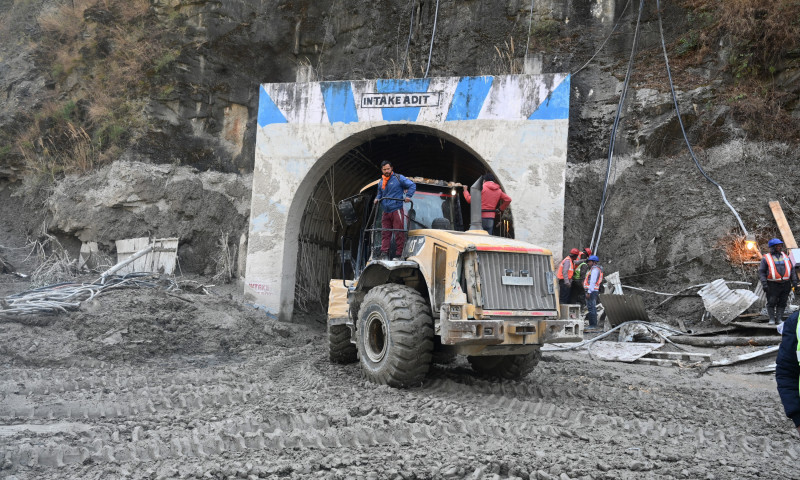
Most of those missing were workers at the two power plants, with some trapped in a 2.7km U-shaped tunnel in Tapovan that filled with mud and rocks when the 20m-high flood hit.
Twelve people were rescued from one side of the tunnel on Sunday, but another 34 were still trapped at the other end, police official Banudutt Nair, in charge of the rescue operation, said.
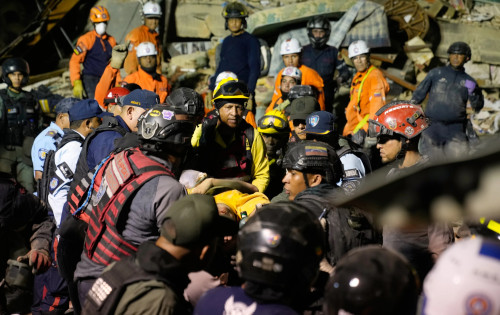
Hundreds of workers toiled all night and by morning had cleared their way 120m into the tunnel, with rescue personnel “waiting to enter as soon as any movement deep inside the tunnel is possible”, the local government tweeted.
“Work will happen day and night. There will be no break,” said local roads official AS Rathod.
Nair said rescuers were not giving up hope, believing that there are air pockets inside the tunnel, where the workers could still be alive.
Giant floodlights lit up one entrance late yesterday as a huge excavator slowly worked its way through the sludge, carrying out huge piles, which rescuers then sifted through looking for survivors, or remains.
Nearby, workers used an excavator to try to remove giant boulders from the road blocking the way to the second power plant, the Rishi Ganga facility.
This was destroyed, and was a wasteland covered with brown and grey slush, with a nearby concrete bridge swept away. At least 35 workers and locals were missing. – AFP, February 9, 2021













.jpg)