


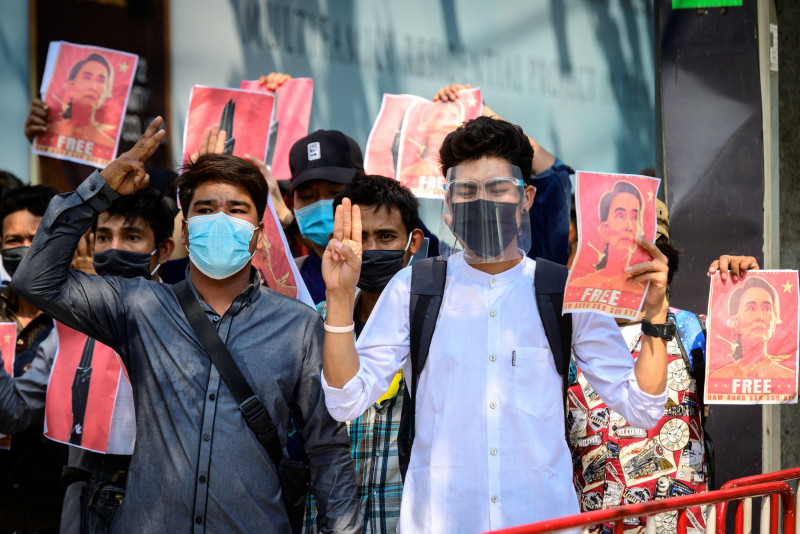
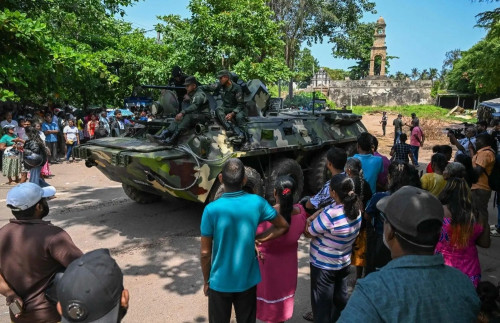
YANGON – Myanmar’s military tightened their post-coup grip on power, stepping up a campaign of intimidation against the ousted civilian leadership, while pushing harsher tactics as a fifth consecutive day of nationwide demonstrations began today.
Soldiers raided and ransacked the headquarters of detained leader Aung San Suu Kyi’s party after dark yesterday, after police shot water cannons, tear gas, and rubber bullets in a sudden escalation of force against the protests sweeping the country.
A doctor in Naypyidaw also confirmed the use of live rounds that left two people critically injured, but footage showed protesters at the capital were undeterred, returning to a blockade on a major highway this morning.
The United States, which has led international condemnation of the army takeover, on Tuesday renewed its call for freedom of expression in Myanmar – and for the generals to step down.
“We repeat our calls for the military to relinquish power, restore the democratically elected government, (and) release those detained,” State Department spokesman Ned Price told reporters.
In Mandalay, the country’s cultural capital and seat of Myanmar’s pre-colonial monarchy, witnesses saw security forces fire tear gas directly at protesters waving the red flags of Suu Kyi’s National League for Democracy party.
State media claimed that the crowd had used “obscene language” and thrown objects at police, injuring four officers, in its first direct mention of the street protests since they began on the weekend.
“Therefore, the police members dispersed in accordance with the methods and laws,” the state-run Global New Light of Myanmar newspaper reported, without mentioning other police confrontations elsewhere in the country.
Hundreds of protesters had returned to the streets of Yangon this morning, where the day before a large crowd faced off against water cannon and a phalanx of riot police near Suu Kyi’s residence.
Though there were no reported clashes with authorities in the commercial hub yesterday, university student Khin Nyein Wai said she was still afraid.
“I still came out as I do not like the military dictatorship,” she said. “This is for our future.” – AFP, February 10, 2021



.jpg)
