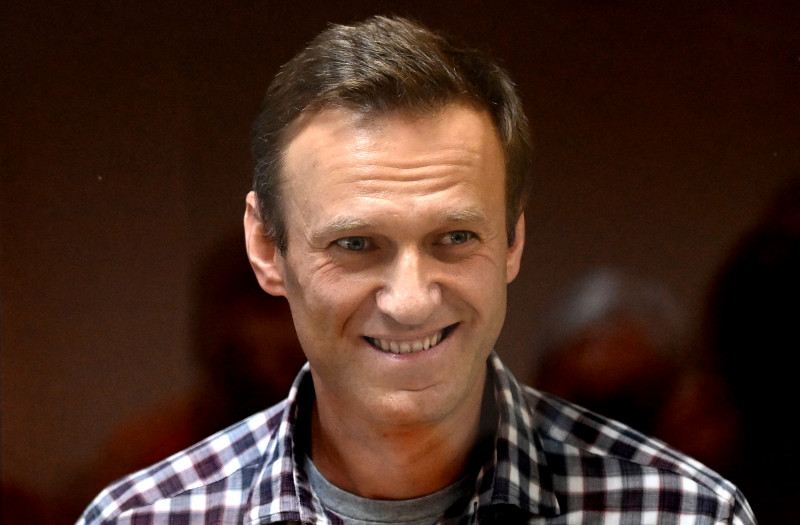
MOSCOW – A court here yesterday branded the political organisations of jailed Kremlin critic Alexei Navalny as “extremist” and barred them from working in Russia, a further blow to the embattled opposition ahead of parliamentary elections.
The ruling could spell the end for Navalny’s anti-corruption organisation, which had shone a light on graft at the highest levels, and his network of political offices that had bolstered his reach to regular Russians beyond Moscow.
“It was found that these organisations not only disseminated information that incited hatred and enmity against government officials, but also committed extremist actions,” a spokesman for the prosecutors, Alexei Zhafyarov, said outside the court.
A statement from the Moscow City Court, distributed to journalists after a marathon, 12-hour long session held behind closed doors, said the judge’s decision was binding with immediate effect.
Navalny, 45, who was jailed earlier this year on his return to Russia from Germany, where he had been recovering from a poisoning attack, vowed to continue fighting despite the ruling.
In an Instagram post, he acknowledged that his supporters would need to change how they work and urged them to “adapt”.
“But we will not retreat from our goals and ideas. This is our country and we have no other,” he said.
Prosecutors in April had requested that Navalny’s network of regional offices and his Anti-Corruption Foundation (FBK) be hit with the “extremist” label, saying the group was plotting an uprising with support from the West.
During Wednesday’s hearing, FBK lawyers said they had asked for the proceedings to be made public, and also that Navalny be called as a witness – requests that among others were summarily dismissed.
They said they would appeal the overall ruling within an allotted 10-day period.
Navalny’s most prominent aides – several of whom are now living in neighbouring European Union member state Lithuania – said the Russian opposition would not be distracted by the ruling.
“We’ll keep working,” Leonid Volkov, who was the head of the regional network, wrote on Twitter from Lithuania. – AFP, June 10, 2021