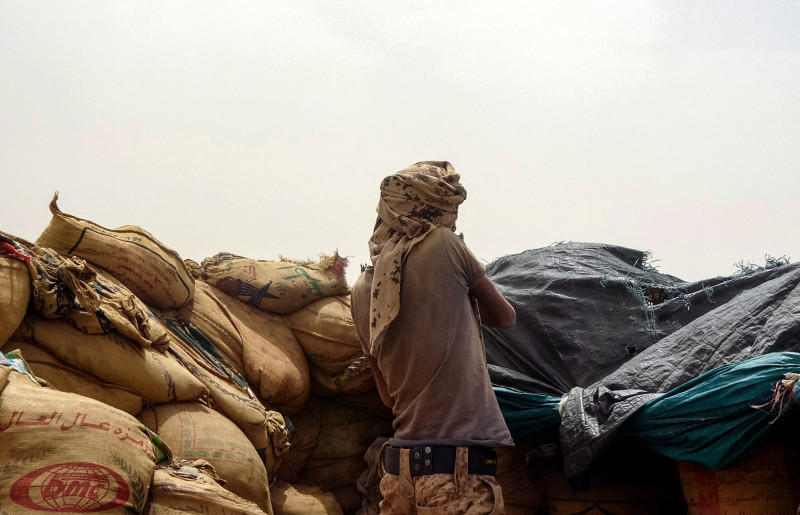
DUBAI – Clashes between rebels and Yemeni government fighters killed at least 111 in Marib over three days, said pro-government sources, following a renewed offensive by Huthi insurgents.
The Iran-allied rebels escalated their efforts to seize Marib, the government’s last stronghold in northern Yemen, in February, and the fighting has killed hundreds on both sides.
The clashes between Thursday and today killed 29 pro-government personnel and at least 82 rebels, three pro-government sources told AFP. Rebel forces have not confirmed the toll.
Yemeni government officials said since Thursday, the Huthis have mounted intensive attacks from the north, south and west, but were unable to breach government defences, which are supported by air cover from a Saudi-led military coalition.
“These areas witnessed fierce fighting amid artillery shelling from both sides, and intense coalition air raids,” said one military official.
Control of the oil-rich Marib region would strengthen the Huthis’ bargaining position in peace talks, but the battle has also raised fears of a humanitarian catastrophe, as many Yemenis had fled to the area to escape fighting in other parts of the country.
Yemen’s conflict flared in 2014 when the Huthis seized the capital, Sanaa, prompting the Saudi-led intervention to prop up the government the following year.
While the United Nations and Washington are pushing for an end to the war, the Huthis have demanded the reopening of Sanaa airport, closed under a Saudi blockade since 2016, before any ceasefire or negotiations.
As well as the bloody offensive in Marib, the insurgents have also stepped up drone and missile strikes on Saudi targets, including the kingdom’s oil facilities.
This month, outgoing UN envoy for Yemen Martin Griffiths told the Security Council that his own efforts over the past three years to end the war have been “in vain”.
The fighting has killed tens of thousands and left some 80% of Yemenis dependent on aid, in what the UN calls the world’s worst humanitarian crisis.
The war has displaced millions of people and left many on the brink of famine. – AFP, June 27, 2021