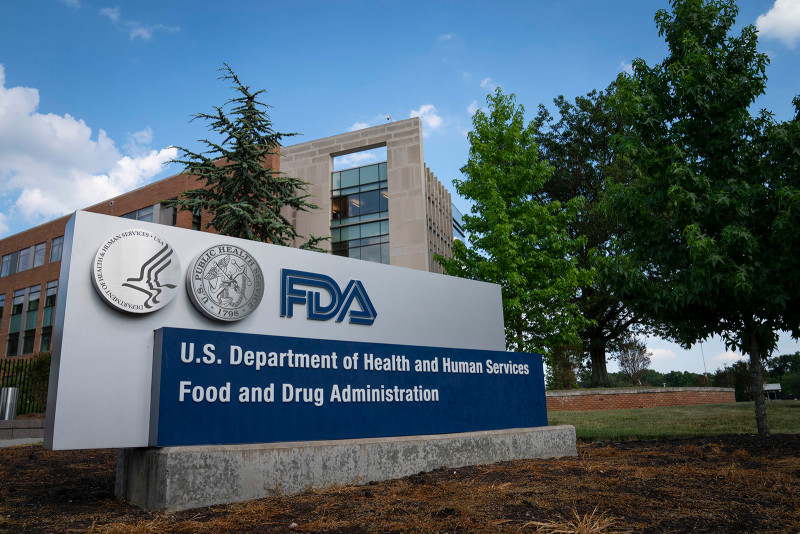
WASHINGTON – United States health authorities yesterday authorised the use of synthetic antibodies developed by AstraZeneca to prevent Covid-19 infections in people who react badly to vaccines.
It was the first time the Food and Drug Administration (FDA) has given emergency authorisation for such a purely preventative treatment.
The drug Evusheld is “not a substitute for vaccination in individuals for whom Covid-19 vaccination is recommended”, warns the FDA.
Evusheld, it said, can only be approved for use for individuals with a weakened immune system or those who cannot be vaccinated for medical reasons, such as a strong allergic reaction.
In such cases, the drug can be administered to people aged 12 and up.
Evusheld combines two types of synthetic antibodies, namely tixagevimab and cilgavimab. It is administered via two intramuscular injections, one straight after the other.
These antibodies help the immune system fight off the virus by targeting its spike protein, which allows it to enter cells and infect them.
The FDA said that the treatment “may be effective for pre-exposure prevention for six months”.
It cannot be administered to someone who is already infected with the virus, the FDA said, although AstraZeneca is testing it for such treatment.
Side effects may include an allergic reaction, bleeding from the injection site, headache, and fatigue.
The FDA authorisation was based on a clinical trial carried out on unvaccinated people over 59 years of age, or with a chronic disease, or at high risk of infection.
The drug was given to 3,500 people while 1,700 received a placebo. The trial showed that the treatment cut the risk of developing Covid-19 by 77%.
Two cocktails of antibodies, made by Regeneron and Eli Lilly, are currently approved for use for prevention of infection in the US, but only in people who have been exposed to the virus shortly before, or who have a strong chance of being exposed, such as employees of retirement homes or prisons.
In addition to being immunocompromised or unvaccinated, these people must also be at high risk of developing a severe case of the disease. – AFP, December 9, 2021





.jpeg)