AMBON – Across Indonesia’s 16,056 islands and expansive coastline lies a rich reserve of marine resources, and a magnet for illegal fishing. But in the Maluku Islands, local wisdom is safeguarding precious fisheries, building sustainability and economic resilience in the process.
Maluku Islands province is one of Indonesia’s most high-potential fishery areas. Its area is 92.4% ocean, so fishing has been central to local culture for generations.
Local wisdom guarded and preserved since ancient times, “sasi laut” offers guidance in managing and utilising fishery resources.
It is made up of “tutup sasi” (closed sasi) and “buka sasi” (open sasi).
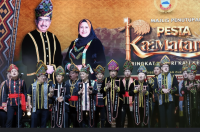
Tutup sasi is a prohibition on catching a certain number of fish, on the use of certain fishing gear and on catching fish in certain areas. Every sasi laut practice begins with the tutup sasi ceremony, marked by placing young coconut leaves on the sasi area.
During tutup sasi, all fishing activities in the area close to the sasi are prohibited. The tutup sasi period can last three months, six months or even a full year.
The tutup sasi period follows a time when particular fish species are breeding, so the ban on fishing helps preserve certain types of fish and keeps the marine ecosystem running well.
The prohibition on using certain types of fishing gear and the ban on catching fish in certain waters (for example, in conservation areas) greatly help prevent overfishing and damage to the environment.
Sanctions such as fines enforce these prohibitions. During buka sasi, people may catch fish using reasonable gear in Maluku Islands waters.
As the customary law of the Maluku Islands, sasi laut is highly respected, and the community complies with it fully and sincerely.
Sasi laut has obtained further legitimacy through a constitutional mandate requiring the state to recognise and respect customary law and traditional community rights as long as the practices are ongoing and in accordance with the development of society and the principles of Indonesia. This has allowed the people of the Maluku Islands to sustainably benefit from the marine resources in their area.
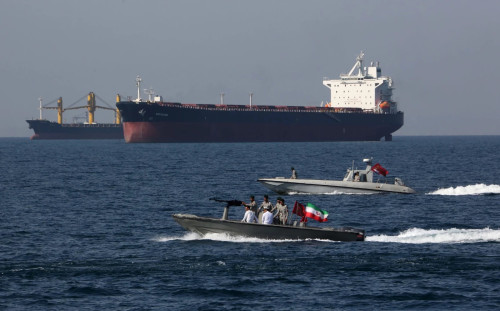
By contrast, large-scale theft of fish by foreign vessels and the use of environmentally destructive fishing gear have left most Indonesian waters in critical condition. Several fishery management areas are categorised as red for their number of fish species and other marine biota. Red means the areas have been overfished.
The Maluku Islands’ potential marine resources, including fish, crabs, lobsters and prawns, total 1.64 million tons per year – 26.3% of the national potential.
Three other Indonesian fishery management areas also have high potential: the Banda Sea, the Seram Sea and its surroundings, and the Arafura Sea. The fishery potential of the Seram Sea area is 431,069 tons per year, of the Banda Sea 631,701 tons per year and of the Arafura Sea 1,992,731 tons per year.
The Aru Sea, Arafura Sea and East Sea have suffered overexploitation of yellowfin tuna, skipjack tuna, mackerel, squid, shrimp, lobster, crab and small crab. Similar conditions prevail in the Java Sea, so tuna, lobster and squid are increasingly rare in these waters. If this overexploitation continues, the fish biomass in Indonesian waters will decline to 81% by 2035.
Illegal fishing has interfered with the sustainable management of Indonesian fisheries. Authorities could tackle the problem through criminal sanctions or by taking a more preventive, non-penal approach.
Other provinces in Indonesia have customary laws about fisheries similar to sasi laut, such as “panglima laot” in Aceh province (at the northern tip of Sumatra) and “limbo tombuluruha” in the Wakatobi islands of south-eastern Sulawesi. This local wisdom could be a model for a preventive approach to reducing overfishing and stopping illegal fishing.
Meanwhile, the ancient customary law of sasi laut provides an illustration of how community buy-in has helped preserve a rich marine ecosystem in the Maluku Islands. – The Vibes, June 12, 2022
Yanti Amelia Lewerissa is an associate professor in the Criminal Law Department of the Faculty of Law at Pattimura University, Indonesia. She is a member of the Society of Criminal Law and Criminology. Her work is focused on crime and crime-prevention policies, especially in fisheries.
Published under Creative Commons and in partnership with 360info.org