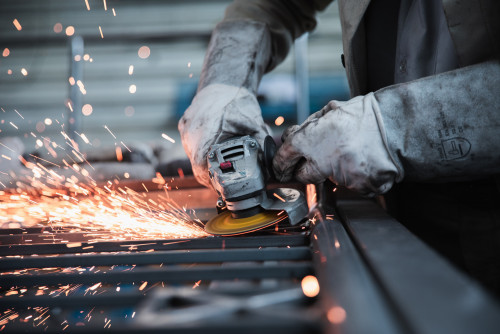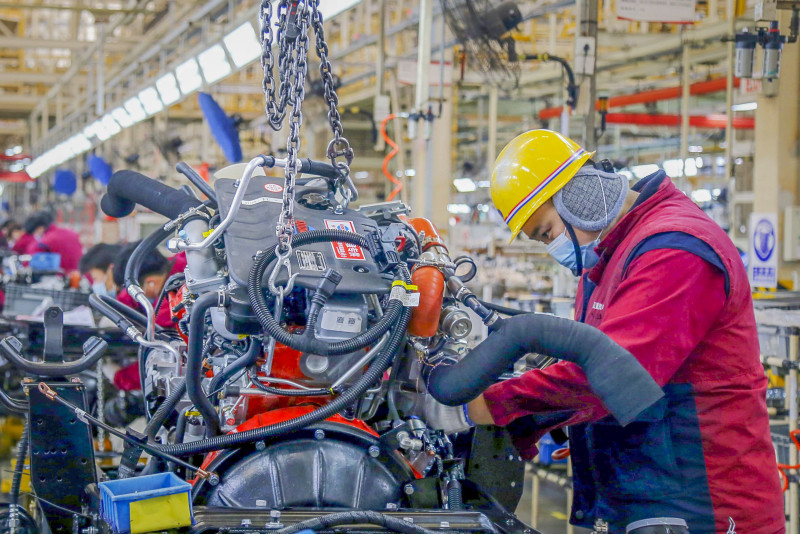
BEIJING – Manufacturing activity in China edged up in November on the back of an easing in power shortages and a drop in some raw material costs, official data showed today.
The Purchasing Managers’ Index (PMI) – a key gauge of manufacturing activity – in the world’s second-biggest economy rose to 50.1, returning above the 50-point mark separating growth from contraction after two months.
The latest data from the National Bureau of Statistics was also better than a 49.7 reading expected by a Bloomberg poll of analysts.
“A series of recent policy measures to strengthen the guarantee of energy supplies and stabilise market prices has shown results,” said NBS senior statistician Zhao Qinghe in a statement.
He added that a “tightness” in power supplies eased this month, allowing manufacturing capacity to pick up, while prices of some raw materials “dropped significantly” as well.
With a recovery in the global economy and the approaching Christmas season, foreign trade has also continued to improve, Zhao said.
China’s non-manufacturing PMI, however, dropped slightly to 52.3 – down from a 52.4 reading in October – as the country grappled with fresh domestic coronavirus outbreaks.
Analysts had predicted slowing growth after the recent flare-up of cases in late October, which spread to 21 provinces and prompted sweeping travel restrictions and closures.
Capital Economics said in a report yesterday the new Omicron variant of the virus would test China’s strict zero-Covid strategy, adding that if this proved harder to contain than the Delta variant, it “would expect officials to tighten containment measures”, disrupting services further.
One analyst suggested a cautious reading of the latest PMI data.
“We don’t think the rebound...implies a turnaround of the manufacturing sector,” Lu Ting, chief China economist at Nomura, said.
He added that factory activity is likely to drop again in December “as the Chinese government starts restricting output in high-polluting sectors to ensure a blue sky for the upcoming Winter Olympics”.
The Beijing Winter Olympics is scheduled to begin on February 4. – AFP, November 30, 2021