Business

Turkey inflation rate reaches highest level in 20 years

Statistics agency reports consumer prices surge by 48.7% from January last year

Updated 4 years ago · Published on 03 Feb 2022 8:00PM

Turkey inflation rate reaches highest level in 20 years
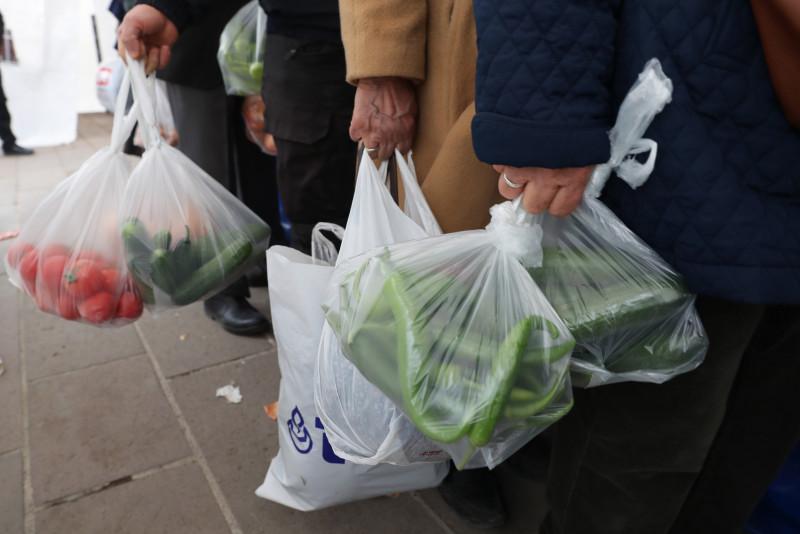
Confronted with persistently high inflation more than a month before local elections, Turkish authorities this week set up stands to sell vegetables at unbeatable prices in a bid to force markets to lower their prices. - AFP Pic, February 3, 2022

ANKARA – Turkey’s annual inflation rate in January reached its highest level since April 2002, official data showed today after a currency crisis decimated people’s purchasing power.

Consumer prices surged by 48.7 percent from the same period in January last year, up from an annual rate of 36.1 percent in December, according to the Turkish statistics agency.

The reading came out just days after President Recep Tayyip Erdogan changed the head of the state statistics agency for the fourth time since 2019.

Turkish media reported that Erdogan was unhappy with agency data showing inflation reaching the highest level since his Islamic-rooted party stormed to power two decades ago, complicating his path to re-election in 2023.

Former agency chief Erdal Dincer had only been in the job for 10 months. He was replaced by Erhan Cetinkaya, who was vice-chair of Turkey’s banking regulator.

Independent data collected by Turkish economists suggested that the annual rate of inflation rose to more than 110 percent in January.

Erdogan staunchly opposes raising interest rates, which he believes cause inflation – the exact opposite of conventional economic thinking.

He admitted on Monday that Turks would “have to carry the burden” of inflation for “some time”.

“God willing we have entered a period where each month is better than the previous one,” he added.

Turkey has suffered from persistently high inflation for years, experiencing two currency crises since 2018.

The second last year came after Erdogan orchestrated sharp interest rate cuts that put them far below the rate at which prices were rising, eroding Turks’ purchasing power and the value of their savings.

This prompted Turks to stock up on gold and foreign currency, resulting in a currency crash that saw the lira lose 44 percent of its value against the dollar in 2021. – AFP, February 3, 2022

Related News

Business / 3w

Traders keep watch on inflation data as energy prices fuel fresh concerns

Malaysia / 2mth

PM Anwar: Putin assured Malaysia’s energy supply for next 20 years

Business / 3mth

BMI sees BNM holding OPR at 2.75% in July, amid contained inflation

Malaysia / 5mth

Tabung Haji declares payout of 3.50 percent, highest in 8 years

Malaysia / 7mth

Anwar conferred Turkiye's Order of the Republic

Malaysia / 8mth

PM: Sabah receives the highest allocation for schools from the Federal Government

Spotlight

Malaysia

Tuanku Muhriz urges Malaysians to uphold Rukun Negara, strengthen unity

Malaysia

PM to bring Felda forensic audit proposal to Cabinet

Malaysia

Malaysia tightens Thailand border security after wave of southern attacks

Malaysia

Mohd Amar’s three-year remark puts PAS’ Kelantan record under spotlight

Malaysia

KPF’s Al-Rawda exposure raises fresh questions over RM119.38 million

By Alfian Z.M. Tahir

Trump’s North Korea gamble deepens Asia’s doubts over US alliances

Malaysia

Rayer denies involvement in 'Maha Kali Red Rally', claims name and photo misused

Business

Nation’s economic outlook strengthens as leading index signals continued growth

You may be interested

Business

Oil prices hold near US$85 as US-Iran tensions keep hormuz risks in focus

Business

Matrix Concepts records RM416.7m in 1Q27 sales as geographic diversification gains traction

Business

Nation’s economic outlook strengthens as leading index signals continued growth

Business

K8 cargo: Businessman seeks clarification from MOF, Customs, Petronas

Business

Oil prices pull back after rally as markets brace for tougher Iran sanctions