Business

Industrial contamination disrupts flash chip output at 2 Japan plants

Chipmaker Kioxia says operations at its factories partially suspended

Updated 4 years ago · Published on 10 Feb 2022 2:30PM

Industrial contamination disrupts flash chip output at 2 Japan plants
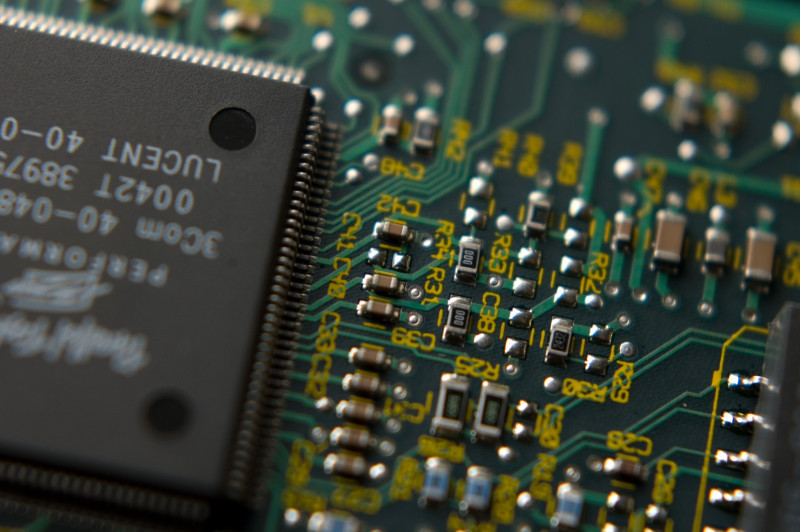
Chipmaker Kioxia, a spin-off of Japanese conglomerate Toshiba, says it is working to restore full output as soon as possible, following the industrial contamination at its factories in Japan. – Pixabay pic, February 10, 2022

TOKYO – Operations at two Japanese factories producing flash memory chips have been disrupted by the contamination of industrial materials, chipmaker Kioxia said today.

It comes as the tech industry grapples with a global semiconductor shortage that has hampered the manufacturing of numerous products from cars to gaming consoles.

Kioxia said it suspects “contamination of materials used in the manufacturing processes” at its plants leading to operations being partially suspended, without giving further details.

The company, a spin-off of Japanese conglomerate Toshiba, said it was working to restore full output at the factories in central and northern Japan as soon as possible.

Kioxia’s United States-based partner Western Digital also confirmed the disruption and estimated it will cause “a reduction of flash availability of at least 6.5 exabytes” at the plants, which are run by the two companies as a joint venture.

A unit of digital data, there are one billion gigabytes in an exabyte.

Hideki Yasuda, an analyst at Ace Research Institute, said the disruption is more bad news for the industry.

“Flash memory prices will rise for sure, further adding fuel to the recent component price hike trend stemming from supply shortages,” he told Bloomberg News.

A pandemic-fuelled surge in demand for home electronics that use semiconductors has throttled chip supplies – a crisis deepened by a cold snap in the United States, a drought in Taiwan and a fire at Japanese manufacturer Renesas last year.

Several firms have recently announced plans for new semiconductor plants as the chip squeeze continues. In November, Samsung said it will build a microchip factory in Texas, a US$17 billion (RM71 billion) investment.

Taiwan’s TSMC has said it will build a plant in Japan in partnership with Sony, while China’s biggest chipmaker said in September that it would build a new factory in Shanghai. – AFP, February 10, 2022


Related News

Malaysia / 1mth

Body found at KLIA2 in tyre storage compartment of aircraft from Japan

Malaysia / 1mth

Woman, believed to be foreigner, allegedly causes disturbance at KLIA (video)

Malaysia / 1mth

Malaysian dies while transiting in Bangkok to Japan (video)

World / 2mth

7.1-magnitude earthquake hits Japan’s Kyushu island

Malaysia / 4mth

PM: Students abroad should gain positive values ​​from the local community

Malaysia / 5mth

PM Anwar instructs MetMalaysia to expedite cloud seeding in Kedah, Perlis

Spotlight

Malaysia

Five fatal helicopter crash victims honoured in Sarawak state awards

Malaysia

No Malaysian is left behind; Budget 2027 puts people first - Anwar  

Malaysia

Panama hit by 6.4-magnitude earthquake

Malaysia

Haze blankets 33 areas with unhealthy air

Malaysia

Malaysia’s 2027 Budget is a steady one: people-oriented continuity rather than bold reform

Malaysia

Budget 2027: What is in it for me?

Malaysia

Budget 2027 steps up Sabah, Sarawak funding by RM2.2b amid push for development parity

Malaysia

Budget 2027: Maternity leave entitlement increased, minimum pension raised to RM1,350

You may be interested

Business

Budget 2027 channels RM270m to SMEs through crowdfunding, P2P financing

Business

Malaysia draws US$9.5b in orders for US$1.5b sukuk, cuts borrowing costs

Business

Oil slips on Trump’s Iran remarks, but supply risks and strong US dollar keep markets on edge

Business

Budget 2027 targets foreign e-commerce platforms, channels billions into local firms and startups