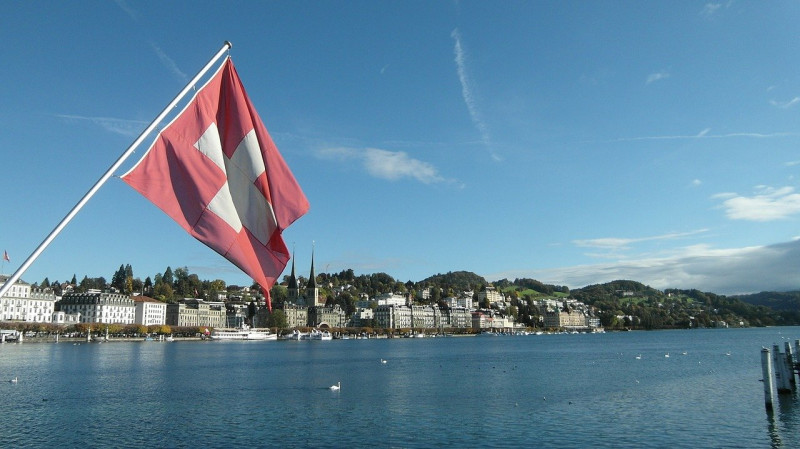
ZURICH – Switzerland’s newly adopted tough stance on Russia has forced the Swiss economy to readjust to sanctions, blowing a wind of panic through the raw materials market in particular.
Switzerland announced Monday it would follow the sanctions being imposed by the European Union, abandoning Bern’s traditional reserve by ordering the immediate freezing of assets belonging to Russian companies and individuals appearing on the EU blacklist.
And it went further yesterday, adopting even stricter EU sanctions applied in response to Moscow’s February 24 full-scale invasion of Ukraine.
Exporting goods that could enhance Russia’s military capabilities is prohibited, as is the exportation of certain goods and services in the oil sector, and aviation technology.
“The implementation of these sanctions is compatible with Switzerland’s neutrality,” the government insisted in a statement.
The wealthy Alpine nation’s businesses are complying with the sanctions but have also stressed that Russian money accounts for only a fraction of their turnover, in an attempt to reassure investors.
The airline Swiss, a subsidiary of Germany’s Lufthansa, has suspended its flights to Moscow and Saint Petersburg.
Global container shipping company MSC and freight logistics firm Kuehne + Nagel have stopped taking Russian orders for cargo, except for food, medical and humanitarian goods.
Business lobby Economiesuisse said the sanctions would have “limited” direct consequences on foreign trade.
Russia is only Switzerland’s 23rd-biggest trading partner. The Swiss mainly export medicines, medical products, watches and machinery to Russia, while the chief imports are gold, precious metals and aluminium.
In 2021, exports to Russia amounted to 3.2 billion Swiss francs (US$3.5 billion, 3.2 billion euros, RM14.6 billion), with imports as low as 270 million francs, according to the customs authorities.
However, the landlocked state is an important player in raw materials trading, through companies such as Glencore, Trafigura, Vitol and Gunvor.
Gennady Gatilov, Russia’s ambassador to the United Nations in Geneva, said yesterday he was surprised by the sanctions, because Switzerland had always “tried to maintain a certain neutrality”.
“We are disappointed with this, because we have very good relations with Switzerland... and the joining of Switzerland to these unlawful sanctions... will have (a) certain negative impact,” he told reporters.
Crisis mode
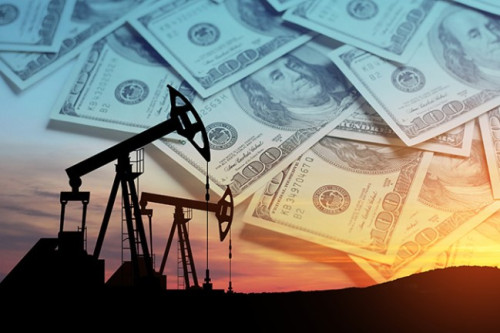
According to figures circulating in the Swiss press, 80% of Russian oil is traded in Switzerland, though Florence Schurch, secretary general of the Swiss Trading and Shipping Association, could not confirm the figure.
The exact amount is “being assessed”, she said, nonetheless confirming that the sector weighs heavily in the economy.
In employment terms, energy, grains, metals and minerals trading represents some 10,000 direct and 35,000 indirect jobs.
“Since Monday, everyone has been in a bit of a crisis cell mode,” Schurch explained. Some companies are already trying to “locate their cargoes” on the move, or “repatriate sailors stranded in the Black Sea”.
“A lot of companies have censored themselves,” she said, not least because payments are becoming “complicated” now that Russian banks are cut off from the SWIFT system and Swiss banks are reviewing their trade financing.
The Swiss-based Nord Stream 2 company has gone under after Germany halted the gas pipeline following Moscow’s invasion of Ukraine.
The bankruptcy has caused panic in the sector. Trading giant Glencore has announced it is reviewing its business in Russia while Trafigura is revisiting its stake in Vostok Oil – Rosneft’s major oil project in Siberia.
Banks, watches and tourism
Swiss banks are a popular place for wealthy Russians to stash their money. According to the Bank for International Settlements, Swiss banks’ liabilities to Russian customers amounted to US$23 billion in the third quarter of 2021.
The Swiss Bankers Association reacted to the sanctions by saying that Russia was “not a priority” market, and excluded the Swiss subsidiaries of Gazprombank and Sberbank from its ranks.
On the stock market, the Richemont group and the Swiss watch giant Swatch were also shaken by investor fears for the luxury sector.
Russia represents only about “1% of our exports”, said Jean-Daniel Pasche, head of the Federation of the Swiss Watch Industry.
But the fall of the ruble could affect watch sales and the conflict also threatens to delay the return of Russian customers who “have not come to Switzerland since the start of the pandemic”, he added.
In 2019, before the Covid-19 crisis, Russian tourists accounted for only 1.7% of hotel nights in Switzerland.
“However, it is a wealthy clientele” favouring five-star hotels, said Switzerland Tourism spokeswoman Veronique Kanel.
Some large hotels with a loyal Russian client base could therefore be “more specifically impacted”. – AFP, March 5, 2022
.jpeg)