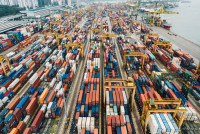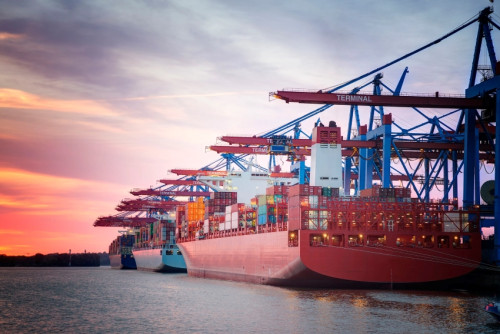

KUALA LUMPUR – The global supply chain is bracing for further delays in shipment deliveries as maritime congestion is exacerbated by China locking down major cities as part of its zero-Covid-19 policies.
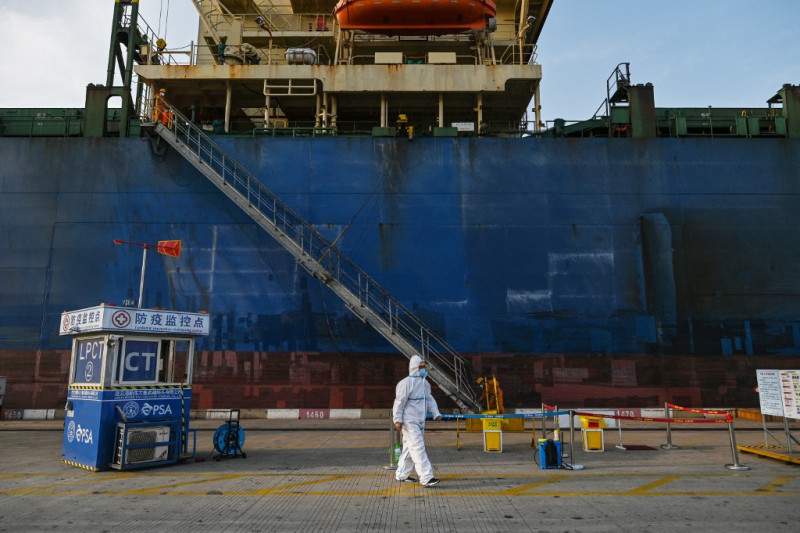
With the lockdowns of two of its largest cities – Beijing and Shanghai – maritime traffic at Chinese ports are choked, while other international ports are dealing with the ripple effects.
The number of container vessels waiting outside Chinese ports has increased by 195% since February, according to data from Windward’s Maritime AI platform.
In a report by CNN Business that cited data from Project44, shipment delays between China and major United States and European ports have quadrupled since late March, when Shanghai, which houses the world’s busiest container port, was shut down.
Shenzhen was also put under lockdown in March.
While the US port of Charleston was ranked sixth highest for import container dwell times, it topped the list for the longest export container dwell times (14.45 days) in the first quarter of 2022.
Dwell time is defined as the period from when the cargo arrives at the port to when it leaves port premises.
Kaohsiung in Taiwan and Yantian terminal at Shenzhen port both recorded 8.61 and 7.52 days of export dwell times, respectively.
Meanwhile, Manzanillo in Mexico heads the list for the longest import container dwell times (6.97 days) in the same period.
The report by Project44 also highlighted that one reason for the export backlog is that China pays ocean carriers a premium to return empty containers from the US.
“As a result, a lot of American export products are held up,” it said.
Of the world’s top 10 container ports, China is home to seven of them, which includes Shanghai, Ningbo-Zhoushan, Shenzhen and Hong Kong.
According to the latest data from S&P Global Market Intelligence, the number of vessels held up at Shanghai port increased to 384 by April 25, up 27% compared to March.

‘We’ll ride out the storm’
Economic director at the Prime Minister’s Office Shahril Hamdan said the lockdowns – be it full or partial – in at least 27 Chinese cities impacts Malaysia considering the two’s trade relations.
Speaking to The Vibes, he said the total bilateral trade between the two countries makes up one-eighth of Malaysia’s gross domestic product (GDP), making China its top trading partner.
It is not insignificant, but we will ride out the storm, helped by a diversified economy with various sources of growth and trade channels. The key point here is that it is a global issue, not a Malaysian one,” said the Umno information chief.
Malaysia’s exports to China, based on data by the Statistics Department of Malaysia, grew 12% in 2020 and 22.6% in 2021.
This raised its share of total exports to 16.2% in 2020 and 15.5% in 2021, which is up from 14.2% in 2019.
As much as Malaysia is affected, Shahril said, local companies have been identifying possible supply diversifications and plans for contingencies.
“It won’t just be Malaysia or Asean who needs to deal with this. With the intertwined nature of global supply chains having knock-on effects, China’s zero-Covid-19 policy and the Russia-Ukraine war are truly affecting world trade.
“One-fifth of the world’s global container shipping fleet is stuck in traffic.”
However, it looks like China will keep its zero-Covid-19 policy as president Xi Jinping on Thursday issued the strongest warning yet to anyone who questions it.
According to state media, it was the first time Xi has made public remarks about China’s battle against Covid-19 since public outcry over Shanghai’s “draconian” lockdown. – The Vibes, May 9, 2022