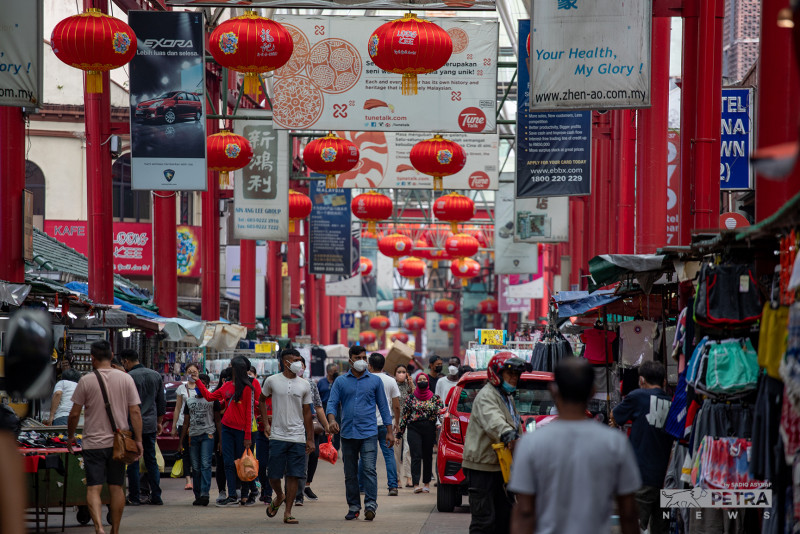
THERE is a common misconception that Malaysian English is an ‘improper’ adaptation of the English language, causing problems in communication, especially with native English speakers. In reality, it binds Malaysia’s multicultural speakers together.
Malaysian English, in whatever form – spoken or written, standard or informal – is a robust, widely used variety of English across the country. Most Malaysians, who are second-language speakers of the English language, benefit from their own brand of English. It reflects their identity and creates a sense of belonging through a sense of solidarity with fellow Malaysians.
The assumption that English with ‘proper’ conventions, such as British or American English, is the only acceptable version is short-sighted. It doesn’t take into account how language can adapt. To expect Malaysians or any non-native speakers of English to speak and write within boundaries defined by others is unrealistic.
Malaysian English, also sometimes referred to as ‘Manglish’ is a localised form of English language with nativised features, varying in meaning, sound, and structure. It is recognised as a new variety of English, similar to the adopted versions of the English language in Singapore, India, and the Philippines.
Rooted in British English, like many other Asian nations with adapted English languages after colonial times, what was once considered a ‘foreign’ language has evolved into a localised variety. It has distinct features that reflect the identity of its culturally rich and multiracial communities.
The formal version of Malaysian English is more similar to British English but demonstrates some level of nativisation, for example, through borrowing words from the local Malay, Chinese and Indian languages, such as ‘rakyat’ (citizens), ‘balik kampung’ (returning to village/hometown), ‘ang pau’ (red money packets), ‘Bumiputera’ (Malay and indigenous groups) and ‘pasar malam’ (night market).
This version is more commonly used in written texts such as newspapers, books, and articles. The appearance of these localised forms can be challenging for non-Malaysian readers. But they are increasingly being used in many instances including by multinational companies to sell products in advertisements, as well as local English radio and TV presenters who switch between standard and informal Malaysian English.
Its informal varieties are more commonly found in casual conversations, and exchanges in shops and on the street, demonstrating a unique mixture of local words, pronunciation, intonation, and the liberal use of the particle ‘lah’ or ‘la’. This form is also known as ‘rojak English’, named after the popular Malaysian dish ‘rojak’ known for its variety of ingredients.
The choice between the formal and informal forms is often situational; whether in professional settings or casually, to project a sense of Malaysian identity and develop camaraderie with fellow speakers.
Communication involving non-Malaysians or native English speakers comes with its own challenges. Miscommunication that arises in formal situations can have repercussions, including errors, misunderstanding, and not least lost job opportunities: a recurring complaint amongst local Malaysian graduates is their inability to find private-sector employment or jobs in multinational companies due to their limited command of formal English.
Despite this, Malaysia was ranked as one of the top Asian countries with high English proficiency by education company, EF’s, English Proficiency nations of 2021 – a move up from its 'moderate' rating the year before.
Over the years, the government and educators have implemented various policies to improve English language proficiency, such as the 2003 English-Malay bilingual education policy, the integration of literature in the school English language curriculum, and the use of English as a medium of instruction for science and technology courses in local universities.
The most recent is the Malaysia Education Blueprint 2013-2025, which among other things, adopts an international benchmark to ensure young Malaysians achieve English fluency that is on par with international standards. This latest attempt, as with previous policies, has met with criticism from various quarters, including teachers, due to problems in implementation.
The issue of the Malaysian language is therefore complicated and calls for a nuanced approach. Beyond national aspirations, trending ideas, entrenched culture, and political agenda, the development of language policies must take into account teachers and students’ perspectives, should be based on comprehensive feasibility research, and most importantly, suitable for the context of Malaysia and Malaysians. – The Vibes, August 21, 2022
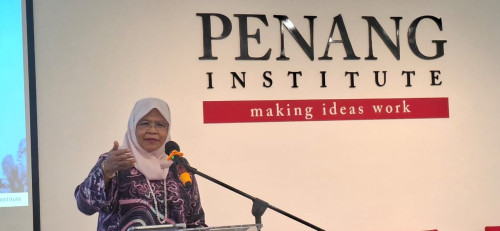
Hajar Abdul Rahim, PhD, is a professor of linguistics at the School of Humanities, Universiti Sains Malaysia, Penang.
Published under Creative Commons and in partnership with 360info.org