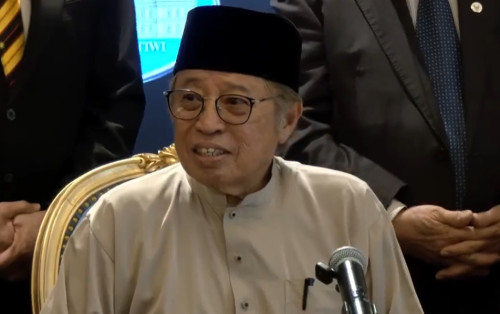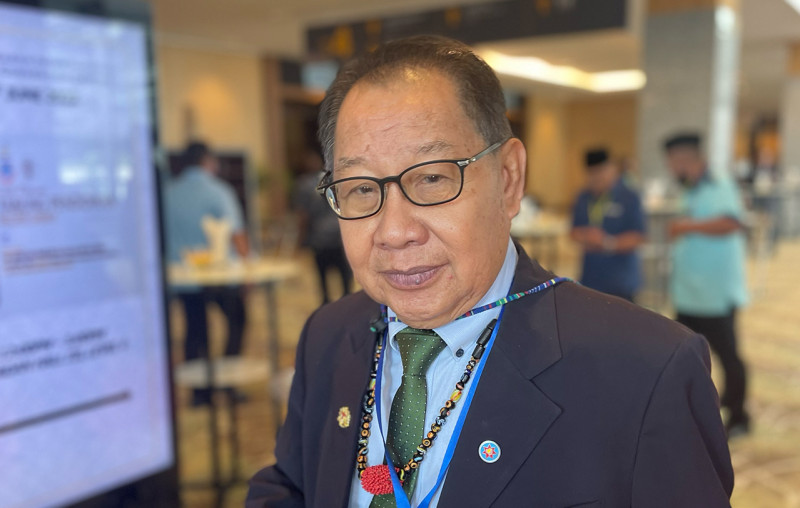
MEMORIES of Datuk Seri Jeffrey Kitingan’s confinement under the Internal Security Act still linger.
Today, at 75 years old, he still gets emotional about the things he lost during his time as a detainee at the Kamunting detention camp.
Two-and-a-half years of incarceration could do that to any man, and for Jeffrey, he still has nightmares about those who betrayed him, viewing his time in detention as his demise.
But Jeffrey managed to keep his sanity intact by writing poems and songs and even learning to forgive the man responsible for his detention 33 years ago.
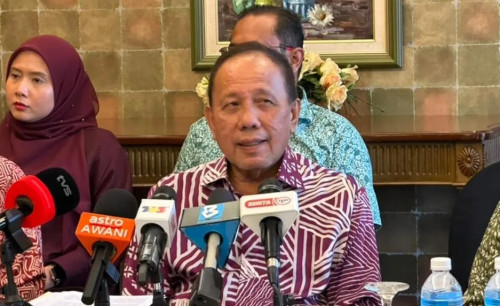
“Whenever people ask me about my experience, I get emotional. Just a few days ago, I was asked about those who betrayed me, and I couldn’t bear it and walked out (from them),” he said during a forum organised by Sabah Way Forward and KupiKupiFM to mark the 33rd anniversary of his detention under the ISA.
Jeffrey was arrested on May 13, 1991, under Section 73 of the Internal Security Act for his alleged involvement in a plot to take Sabah out of the Federation of Malaysia – an allegation he vehemently denies.
He insists there was never a plot to secede; rather, he was targeted for political persecution for questioning Kuala Lumpur’s reasons for denying Sabah’s rights as stated in the Malaysia Agreement 1963, particularly on matters related to the 20-point agreement.
Jeffrey suspected that he became a target due to the escalating tension between Kuala Lumpur and the Parti Bersatu Sabah-led Sabah government in the 1990s.
Following the party’s election victory, he said the federal government denied the state government development funds, instead choosing to channel the funds through the Federal Development Office.
His dissatisfaction led him to question the federal government’s treatment of Sabah, accusing it of not honouring the 20-point agreement and state rights.
He believed then prime minister Tun Dr Mahathir Mohamad saw him as nothing but a troublemaker and targeted him for persecution.
Jeffrey said he was already under scrutiny by the authorities such as the income tax and graft busters before his subsequent arrest.
His time in detention was not easy either as he witnessed madness in other inmates.
“I saw other detainees trying to kill themselves, climbing walls and beating their heads against them in frustration. But I told myself not to fall into that category. I told myself I should be there to learn about my own behaviour,” he said.
Following his release in January 1994, Jeffrey travelled to the Himalayas, where he was able to understand himself better, taking up yoga and immersing himself in the local culture.
He bore no grudge against former prime minister Dr Mahathir for his detention.
Instead, he forgave him, even though Mahathir branded him crazy and warned him “not to teach the people what they don’t know” in reference to the Malaysia Agreement 1963 and the 20-point agreement.
“I don’t take revenge. I don’t hold grudges. I let go. I move on. I just hope Dr Mahathir will continue to live on until the end of this fight for state rights,” he said.
Today, Jeffrey believes his perseverance in the struggle for Sabah’s rights have borne fruit as the Malaysia Agreement 1963 and the 20-point agreement have now become national concerns.
He recalled a time when he faced a mounting challenge against state leaders during the reign of Barisan Nasional in Sabah to assert the state’s rights, but now, most of them are on his side.
“But I’ve never harboured any regrets. I was ready to lay down my life for my country. In a way, I did face a kind of death, losing my freedom, my connection with family, and everything else I held dear. It brings tears to my eyes.
“But despite the hardships, I remain steadfast in my conviction. I’m grateful for the opportunity to contribute to Sabah’s cause. My hope is that future generations will carry on this struggle until we achieve our freedom,” he said. – May 14, 2024