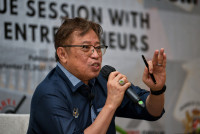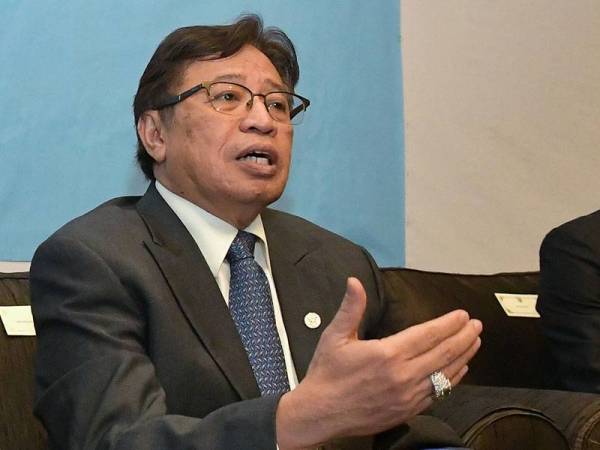
PASSENGER planes of the future could be powered by hydrogen fuel produced in Sarawak, Premier Abang Johari Openg told an energy summit in Bangkok today.
Speaking at the Future Energy Asia Exhibition and Summit 2024 , Abang Johari said Sarawak has envisioned hydrogen as a versatile and sustainable feedstock for a multitude of industries including aviation.
Abang Johari told the industry leaders that producing sustainable aviation fuel (SAF) from hydrogen looks “particularly promising”.
Sarawak is currently trialling SAF from algae.
“By harnessing the power of hydrogen in conjunction with renewable resources like algae oil, we can create a cleaner, greener alternative to conventional jet fuel, significantly reducing the carbon footprint of air travel,” he said.
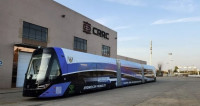
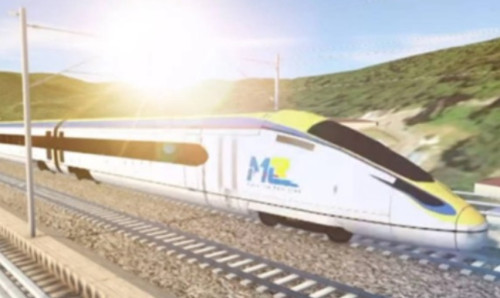
Invited to share Sarawak's journey to a sustainable green economy in line with global movements toward renewable energy and net-zero emissions, Abang Johari said the Sarawak government's hydrogen ambition extends beyond powering its public buses and upcoming autonomous rapid transit (ART) system with hydrogen fuel.
“In our pursuit of a greener future, Sarawak is leading the hydrogen economy with groundbreaking projects, positioning ourselves as global leaders in the hydrogen market.
“Hydrogen is not merely a fuel. It is a catalyst for a greener, more resilient Sarawak,” he said.
Abang Johari, now seen as a global leader leading the charge for change, told the summit that Sarawak's Green Energy Agenda started in 2017 with hydropower and that he is optimistic the state's journey to sustainable energy is not just a vision but a tangible reality.
“In 2017, the Sarawak government entrusted Sarawak Energy with leading research into green hydrogen production to decarbonise the transportation system and accelerate the state's transition to a low-carbon economy.”
On the H2 hub in Tanjung Kidurong, Bintulu, Abang Johari said the two flagship projects - H2biscus and H2ornbill - spearheaded by SEDC Energy at the Bintulu Petchem industrial park, will serve as a nucleus for hydrogen production, storage, and distribution.
He said it would also foster cutting-edge research and development, propelling Sarawak to the forefront of the hydrogen value chain.
H2Biscus is a collaboration between SEDC Energy, Sarawak Energy, LOTTE Chemical, Samsung Engineering, and Korean National Oil Company (KNOC).
This project will harness hydropower and natural gas to produce green and blue hydrogen.
7,000 tonnes of green hydrogen will be dedicated to Sarawak's domestic needs with the remaining hydrogen converted into 1.7 million tonnes of blue and green ammonia and green methanol for export, primarily to South Korea.
H2ornbill, on the other hand, is a joint venture between SEDC Energy, Japan's ENEOS Corporation, and Sumitomo Corporation Group.
This project will harness hydropower to produce 90,000 tonnes of green hydrogen annually with 2,000 tonnes allocated for local consumption.
The rest would be converted into methylcyclohexane (MCH), a liquid hydrogen carrier, for export to Japan. – May 17, 2024