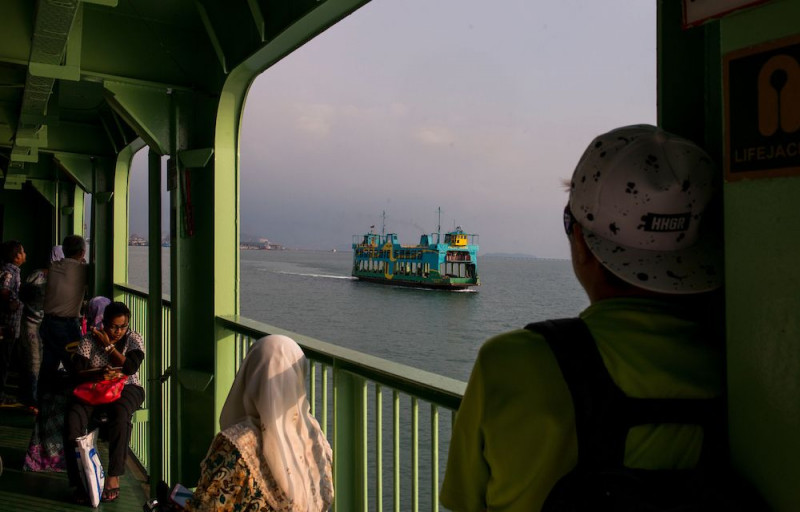

AS Penang marks 130 years of cross-channel ferry services, the decision to melt down four iconic double-decker ferries and to dismantle the bigger parts for the scrapyard did not sit well with some parties.
They said the Penang Port Commission (PPC) erred in how it managed the decommissioning of the ferries, which have been left moored inshore since 2020.
Yesterday, the “Pulau Kapas” ferry sank at the Butterworth Wharf after corrosion had set in since it was “parked” at the wharf from 2018.
“Pulau Kapas” was one of the four ferries that were decommissioned in 2020. The other ferries were “Pulau Undan”, “Pulau Paya”, and Pulau Talang Talang”.
Following the incident, the PPC decided to dispose of these ferries immediately as further repair works could not be carried out due to serious structural rot.
A maritime industry specialist said that the ferries could have been placed on the dry docks immediately after they were decommissioned instead of moored inshore.
It would have reduced the erosion process and given more time for the authorities to find the right takers for the ferries, said the specialist, who declined to be identified.
“Anytime a vessel is put into the water, there must be maintenance done. I doubt if this was done in the case of these ferries. They were just put out to waste,” said the specialist.
The pump must be constantly working but in the “Pulau Kapas” ferry case, it was clear that the authorities had allowed seawater to seep in and before long, it tilted and sank.
The specialist said owners of any vessel need to be mindful of how to handle aging boats and ships, adding that the lengthy time to arrive at a decision also caused the vessel to suffer erosion until it was beyond repair and no longer seaworthy.
Former PPC chairman Jeffrey Chew Gim Eam, meanwhile, said the PPC did reach out to the private sector to refurnish and maintain the decommissioned ferries but there were no takers.
Even those who were initially keen could not bear the high costs, he added.
He said the PPC has valid reasons to dispose of the ferries although it is disappointing because of the iconic stature that those vessels enjoyed in Penang.
Chew said that out of the six remaining ferries, two were salvaged – one was bought by the developer Ideal Group, which has turned it into a floating restaurant off the Queens Waterfront mix-development site off Queensbay Mall.
Another was purchased by a Bumiputera company with plans to turn it into a floating museum.
Chew said the PPC gave ample opportunity for the private sector to take the lead but nobody really put forward a comprehensive proposal to salvage the remaining four ferries in 2018.
Iconic ferries
Tropical Charters Sdn Bhd owner Issac Alexander said that he advanced a proposal to the PPC to lease the ferries but he wanted them placed in Langkawi as a tourist attraction.
“It was rejected because the ferries are iconic and exclusive to Penang,” he said.
Former PKR deputy secretary-general S. Raveentharan said that it was unfortunate that the ferries had to meet this fate.
He said more effort could have gone into salvaging them if there was conviction that they were national or state treasures.
“They could have relocated the ferries to the dry docks and turned them into museums or inland attractions.
“Or at least offer incentives to the private sector to invest in them with the return of investments coming from tourism,” said Raveentharan.
It could be placed at a figurehead for the proposed upgrading of the state museum just like the aged funicular trains were for Penang Hill, he proposed.
The cross-channel double-decker ferries had operated since 1925 but the service began in 1894 to meet the demand for cross-channel exchanges.
In 1894, it was mostly confined to a pedestrian cross-channel crossing but by 1925, it was refitted to become one which moved vehicles and cargo.
But some 100 years later in 2018, the service was scrapped as the operator, Penang Port Sdn Bhd, suffered annual losses of close to a million ringgit after the ferries became an afterthought with the opening of the two bridges.
Last year, catamaran-designed ferries entered service to replace the old double-decker fleet, but they only transport pedestrians. – July 25, 2024.



.jpeg)