
THE NATIONAL Kenaf and Tobacco Board (LKTN) hopes to showcase kenaf to the private sector as a sustainable green and a viable alternative to tobacco during its national conference in Cyberjaya tomorrow on the highly diversified plant.
Since it was introduced as an alternative plant to tobacco in 2000, the board has been actively promoting its commercial benefits to firstly the tobacco growers and secondly to the private sector to take up its potential.
Kenaf has stepped up to replace tobacco as the latter is no longer promoted as a commercial cash crop because it is seen as a danger to public health.
"It is a multi-million industry with the potential for tremendous growth if we can convince the masses about its benefits, especially with the shift towards sustainability and food security, said the board's chairperson Datuk Wan Abdul Rahim Wan Abdullah.
The former Kelantan legislative speaker, said that now is an opportune time to be involved in the kenaf's upstream and downstream industries after over a decade of fine-tuning its development policies as well as research among the local learning institutions.
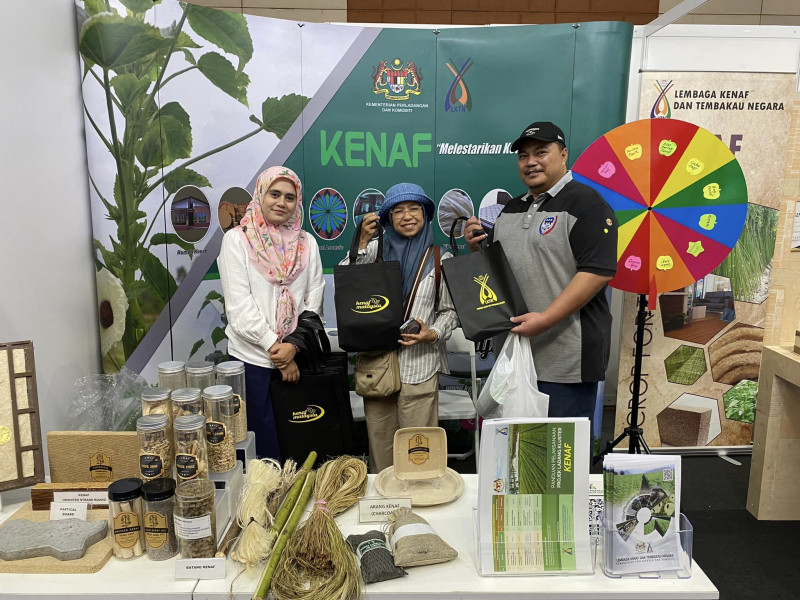
The board is ready to take kenaf to the next level of incorporating sustainable practices while commercialising its end products; among which, are fibre for textile, wood furnishings and ingredients for pet food.
Latest research has also shown that the plant, when harnessed through biotechnology, can produce a pharmaceutical product for diet slimming.
It will be launched at the national conference, Wan Rahim said.
The board also wants the adoption of kenaf to be done in phases and in a holistic manner so it is sustainable and can boost the country's agriculture sector, particularly as a plantation commodity, Wan Rahim said.
Kenaf as a plant is widely grown in Perlis, Kedah, Kelantan, Terengganu and Pahang with big plans to expand into Sabah and Sarawak soon.
The conference will also give room for the outcomes from the research and development (R/D) to be discussed.
The R/D has focused on the production of innovative products as well as value-added items to meet the market demands.
Wan Rahim also wants recognition to be accorded to the local learning institutions, who are active in R&D and, who have helped the private sector to commercialise it.
The growing and cultivation of kenaf is now made in line with the national agro-commodity policy and the global sustainable development goals, he said.
As for the challenges ahead, Wan Rahim acknowledged that generating awareness about the plant is difficult, as it is a relatively new plant to be adopted in the country.
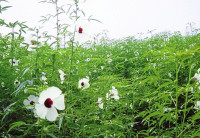
Kenaf originated from Africa but it can be grown easily and widely in the country due to the harsh tropical climate, which its roots thrive on.
Kenaf was historically used as a cordage crop (rope, twine, and sackcloth) and its commercial uses evolved to other different uses such as absorbents, paper products, building materials and animal feed.
It consists of four important useful components; seeds, stems, leaves, and flowers.
Wan Rahim said the plant has a high demand although it is not cultivated as effectively as it should due to the lack of proper land management by the farmers.
Farmers tend to grow other plants in view of the push for food security but Wan Rahim stressed that due to its flexibility, kenaf can be grown alongside other food items such as padi.
He said much fertile land is being under-utilised despite the realisation that kenaf has much potential to tap.
He said kenaf should be grown through the cluster approach at plantations, which are already growing other crops such as oil palm and rubber. - September 18, 2024.



.jpg)