NATURAL gas plays a dual role within energy transition providing a cleaner alternative to fuel growing power needs and filling gaps created by the intermittent nature of renewable energy sources. This versatility will sustain global demand for gas well into the 2050s.
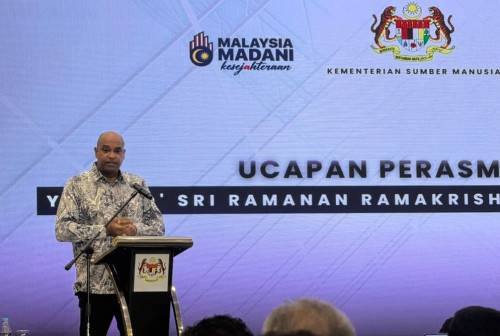
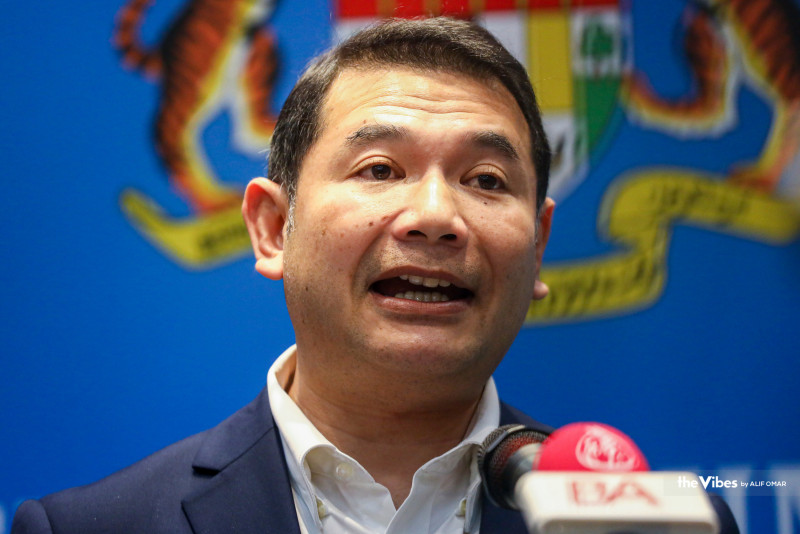
Speaking at the Malaysia Gas Symposium today, Economy Minister Datuk Seri Rafizi Ramli said: “In Malaysia, natural gas is also central to energy projections, with its contribution expected to grow to 56% by 2050, far outstripping the role of renewables.
“While some may consider natural gas a transitional fuel, the data suggests otherwise. For Malaysia and many developing nations, natural gas appears to be a destination fuel.”
The minister emphasised that the outlook for the global gas industry must be viewed through the lens of emerging economies, especially in light of the significant coal-to-gas transitions being undertaken by China and India, alongside efforts to scale renewable energy capacity.
This diversification will inevitably lead to increased reliance on LNG imports, with Malaysia, now the 5th largest LNG exporter, projected to become a net importer within the next 10 to 20 years. This shift is necessary as demand grows faster than domestic supply can meet.
Given this context, the minister outlined that gas liberalisation is no longer just a policy choice, but a necessity. The first steps toward this were taken in 2016 through the Gas Supply Amendment Act, which introduced a third-party access system to encourage competition and increase the number of gas suppliers, ultimately strengthening gas security.
However, the slow uptake of LNG shipments by third parties—just two shipments as of 2023—indicates barriers to entry remain. The minister called for a review of regulations, particularly price controls in the domestic gas market, to make participation in the gas-to-power sector more attractive, Rafizi said.
In response to these challenges, the Ministry of Economy is set to launch the Natural Gas Roadmap this year. The roadmap aims to address key regulatory barriers, demonstrate how they will be tackled, and highlight opportunities for building a robust gas infrastructure that will secure Malaysia's long-term energy supply.
This roadmap will also foster investment in the sector, contributing to Malaysia's RM52 billion natural gas GDP. By expanding regasification terminals and pipelines, the government aims to create more technical jobs and ensure the long-term socioeconomic impact of the industry.
The geopolitical volatility of energy markets, the minister noted, underscores the importance of these efforts. Unlike crude oil, the global gas market is fragmented, with prices subject to regional fluctuations, as demonstrated in 2022.
“As ASEAN’s chair, Malaysia must be aware that the region is projected to become a net importer of LNG within two years, presenting an energy risk that will require contingency plans from all member states,” added Rafizi.
The Minister expressed gratitude to the Malaysia Gas Association (MGA) for inviting him to deliver the Ministerial Address at the 4th edition of the Gas Symposium under the theme “Fuelling a Sustainable Gas Industry’s Transition,” an important platform for discussing the future of the gas industry.
“However, the country faces a pressing issue in achieving this vision. Rapidly declining natural gas reserves, particularly in Peninsular Malaysia and Sabah, are threatening energy security. While Sarawak maintains a stable and high supply of gas, this mismatch between demand and supply calls for a shift in strategy—one that diversifies sources of natural gas.
Despite this, the minister believes Malaysia is well-positioned to emerge as the de facto natural gas hub for ASEAN. The country’s strategic location within the region, mature infrastructure, and a skilled workforce make it an ideal candidate for this role. Furthermore, Malaysia’s neutrality on the global stage makes it a trustworthy partner for long-term energy commitments, Rafizi said.
With the launch of the Natural Gas Roadmap, Malaysia is poised to become the anchor of an ASEAN natural gas hub, unlocking the full potential of the country’s gas ecosystem and securing a key role in the region’s energy future. – February 13, 2025