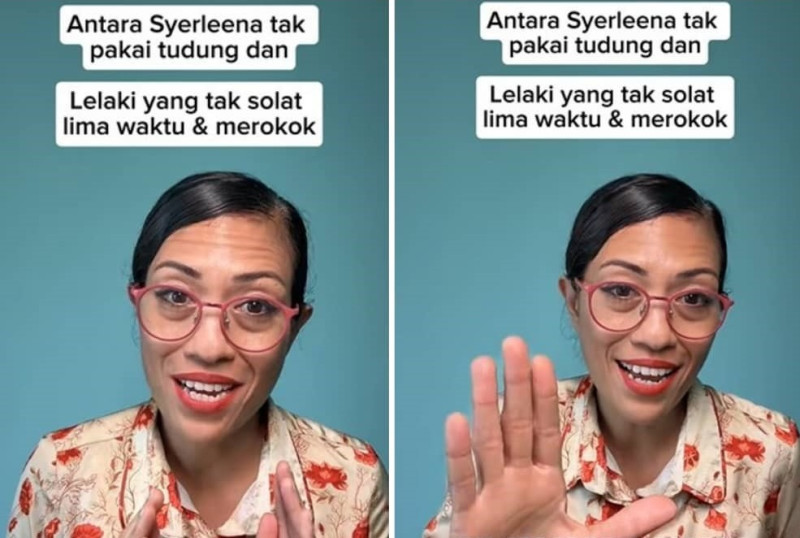
IN a pointed response to male critics who mocked her for not wearing the ‘tudung,’ DAP lawmaker Syerleena Rashid has called on them to first focus on their own religious practices, particularly their prayer times, rather than dictating how others should dress.
The Bukit Bendera MP, known for being one of the few Muslim women parliamentarians who does not wear the headscarf, expressed her frustration with the hypocrisy of those who judge her personal choices while neglecting their own religious duties.
Addressing the issue through a popular TikTok video, Focus Malaysia cited Syerleena taking to task those who feel entitled to criticize her for not conforming to the conservative standard of modesty, which includes wearing the ‘tudung’ to cover the hair.
The lawmaker pointed out that in a self-proclaimed moderate Muslim nation like Malaysia, such matters should be considered personal choices rather than obligations imposed by others.
According to Syerleena, many of her male critics, who often argue that women should wear the ‘tudung,’ are often not the paragons of religious virtue that they claim to be.
“It’s hypocritical to lecture me about my choice not to wear the ‘tudung’ when these same critics are lounging around, smoking instead of heading to the mosque for Friday prayers,” she remarked.
Syerleena also questioned the sincerity of her critics’ commitment to Islamic practices. “Do these men even pray five times a day as required by Islam?” she asked.
The 45-year-old MP, who studied at Convent Green Lane in Penang, then pointed out the inconsistency in their religious observance, highlighting that smoking is haram (forbidden) in Islam.
She reminded her critics that the fatwa (religious edict) on tobacco consumption exists, but many conveniently ignore it.
The DAP lawmaker further challenged her detractors to engage in constructive criticism, asking them to refrain from making lewd or offensive remarks about her personal decisions. "If you want to comment on my stance, do so without resorting to unsavoury language or personal attacks," she emphasised.
Strong support from netizens
Syerleena’s comments resonated with many social media users who supported her stance.
One TikTok user pointed out that platforms like TikTok often become a refuge for people with holier-than-thou attitudes, while others reminded her critics that whether it is smoking, skipping prayers, or not wearing the ‘tudung,’ everyone will ultimately be accountable to Allah.
Some supporters also pointed out the double standards in society, with one noting that high-profile women like Datin Seri Rosmah Mansor, the former First Lady of Malaysia, and Tun Dr Siti Hasmah Mohamad Ali, the wife of former Prime Minister Tun Dr Mahathir Mohamad, also did not wear the ‘tudung.’
These women, the commenter said, should not be subjected to bias or pressure to conform to societal expectations.
One user made a pertinent observation that everyone has the right to make their own decisions regarding their attire and lifestyle.
"Individuals should have the freedom to decide what is best for themselves without being judged," they stated.
The issue of wearing the ‘tudung’ has also been raised by prominent figures like lawyer and social activist Siti Kassim, who has spoken out about the rising Islamisation in Malaysia, particularly in public institutions such as schools.
The growing influence of conservative views, she argued, threatens the freedom of individuals to make personal choices.
Syerleena’s comments also shed light on a broader societal issue—the fine line between offering "friendly advice" and issuing harsh condemnation.
As highlighted in her TikTok video, the latter often manifests in the form of abusive language, which should not be normalised in any civil society.
"Forceful coercion has no place in our society. Respect for individual choices must be upheld, regardless of how uncomfortable it may make the conservative community feel," she concluded.
Her strong stance against personal attacks and her advocacy for individual freedom of choice have sparked a wider conversation about the need for respect and understanding in a diverse society.– March 13, 2025