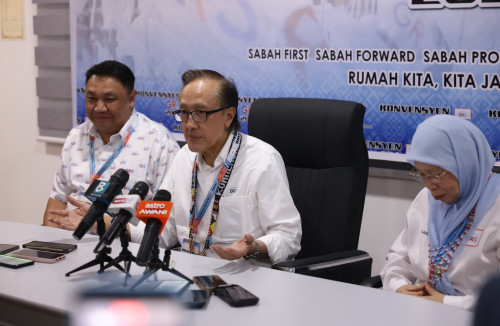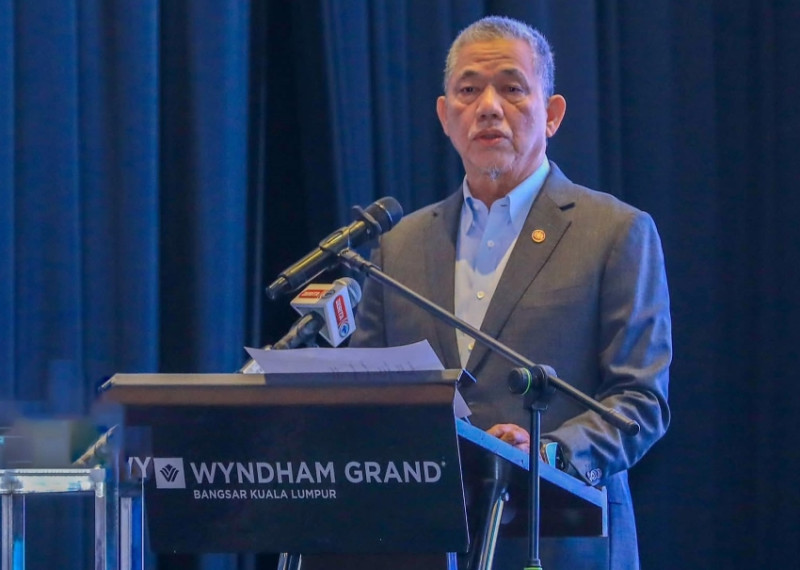
MALAYSIA has unveiled a bold blueprint to become a global leader in science, technology and innovation with the launch of the National Innovation and Commercialisation Expo (NICE) 2025, officiated today by Deputy Prime Minister II Datuk Sri Fadillah Yusof at the World Trade Centre, Kuala Lumpur.
In his opening remarks, the Deputy Prime Minister emphasised the central role of innovation in economic transformation and Malaysia’s strategic ambition to reduce foreign technology dependence through home-grown research and development.
“The only way for our society, economy, and enterprises to continue advancing in this era is to innovate and adapt to change,” he said. “Innovation and embracing change are vital in economic prosperity.”
He described NICE 2025 as “a major Government initiative that celebrates achievements in Malaysia’s RDCI ecosystem, in line with our MADANI aspirations rooted in creativity and human capital empowerment.” The event carries the theme ‘Innovation. Growth. Global Impact.’
Organised by the Ministry of Science, Technology and Innovation (MOSTI), NICE 2025 serves as a national platform integrating four flagship programmes: the Malaysia Commercialisation Year (MCY), FundConnect Convention, I-Nation Global Summit, and BioXCeed 2025.
Twelve agreements and memoranda of understanding worth over RM800 million were signed during the event, alongside the launch of 13 innovative products in the agrotech, biotech, and digital sectors.
Malaysia Eyes Status as High-Income Tech Nation
Fadillah reiterated the Government’s target to increase gross expenditure on R&D (GERD) to 2.5 per cent of GDP by 2030, driven by stronger public-private partnerships.
Malaysia’s GERD rose from 0.95 per cent in 2020 to 1.01 per cent in 2022, with private sector investment more than doubling from RM4.61 billion to RM9.33 billion. The country also climbed three places in the Global Innovation Index 2024, reaching 33rd position out of 133 economies.
“I am confident Malaysia’s global standing will continue to rise as we strengthen our culture of innovation and collaboration,” said the Deputy Prime Minister.
Strengthening STI for Economic Resilience
Under the 13th Malaysia Plan (RMKe-13), the Government is committed to enhancing the RDCIE framework – Research, Development, Commercialisation, Innovation, and Economy – to boost economic competitiveness and scientific leadership.
“The ecosystem must be dynamic to nurture a research-driven entrepreneurial culture,” Fadillah noted. He added that the Government is investing in mission-oriented research and international-level projects led by local scientists and companies.
Key initiatives include the Pelan Hala Tuju Ekosistem Startup Malaysia (SUPER) 2021–2030, which aims to elevate Malaysia into the top 20 global start-up ecosystems, and Cradle Fund’s various support schemes for local tech-based SMEs and start-ups.
Malaysia’s start-up ecosystem, now valued at USD47 billion, is projected to reach USD90 billion by 2030. According to the Global Startup Ecosystem Report 2025, Kuala Lumpur has risen to 18th place among emerging start-up hubs worldwide.
National Push for Technological Sovereignty
The Deputy Prime Minister highlighted the urgency of building national resilience through technological independence.
The National Technology Sovereignty Framework (NTSF), spearheaded by MOSTI, is designed to direct investment and policy towards critical sectors such as artificial intelligence, green technology, semiconductors, and aerospace.
“The NTSF aims to reduce dependency on foreign technologies, ensuring national security and competitiveness in the global high-tech economy,” Fadillah said.
Strengthening Research Governance and Commercial Returns
Efforts are also underway to modernise research governance under the new RDICE roadmap. The National Research Management Unit, under the Ministry of Economy, will be expanded to streamline planning, execution, and monitoring of national research programmes.
To unlock greater economic value from research, the Government will also introduce mechanisms to recognise intellectual property as intangible assets eligible for funding. Researchers will be empowered to retain IP rights derived from publicly funded projects, and industry-university collaborations will be strengthened through sponsored laboratories.
Among those already underway are partnerships such as Western Digital with Universiti Sains Malaysia, Agilent Technologies with Monash University Malaysia, and Huawei with the University of Malaya.
Funding and Forward Momentum
Recognising the critical role of sustainable financing, the Government has allocated RM350 million under the PEMACU Fund in the 12th Malaysia Plan to support experimental development research, with a target of channelling at least 50 per cent of national R&D investment into this phase.
As of August 2025, 158 high-impact research projects had received RM331 million in support under this scheme.
To further diversify sources, the Malaysia Science Endowment (MSE) was established to tap into alternative funding from international donors, industry grants, philanthropists, angel investors, and waqf contributions.
“Malaysia’s clear ambition to become a regional hub for innovation and technology must be anchored in a strong, inclusive ecosystem of support, funding, governance and commercialisation,” said Fadillah.
Shifting Mindsets and Building a Creator Nation
In closing, the Deputy Prime Minister quoted German philosopher Martin Heidegger: “Everywhere we remain unfree and chained to technology, whether we passionately affirm or deny it. But true reflection on technology opens a free relationship to it.”
He said the remark serves as a powerful reminder that Malaysia must transition from being a consumer of technology to a global producer and exporter.
“With the collective effort of government, academia, industry and the rakyat, Malaysia is well-positioned to become a regional innovation hub,” he declared. - October 6, 2025