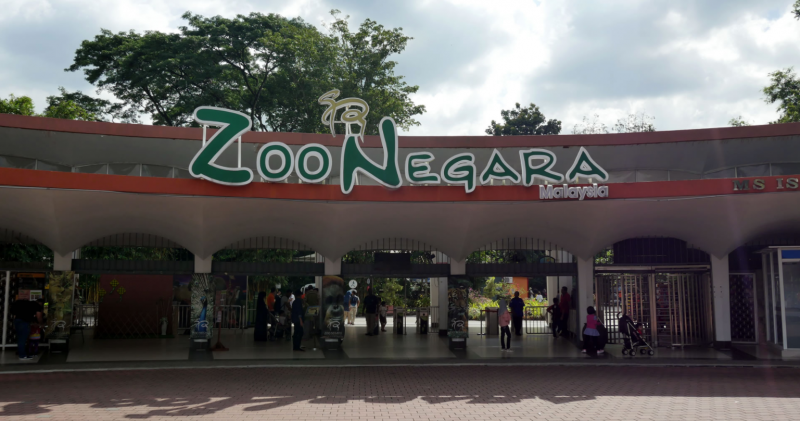
CONTROVERSY has erupted following the sale of a hillside parcel of land adjacent to Zoo Negara, long unused since 1963, to meet operational costs, just as official zoning maps now suggest it is designated for commercial development.
Residents of Taman Melawati, whose homes border the zoo, say the recently gazetted Local Plan by the Ampang Jaya Municipal Council shows the land has been reclassified for commercial use.
An NGO coalition is demanding a full explanation from the Selangor state government and plans to hold a press conference tomorrow to present the chronology and possible environmental and community impacts — including risks of slope failure and flooding.
According to Zoo Negara Deputy President Datuk Rosly Lana, the land in question had never been utilised. During the height of the Covid‑19 pandemic, he said, the zoo was left with only RM1 million in reserves but daily feeding costs for its animals ranged between RM1.3 million and RM1.5 million.
With no visitor revenue, the zoo claims to have had no choice but to sell that idle land.
“When Covid struck, the council decided to sell that land to get funds to feed the animals, pay staff salaries and maintain operations,” Rosly said, acknowledging that the decision was made under duress.
He added that the land was unsuitable for zoo use due to its hillside terrain and susceptibility to erosion, making development approvals difficult.
Rosly insists the proceeds from the sale were locked into a fixed deposit and remain just sufficient for day‑to‑day operations, while new upgrades rely on public donations and a recent RM11 million allocation from the Prime Minister.
He explained that the zoo plans to prioritise three areas in future development: animal welfare, visitor experience, and species conservation.
Zoo Negara also aims to broaden its educational programmes and forge government‑to‑government partnerships to bring in rare species like birds-of-paradise and Komodo dragons. Meanwhile, the zoo is improving existing exhibits—including deer and tiger enclosures—and seeking to expand via aquariums, although those plans remain in the negotiating stage.
As tensions mount over the land’s sale and classification, the zoo’s management maintains its commitment to evolving into a world‑class centre for conservation, education and recreation. - October 14, 2025