MALAYSIA has called on ASEAN to embed good regulatory practices (GRP) across all levels of governance, as the ASEAN-OECD Good Regulatory Practice Network (GRPN) marks its tenth anniversary since being established in Kuala Lumpur in 2015.
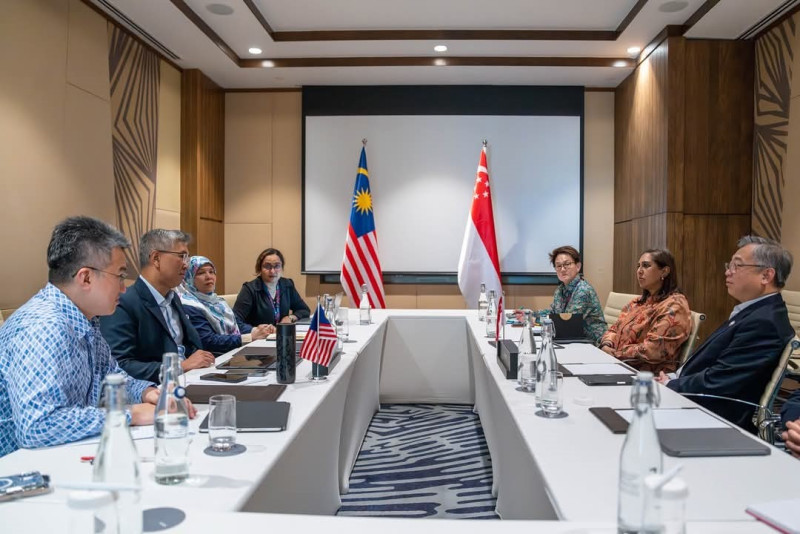
Speaking at the 10th Meeting of the ASEAN-OECD GRPN, Minister of Investment, Trade and Industry, Tengku Zafrul Abdul Aziz, urged regional policymakers to shift from policy discussions to implementation, warning that regulation must keep pace with the fast-changing technological and trade environment.
“GRP is not just a technical exercise. It is the foundation of trust, competitiveness, and sustainable growth,” he said. “Success is not about how many regulations we make, but how many lives we improve through them.”
The GRPN, launched with just 40 participants a decade ago, now engages more than 200 policymakers across ASEAN and the OECD. Tengku Zafrul credited the network’s expansion to its practical impact and increasing relevance in shaping ASEAN’s regulatory environment.
“Today, we gather to celebrate a belief that has taken strong root – that improved regulations lead to better lives. GRPN is now a key anchor for ASEAN–OECD cooperation on regulatory reform,” he said.
Among the network’s achievements are the ASEAN–Canada Free Trade Agreement, the first ASEAN multilateral deal to include a dedicated GRP chapter, the 2018 ASEAN GRP Core Principles, and the 2022 ASEAN Handbook on GRP.
Malaysia’s domestic experience was cited as a case study in regulatory modernisation. Tengku Zafrul highlighted the ILTIZAM Act 2025 as a pioneering law in the region, institutionalising GRP through mandatory three-year reviews of existing regulations, a “one-in, one-out” rule for new laws, and government-wide regulatory ratings linked to parliamentary oversight.
He reported that Malaysia has implemented over 1,000 regulatory improvement projects since 2022, saving RM1.1 billion in compliance costs. Under the New Industrial Master Plan 2030 (NIMP2030), GRP initiatives helped raise manufacturing GDP by RM3.5 billion, created 27,000 new jobs, and lifted median manufacturing wages by more than 25 per cent compared to 2021 levels.
These gains contributed to Malaysia’s rise to 23rd place in the 2025 World Competitiveness Ranking, its highest ever.
Looking forward, Tengku Zafrul proposed three strategic directions for GRP in ASEAN’s next phase: using regulatory reform as a tool for regional integration; embedding GRP into the ASEAN Community Vision 2045; and mainstreaming GRP in national governance to ensure that every regulation serves the public interest and long-term productivity.
He also stressed the urgency of adapting regulatory systems to match rapid technological shifts.
“Emerging technologies – artificial intelligence, quantum computing, robotics and the Internet of Things – are transforming trade and investment faster than regulation can keep up. This is why ASEAN’s cooperation with the OECD has never been more valuable,” he said.
Calling for an inclusive platform for reform, he added: “Let us ensure GRPN remains a living platform – not just for regulators, but also businesses, academia and civil society.”
Reaffirming Malaysia’s commitment to the 2022 ASEAN-OECD Memorandum of Understanding, Tengku Zafrul concluded: “In line with today’s theme, ‘From Policy to Impact’, let’s ensure that regulatory reform translates into real change for our people.” - October 15, 2025