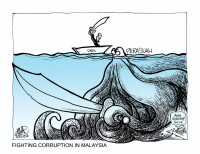
EFFORTS to combat corruption must be carried out through lawful and ethical channels, with formal reports to the Malaysian Anti-Corruption Commission (MACC) being the most appropriate course of action to ensure investigations are conducted transparently and fairly.
This was stressed by Dr Geshina Ayu Mat Saat when commenting on the controversy surrounding the public disclosure of personal and confidential information allegedly protected under the Official Secrets Act (OSA), linked to claims of a corruption cartel within the Malaysian Armed Forces (ATM).
According to the criminologist, open disclosure through social media without adherence to legal procedures not only risks undermining ongoing or potential investigations but may also infringe upon individual rights and create public confusion.
“While efforts to expose corruption in the public interest should be supported, methods that disregard legal guidelines can have serious consequences for multiple parties, including individuals who may not be involved or whose guilt has yet to be proven,” said the academic from Universiti Sains Malaysia.
She explained that the most appropriate initial step is to submit a written report to the MACC and allow the authorities to conduct investigations in accordance with established procedures.
“Whether an investigation proceeds swiftly or takes time depends on the priority and severity of the case reported,” she added.
From a criminological perspective, Dr Geshina noted that the disclosure of confidential information is often driven by various factors, including political or power-related motives aimed at discrediting certain parties or gaining influence.
She added that economic incentives—such as the sale of sensitive information to third parties—as well as ideological motivations, where individuals believe they are acting in the public interest, may also influence such actions.
“However, these actions can have serious social consequences, including eroding public trust in institutions and increasing the risk of secondary crimes such as fraud, intimidation and the misuse of personal data,” she said.
From a psychological standpoint, Dr Geshina explained that individuals who disclose information may be motivated by a sense of moral responsibility as whistleblowers.
At the same time, she acknowledged that ego-driven or narcissistic motivations may also be present, including the desire to be recognised as a truth exposer or an agent of change.
“Emotional pressures such as anger, frustration and dissatisfaction with an organisation can further drive impulsive actions,” she said.
She also cautioned that disclosures made without legal protection may have serious psychological consequences for the individuals involved, including prolonged anxiety, paranoia, internal conflict between moral values and legal compliance, as well as trauma resulting from threats, job loss or social isolation.
In this regard, Dr Geshina emphasised that the true motives and consequences of such disclosures should not be judged broadly or used to label any party without a thorough investigation.
She further underscored the fundamental principle of justice that every individual must be presumed innocent until proven guilty through a legitimate legal process.
“By adhering to official channels and legal principles, anti-corruption efforts can be more effective while preserving the integrity of the justice system and safeguarding the rights of all parties involved,” she said. – January 22, 2026