THE Federal work-from-home (WFH) policy has entered a more tightly controlled phase, with the government placing strong emphasis on monitoring and verifying the presence of civil servants during remote working hours, even as the flexible arrangement is expanded nationwide.
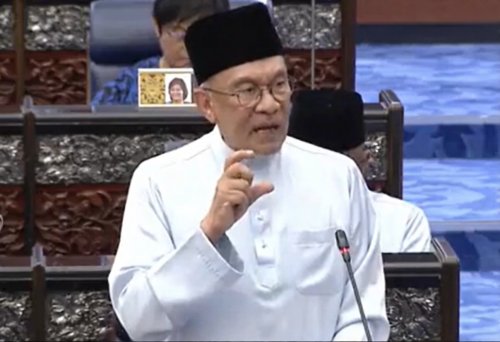
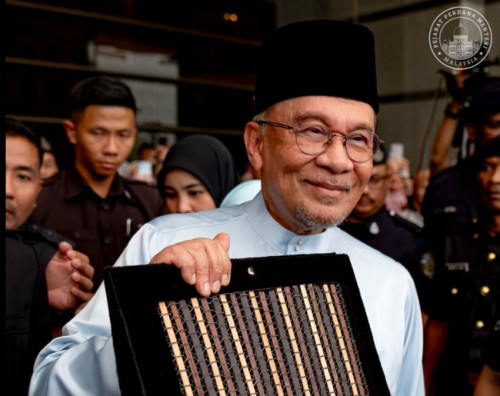
Prime Minister Datuk Seri Anwar Ibrahim has instructed Chief Secretary to the Government Tan Sri Shamsul Azri Abu Bakar to closely oversee implementation, with a focus on governance and discipline to ensure productivity is not compromised.
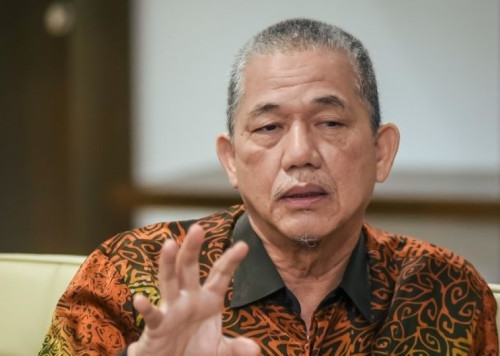
Madani Government spokesperson Datuk Fahmi Fadzil said the directive, issued at a Cabinet meeting on Wednesday, includes mechanisms to confirm that officers working remotely are actively on duty throughout designated hours.
“However, government service delivery to the public, particularly counter services, will continue to operate as usual,” he said at a post-meeting press conference.
The policy, which took effect nationwide this week, involves approximately 200,000 federal civil servants, particularly those based in Putrajaya, Kuala Lumpur and state capitals who live more than eight kilometres from their workplaces.
It forms part of a broader response to the global energy crisis linked to ongoing conflict in the Middle East.
While the government maintains that enhanced monitoring is necessary to balance flexibility with service efficiency, the measures have sparked debate among workers over the trade-off between accountability and trust.
Among civil servants, concerns have emerged over the implementation of hourly check-ins used to verify attendance.
“It’s troublesome because we have to check in every hour. Today, I heard there were system glitches and some locations could not be detected but I try to log in and record my login by taking screenshots as proof.
“Check-ins are quite disruptive when you’re in the middle of work, you have to set an alarm just to check in. Sometimes, you’re so focused that you don’t realise the time, and suddenly you have to stop to check in,” a human resources officer who identified herself as Neesa told The Star.
She argued that such requirements do little to enhance productivity and instead create additional administrative burdens.
“Even in the office, we manage our own time. There are moments when you step away to the pantry or attend to other matters.
“Now, you must always have your phone at hand. It’s as if we are not trusted, even after working for years,” she said.
Neesa added that a hybrid arrangement of three days working from home is sufficient, noting that certain tasks still require physical presence.
“If we bring files home, there’s a risk they could be misplaced. So, I will settle office-based work on Mondays and Fridays, and use the other three days to complete tasks from home.”
Another worker, who wanted to be known as Sarah, from Cheras and commutes to central Kuala Lumpur, described the arrangement as a mixed experience.
“There are the pros and cons of this WFH. Yes, I can avoid the morning traffic but the workload is so big that I had no time to take a break. I have yet to have lunch,” the 29-year-old said.
She added that she is relieved to have only one day of remote work each week.
Hamdan, 32, who travels between Petaling Jaya and Kuala Lumpur for work, also criticised the hourly verification system.
“There are meetings that can go on for hours but I have to excuse myself to check in. Why are we disrupting work just to do online check-ins?
“Malaysians tend to somewhat abuse the freedom of work from home and turning it into literally working from anywhere. That is an abuse of this privilege,” he said.
Despite such concerns, the government maintains that the verification mechanism is essential to reinforce accountability within an increasingly flexible public sector work model.
At the same time, authorities have encouraged private sector employers to adopt similar arrangements where appropriate, signalling a broader shift towards adaptive working practices while retaining strict oversight of implementation integrity. - April 16, 2026