MALAYSIA’S reform agenda under the MADANI framework is yielding gradual economic improvements, yet public confidence remains uneven as households grapple with persistent cost pressures and a reform pace that some view as inconsistent, according to an academic assessment.
International Islamic University Malaysia associate professor Syaza Shukri said the country’s deeply rooted political divisions continue to shape how citizens interpret government performance, often overriding the substance of policy outcomes.
“In Malaysia, almost everything is viewed through a political lens,” she said, noting that even necessary reforms can provoke sharply divided reactions.
Her analysis suggests that while fiscal measures such as targeted subsidy rationalisation are broadly understood as essential for long-term sustainability, they are frequently resisted due to their immediate financial impact.
“People understand the rationale, but they feel the immediate loss more than the long-term gain.
“It becomes an issue of perception, especially when government revenue growth does not directly translate into improved personal income,” she told The Vibes.com today.
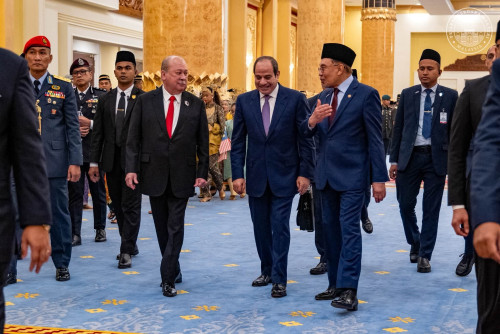
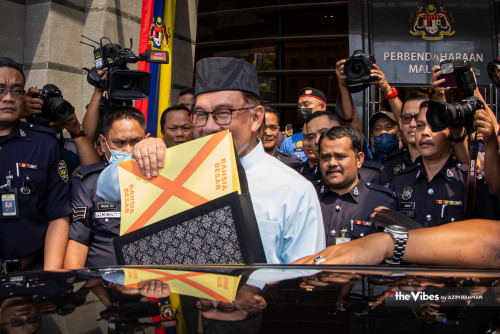
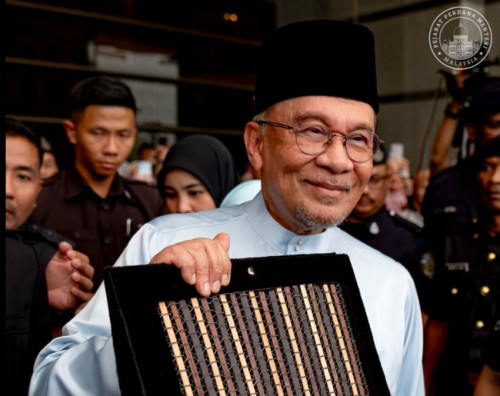
Since taking office, Prime Minister Datuk Seri Anwar Ibrahim has prioritised fiscal discipline, macroeconomic stability and institutional reform as core pillars of his administration.
However, lingering inflationary pressures and subdued wage growth have limited the visibility of these gains at the household level.
This disconnect has fuelled criticism in some quarters that the government’s policies lean towards business interests, despite the continuation of social assistance programmes.
The academic also pointed to recurring comparisons between Anwar and former prime minister Datuk Seri Najib Razak, particularly in leadership style and economic approach.
Syaza argued that such comparisons reflect differing priorities rather than direct measures of performance.
While Najib’s tenure was associated with large-scale infrastructure expansion and cash transfer initiatives such as BR1M, the current administration has focused more on fiscal consolidation and strengthening governance frameworks, with selected programmes retained in modified form.
Despite contrasting approaches, macroeconomic indicators suggest Malaysia is on a firmer footing, although the benefits of recovery are not yet widely felt.
“Cost of living remains the top concern because the benefits of growth are not immediately felt,” she said.
Survey data, she added, indicates that younger Malaysians are more receptive to reforms, particularly in areas such as education and wage policy, where the impact is more direct and tangible.
Nonetheless, challenges persist. The pace of institutional reform, a central promise of the Madani agenda, has been slower than anticipated, while concerns over perceived inconsistencies in anti-corruption enforcement continue to affect public trust.
On the social front, she observed heightened sensitivity in race relations, attributing it more to evolving societal dynamics than to policy failure alone.
“There is greater openness now, but also heightened sensitivity, and sometimes inconsistent responses from authorities,” she said.
Overall, she characterised the administration as being in a transitional phase, where structural recalibration is under way but outcomes remain unevenly distributed.
While the groundwork for long-term stability appears to be taking shape, public sentiment is likely to remain divided until economic improvements are more broadly experienced. - April 21, 2026








.jpeg)