THE national economy continues to demonstrate resilience amid persistent global uncertainty, with the government expressing confidence that strong inflows of foreign and domestic investment, coupled with rapid expansion in artificial intelligence, data centres and semiconductor industries, will sustain the country’s growth trajectory.
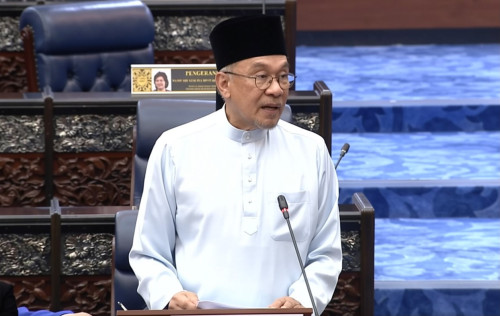
Finance Minister II Datuk Seri Amir Hamzah Azizan said Malaysia’s gross domestic product expanded by 5.4 per cent in the first quarter of this year, surpassing the earlier forecast of 5.3 per cent and signalling that the country’s economic fundamentals remain robust despite external pressures affecting global markets.
He said the sustained momentum reflected continued confidence among investors as Malaysia strengthens its position as a regional technology and industrial hub under the MADANI Economic Framework.
“We are seeing foreign direct investment (FDI) beginning to contribute to GDP growth, while domestic direct investment (DDI) remains strong and public spending continues to be robust.
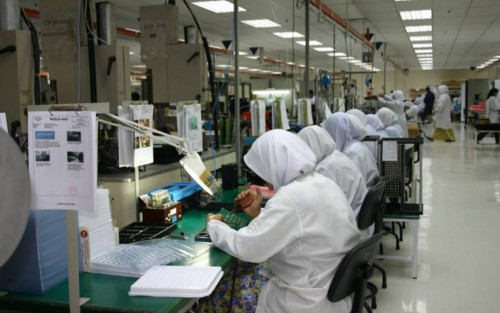
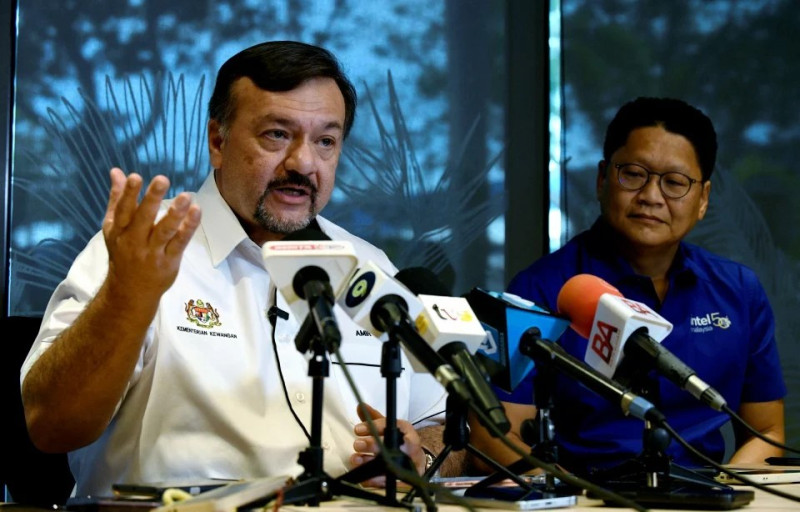
“This is a unique characteristic because the government, through the MADANI Economic Framework, is working hard to ensure that all engines driving the economy continue operating smoothly,” he told reporters after visiting Intel’s facilities in Bayan Lepas today.
Amir Hamzah said the government’s broader economic agenda was not solely focused on attracting investments, but also on raising household incomes and improving living standards through structural reforms and wage enhancements.
He said initiatives under the MADANI framework included civil service salary increases, implementation of the national minimum wage and efforts to encourage government-linked investment companies (GLICs) and government-linked companies (GLCs) to transition from minimum wage practices towards a “living wage” approach.
“I believe the AI and data centre sectors remain very strong and we already possess a solid ecosystem in Malaysia, particularly in the northern region,” he said.
He added that Malaysia’s status as a trading nation continued to attract international investors, supported by a mature industrial ecosystem and sustained expansion in digital industries, artificial intelligence infrastructure and high-value manufacturing.
“The government will continue building an ecosystem capable of encouraging investors to establish and expand operations here, ultimately positioning Malaysia as a developed nation in the future,” he said.
Amir Hamzah also highlighted several major infrastructure projects aimed at strengthening industrial competitiveness and improving connectivity in the northern economic corridor.
Among the projects cited were the expansion of the Juru interchange, the upgrading of Penang International Airport and the implementation of the Penang Mutiara Line Light Rail Transit (LRT) system, which he said would improve mobility for workers and investors while supporting long-term industrial activity.
He said the government was also prioritising utility stability, particularly electricity and water supply security, as part of efforts to support large-scale industrial and digital investments.
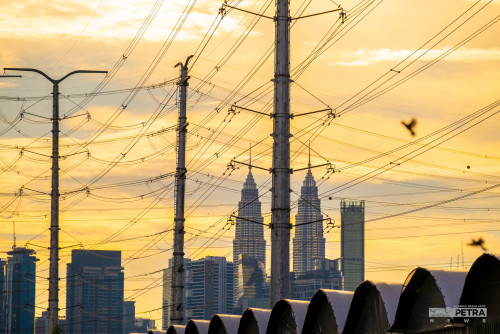
According to him, a new electricity transmission line by Tenaga Nasional Berhad (TNB) near the Penang Bridge has already been completed, while a major water supply project in Kerian, Perak, is expected to benefit both Perak and Penang as demand for industrial resources rises.
On Intel’s expansion plans, Amir Hamzah said projects involving advanced packaging components would further strengthen Malaysia’s standing as a strategic semiconductor hub within the global supply chain. - May 18, 2026