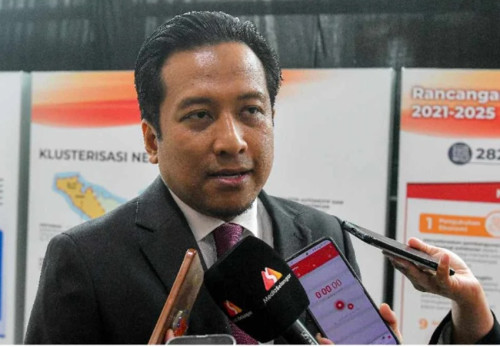
A PENANG-based education entrepreneur has come forward with details of a nearly two-year scam ordeal that left him almost RM400,000 out of pocket after fraudsters allegedly trapped him through a fake online loan scheme and subjected him to relentless threats and emotional manipulation.
Bryan Teow, 50, said he initially sought financial assistance in August 2024 while facing temporary cash-flow difficulties linked to legal challenges involving a company he managed in Hong Kong.
The Tanjung Bungah resident said he was attracted to what appeared to be a legitimate fast-loan advertisement on Facebook that carried the branding of a prominent financial institution and offered quick access to financing.
According to Teow, the scheme initially appeared genuine when he was contacted via WhatsApp by an individual claiming to be a bank officer and was subsequently provided with funds.
“Once I clicked on the link, I was contacted by an individual claiming to be a bank officer through WhatsApp and asked to provide several documents.
“At first, I did receive the loan money, but from the beginning I felt something was not right because the funds did not come from a bank account as expected,” he said during a press conference at Komtar on Friday.
Although he sensed irregularities, Teow said he attempted to repay the amount immediately in the hope of ending the matter.
“I tried to return the money as quickly as possible but they said the amount was insufficient.
“They kept asking me to make more payments again and again. At one point, they instructed me to pay RM100,000 in a single transaction, claiming the file would then be closed.
“But after several months, they contacted me again and the threats continued one after another until my losses reached almost RM400,000,” he said.
What followed, he claimed, was a sustained campaign of intimidation lasting almost 20 months, during which the syndicate allegedly bombarded him with phone calls and messages while attempting to isolate and psychologically pressure him into making further payments.
Teow said the perpetrators claimed to have connections with enforcement agencies, including the police, and allegedly produced documents resembling confidential government papers to reinforce their threats.
“They threatened to disrupt my company’s operations, contact my family members, colleagues and company management.
“They also spread false accusations, threatened to distribute my photographs and labelled me a fraudster.
“Because of all that pressure, I lived in fear and believed that if I did not follow their instructions, the situation would become even worse,” he said.
For much of the ordeal, Teow remained silent, believing compliance would eventually bring an end to the harassment.
“I thought that if I followed all their instructions, the problem would be resolved, but I eventually realised that remaining silent was not the solution.
“Looking back now, what happened does not seem logical, but when you are a victim, you are operating in a state of fear, anxiety and stress,” he said.
The turning point came when he decided to seek legal assistance rather than continue responding to the syndicate’s demands.
He lodged a police report on May 29 and subsequently appointed legal counsel to assist with the case.
“I was informed that the police have already begun investigations and I am leaving the matter in the hands of the authorities for further action.
“I am speaking out today because many scam victims choose to remain silent. I hope that by sharing my experience, more people will be cautious and seek help immediately if they become victims,” he said.
His lawyer, Dixon Eng Yuh Pei, said police investigations were underway and included requests to financial institutions for banking records, with the case believed to involve nine separate bank accounts.
He said tracing the movement of funds remained crucial even if identifying the masterminds behind the operation proved difficult.
“We also want to remind the public not to casually lend their bank accounts to others in exchange for financial rewards because doing so could expose them to legal consequences.
“In many cases, the accounts used to transfer money are problematic accounts or mule accounts,” he said.
Eng warned that individuals who receive money from suspicious accounts may also face frozen accounts, banking restrictions or legal action.
He explained that many such scams begin with victims receiving funds before being subjected to escalating threats designed to maximise fear and compliance.
“They will make relentless phone calls, send messages, contact family members and colleagues, and even disrupt the victim’s workplace.
“Their objective is simple — to apply maximum pressure and shame the victim until the victim feels there is no option except to keep paying,” he said.
Meanwhile, Penang Infrastructure, Transport and Digital Committee chairman Zairil Khir Johari urged members of the public to report suspected scams immediately instead of waiting for the situation to worsen.
“Investigations are usually conducted under Section 420 of the Penal Code and other relevant provisions.
“If you have clicked the link, received money and started receiving threats, do not wait. Lodge a police report immediately and obtain the appropriate protection from the authorities,” he said.
Zairil also advised victims to contact the National Scam Response Centre through its 997 hotline as quickly as possible, noting that swift action can help authorities freeze suspicious accounts before funds are moved elsewhere.
He added that complaints may also be lodged with the Commercial Crime Investigation Department and the Malaysian Communications and Multimedia Commission, including through the commission’s dedicated WhatsApp reporting channel. - June 5, 2026