
PENANG needs to reduce its sole reliance on the electrical and electronics (E&E) industry by developing high-value, complementary industries that leverage the state’s existing strengths.
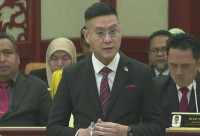
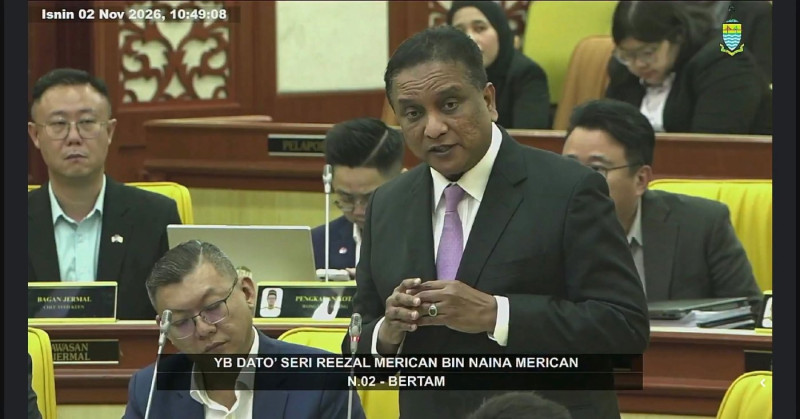
Datuk Seri Reezal Merican Naina Merican (UMNO-Bertam) stated that a comprehensive industrial diversification strategy for Penang must be developed to ensure the state’s economic growth becomes more sustainable and resilient.
According to him, this strategy is not intended to shift away from the E&E sector; rather, it aims to strengthen complementary industries capable of enhancing value-added contributions, technology ownership, and the competitiveness of local companies.
"The strategy must take into account alignment with the strategic sectors of the 2027 State Budget, the strengths of the existing industrial ecosystem, foreign direct investment (FDI) trends, and the restructuring of global supply chains; it should also be supported by a timeline and measurable targets.
"A key priority is elevating Penang’s position within the technology value chain through 'Penang Silicon Design @5km+' and the 'Penang Chip Design Academy,' which have been allocated RM120 million over five years," he stated.
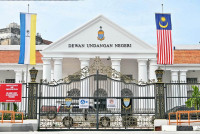
He made these remarks while debating the 2027 Penang State Budget during the Second Meeting of the Fourth Session of the 15th Penang State Legislative Assembly.
The former Member of Parliament for Kepala Batas added that the initiative aims to produce 1,000 IC (integrated circuit) design engineers.
To date, over 400 skilled professionals have been trained, and the number of IC design companies has grown from approximately 25 to more than 50.
However, he noted that local technological capabilities must be enhanced to strengthen intellectual property (IP) ownership.
This is particularly relevant given that, between 2012 and 2020, Malaysian firms accounted for only 34 semiconductor-related patent filings in the United States, out of a total of approximately 678 filings.
He added that Penang must also strengthen local EMS players by drawing lessons from the success of companies like VS Industry and SKP Resources.
On the halal sector, he welcomed the establishment of the Penang Halal Industry Development Council, the proposal for a Penang Halal Industrial Park, and the Penang Halal Industry Master Plan 2026–2030.
He stated that the success of Penang's industrial diversification should not be evaluated solely based on investment figures or certifications; rather, it should be measured by the advancement in technology ownership, the participation of local companies in global supply chains, and an increase in the number of sustainable exporters. – November 3, 2026