Malaysia

ECRL Section B construction progress surpasses target

Achievement attributed to rapid construction at 94 priority locations, says Pahang exco

Updated 5 years ago · Published on 22 Jan 2021 3:29PM

ECRL Section B construction progress surpasses target
Section B of ECRL stretches from Dungun in Terengganu to Pahang’s Mentakab. – AFP pic, January 22, 2021

KUANTAN – The progress of Section B of the East Coast Rail Link (ECRL), from Dungun in Terengganu to Pahang’s Mentakab, has surpassed its 5.11% target, hitting 7.03% last month.

Pahang Works, Transportation and Health Committee chairman Datuk Seri Norolazali Sulaiman told Bernama today that the achievement is underpinned by rapid construction works at 94 priority locations, 58 of them being in Pahang and the rest in Terengganu.

“The primary focus of the construction works taking place along Section B’s 223km main line includes earthworks, and prefabricated vertical drain, culvert, tunnelling and bridge works. 

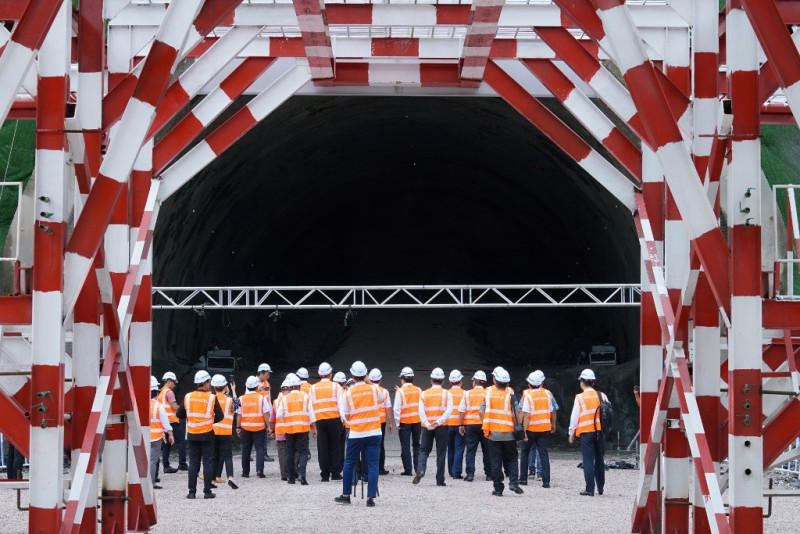
“Excavation works for the 2.86km Kuantan Tunnel, which is part of Section B, have covered 950m, or 33.5% of the total length, to date.”

Norolazali visited the Kuantan Tunnel site on Tuesday. 

He said the Pahang government is pleased with the progress of the ECRL project, and believes it will help boost investments, commercial activities, job opportunities and tourism upon completion.

He said construction is proceeding smoothly under strict standard operating procedures set by the Health, and International Trade and Industry Ministries, among others, during the movement control order, which is in effect in Pahang from today until February 4.

He said workers with Covid-19 symptoms will be asked to immediately leave the construction site and undergo swab tests.

“In line with the recommendations by the authorities, the workforce has been divided into groups. This practice will ensure the project continues even if one group is required to undergo quarantine.”

He added that flood-prone areas along the ECRL alignment have been identified, and designers took into consideration the “100-year flood” level.

“Generally, all flood-prone areas where the ECRL is expected to traverse are designed to have viaducts to facilitate smooth water flow, especially during the monsoon season, to reduce the risk of service disruptions due to heavy rains or floods.” – Bernama, January 22, 2021


Related News

Malaysia / 3w

‘Zalim apa ini?’ Anwar challenges claims opposition areas are sidelined

Malaysia / 1mth

LPT3 row puts Kelantan’s infrastructure priorities under scrutiny

Malaysia / 2mth

Pahang hospitals test drones to deliver blood samples

Malaysia / 3mth

Pahang police reject claims of drug cartel operating in Genting Highlands

Malaysia / 3mth

Use of Jalur Gemilang without crescent moon, stars was unintentional - MB

Opinion / 3mth

Orang Asli in Pahang: Token gestures or genuine recognition?

Spotlight

Malaysia

Khalid urges PAS to ditch Umno alliance and support Anwar

By Alfian Z.M. Tahir

Malaysia

Najib’s house arrest: Govt, AG, Hannah opposed conditional pardon, minutes show

Malaysia

Former Negeri Sembilan exco members end legal fight over removal

Business

Nvidia rules out Jensen Huang comeback as quarterly revenue doubles to US$115b

Malaysia

Indonesia should compensate Malaysians for the prolonged haze – Guan Eng

By Ian McIntyre

Malaysia

Padang Rengas dispute exposes challenge facing possible BN-PN pact

You may be interested

Malaysia

Malaysia faces 27-year window to prepare for aged-nation transition

Malaysia

No large-scale cyberattack causing Malaysian data leak reported, says Fahmi

Malaysia

Umno seeks clarification on declassification of Najib's pardon board minutes

Malaysia

Khalid urges PAS to ditch Umno alliance and support Anwar

By Alfian Z.M. Tahir

Malaysia

Ismail Lasim resigns as Negeri Sembilan MB

Malaysia

Floods displace 2,527 people across four states, 23 relief centres opened

Malaysia

Indonesia should compensate Malaysians for the prolonged haze – Guan Eng

By Ian McIntyre

Malaysia

Civil society coalition warns against politicising monarchy, public institutions

By Alfian Z.M. Tahir