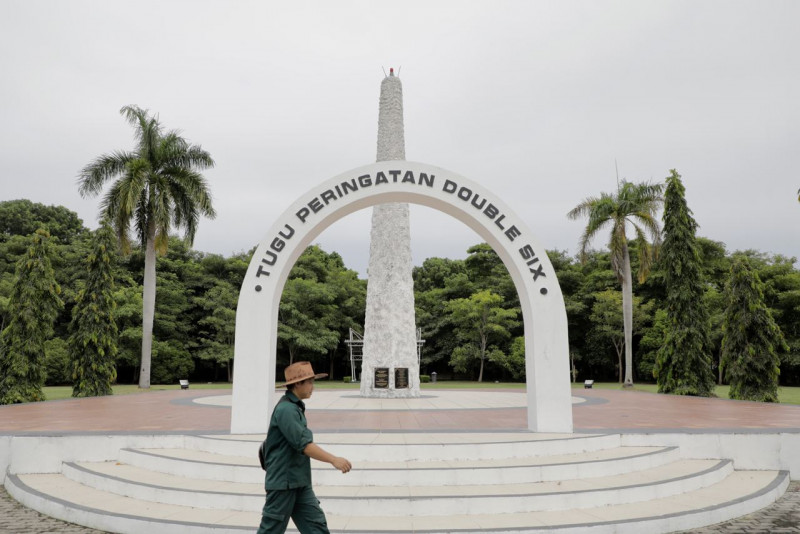

KOTA KINABALU – A few kilometres off the coast of Tanjung Aru sits a lone aircraft warning light, resting neatly on top of a white stony obelisk that glows whiter as sunlight brightens.
On a cloudless noon it becomes a blinding beacon.
To the unfamiliar, the lamp being there was odd, out of place even, as there were no airplane runways nearby, but to the locals, the lamp and the monument were – still are – solemn reminders of a tragedy that struck Sabah.
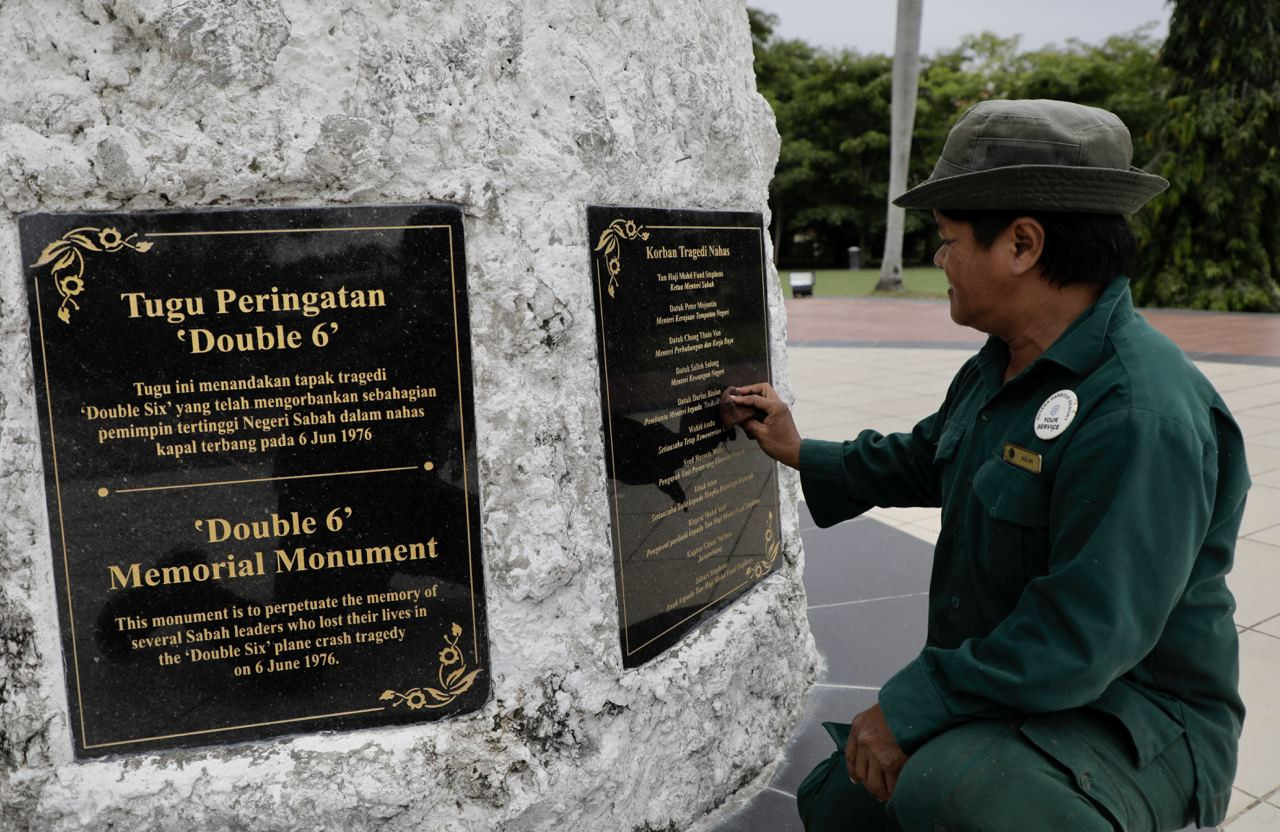
It was June 6, 1976. An Australian aircraft of Sabah Air, which was en route to Kota Kinabalu International Airport from Labuan, crashed into the nearby Sembulan district, killing 11, including the then Sabah Chief Minister (CM) Tun Fuad Stephens.
There were no survivors.
Also killed were: Datuk Peter Mojuntin (State Local Government Minister), Datuk Chong Thain Vun (State Transport and Works Minister), Datuk Salleh Sulong (State Finance Minister) and other key officials.
“The aircraft broke into several pieces [when it crashed]. The cause of the accident is not yet known,” was how the then deputy chief minister Datuk (now Tan Sri) Harris Salleh broke the news to Sabahans.
The mystery and the myth
The Australian manufacturer of the aircraft, Government Aircraft Factories, launched and investigation but the findings were not publicly disclosed. The then state deputy communication minister, Mohd Ali M. Sharif, said the cause of the incident was “human error”.
He added “The aircraft storage was loaded with goods above the maximum load. As a consequence this had resulted in the aircraft losing control when it attempted to land at the Kota Kinabalu Airport, thus resulting in the accident.”
Even until today, no one knows what truly happened as the findings of the investigation were classified and like any mystery, the tragedy colloquially dubbed as “Double Six” has birthed many speculations.
A lot of invisible dots were connected and talk among those who put two-and-two together centred on it being a supposed powerplay between the state and federal government, which has never been proven.
But what gave creedence to such a theory was how the rather strained Sabah-KL relationship under Tun Mustapha Harun’s (of Usno) time as CM (1967–1971) grew friendlier following the Double Six tragedy under Harris’ leadership (1976–1985).
The signing of the previously much objected 5% oil royalty agreement on June 14, 1976; the ceding of Labuan, in 1984, to the federal government without compensation were among the examples cited by critics to further lend credence to their claim.
The defeat and the hushed riot
The tell-tale sign of Sabahans unhappiness with the Harris’ Berjaya government was its defeat to Tan Sri Joseph Pairin Kitingan’s Parti Bersatu Sabah (PBS) in the 1985 state election – nine years after Double Six.
In a 1994 journal article published by the University of California Press, Professor James Chin, remarked that out of the many pro-KL policies of Harris, the handing over of Labuan was the straw that broke the Sabahan’s back.
“Harris opted for a snap election in April 1985 but it was too late for Berjaya. A clear swing toward the PBS netted 26 seats; Usno won 16 and Berjaya 6. PBS had the near total support of the Kadazan community and majority of the Chinese,” Chin said.
Prior to the polls, PBS formed a secret coalition with Usno but a miscommunication led to a panicked Mustapha who called up Berjaya to form a coalition. Mustapha was sworn in as chief minister at but was eventually removed and four hours later Pairin was sworn in.
Pairin’s initial tenure, from 1985-1986, as chief minister was a baptism by fire.
Mustapha had filed a suit against him, challenging the legitimacy of his appointment as chief minister; pressured to form a coalition government with Usno; but the cherry on top were the pockets of bombing in the state capital Kota Kinabalu in May 1985 and the March 1986 riot allegedly done by Pairin’s detractors.
Expectedly, Pairin called for a snap election in May 1986.
The result further bolstered PBS’ clout; its seats increased from 26 to 34 and it won 53% of the popular vote but what happened afterwards attested the unique fluidity of Sabah politics – Pairin led PBS into joining a Barisan Nasional (BN) coalition.
It was unique in the sense that, at state level, the ruling and main opposition parties were part of BN; PBS and Usno, respectively. – The Vibes, September 21, 2020
(To be continued in Part Two)






.jpeg)