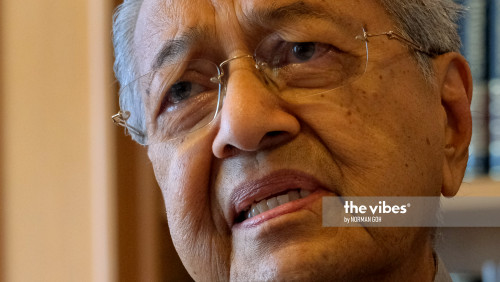

KUALA LUMPUR – MPs today can surely take a leaf from the books of past elected reps such as Tun Musa Hitam, who strove to let voters know how allocations were used amid highly constrained funding.
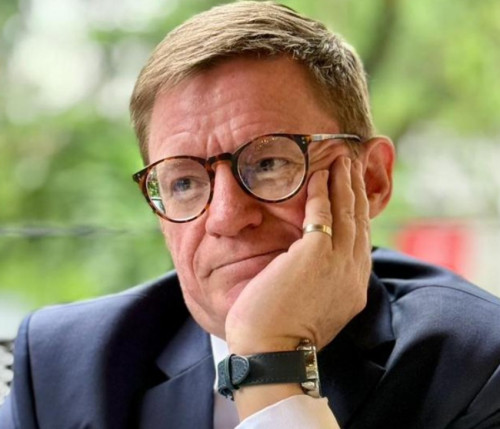
Recalling his tenure as an MP himself in the 1960s, the 87-year-old said that he constantly reminded the people in his Segamat Utara parliamentary constituency of how he spent from his tight budget.
“I never stopped reminding my constituents that if my explanation (on expenditures) was not acceptable, I would have to get funds from other sources, even illegal contributions to fulfil their demands,” he said.
The former deputy prime minister was speaking during a webinar titled “Political Party Finance Reform Agenda in Malaysia” today, organised by Bersih 2.0 and The Association for Elections and Democracy.
He said that he would inform his voters of how allocations would be used for predetermined events such as national celebrations, giving the example of how he had volunteered RM600 annually to cover costs for schoolchildren’s shoes and uniforms.
“Money was very much in need” in those early days, stressed the former Umno deputy president.
However, as Umno along with the Barisan Nasional coalition kept winning elections later, the situation eased and “money was never a problem”.
“But then, as it has been often said, power corrupts and more power corrupts completely,” Musa said.
Musa served as deputy prime minister from 1981 to 1986 before resigning after falling out with then prime minister Tun Dr Mahathir Mohamad.
He then threw his support behind Tan Sri Tengku Razeleigh Hamzah’s bid to challenge Dr Mahathir for the Umno presidency in 1987.
The Razaleigh-Musa partnership to wrest the posts of president and deputy president was narrowly defeated by Dr Mahathir who defended his position with Tun Abdul Ghafar Baba becoming his new deputy.
The party election that year was infamously reported to have been rife with money politics.
Despite Musa and Tengku Razaleigh’s efforts to declare Umno as illegal and forming the new Semangat 46 party, Mahathir continued ruling the country with the support of the newly branded Umno Baru.
Touching on pressing issues surrounding political funding reforms, Musa today suggested that they may fizzle out, such as when Malaysia introduced a policy requiring MPs declare their assets.
The Malaysian Anti-Corruption Commission had announced in July last year that the details of MPs’ asset declarations would be available for public viewing on its website.
“True enough, it was determined that asset declaration by parliamentarians was one way to avoid corruption.
“For a fleeting moment in Malaysia, the whole country was excited and applauded (the approach). But why are we all now quiet?
“Are we all done with satisfaction? I don’t think so, as the system lacks good auditing and enforcement,” Musa said.
The veteran politician suggested that a multi-dimensional and holistic approach is needed to address political financing reforms.
He said various factors must be taken into account such as election conduct, asset declarations, faulty bureaucracy, and corruption.
“I fully agree with the challenges (to pursue political financing reform).
“Briefly, these are legislative shortcomings, weak oversight, lack of political will, and weak bookkeeping practices,” Musa told the webinar. – The Vibes, October 1, 2021