
GEORGE TOWN – Malaysian authorities are advised to handle incoming travellers nationwide by applying more practical measures instead of a cumbersome approach, said a tourism official.
Malaysia Convention & Exhibition Bureau chief executive officer Datuk Seri Abdul Khani Daud said that the international entry points, namely the Kuala Lumpur International Airport (KLIA) needs to reduce the hassle when processing incoming tourists.
“It is the first entry point, which foreigners will see upon arriving in Malaysia.
“We need less hassle and a better processing system with minimised delay despite the ongoing concerns of the Covid-19 pandemic,” said Khani.
While understanding the need for the relevant authorities ranging from public health officials, immigration and customs officers, and police personnel being tasked to ensure the safety of the local populace, he stressed that the country cannot afford to be rigid in handling incoming travellers.
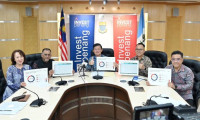
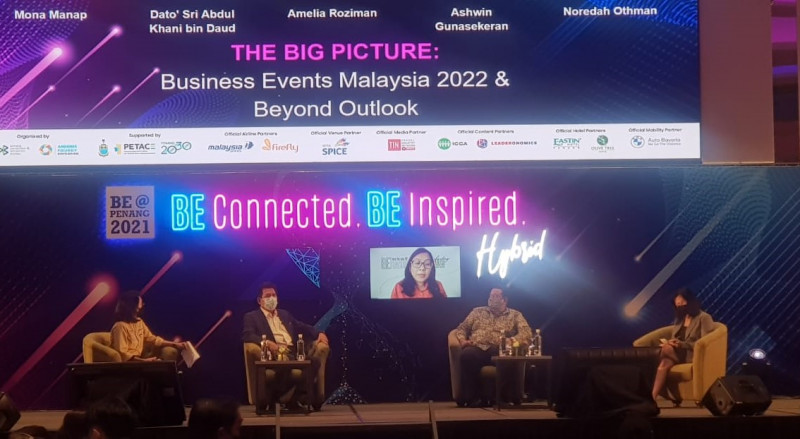
“They are mostly on long-haul flights and the last thing on their minds are to be thrown into a sense of confusion upon setting foot on our soil,” he said, after attending the 6th annual BE (Be Connected) @ Penang 2021 – a business trade event to showcase Penang’s strength as an events gateway for business, convention, meeting and trade travellers.
Khani said he just completed a tour of four countries where he inspected how they were processing travellers under the new normal and standard operating procedures (SOPs).
“It was seamless in places such as Colombia and Singapore. We may need to look at how others are processing it,” he said, after completing a tour of four countries recently to observe their SOPs.
It had been reported that airliners and travel agents have shared their concerns that several tourists had been left confused when arriving at KLIA on whether they should take or retake Covid-19 tests, the type of test and the length of quarantine.
Concerned parties have alleged that testing and quarantine procedures in the country, is among the highest in the region, nullifying efforts to promote the country as a leading tourism destination.
The Health Ministry has announced that as of today, international, and local travellers using the Vaccinated Travel Lane by air and land, the Langkawi International Travel Bubble (LITB) and the one-stop centre (for short-term business visitors) will have to undergo testing for six days straight after arriving in Malaysia.
It is aimed at strengthening the Health Ministry’s existing precautionary and control measures to prevent the transmission and spread of the Omicron variant in the country.
“Travellers under these categories must undergo a Covid-19 detection test upon arrival in Malaysia, RTK-Ag test or Rapid Antigen Test (self-test) on the second, fourth and sixth day after arrival.
“They would also need to undergo a professional RTK-Ag test on the third and fifth day after arriving.
“LITB travellers are required to undergo a RT-PCR test at least 48 hours earlier before leaving Langkawi Island."
Earlier, Khani addressed a dialogue session during the event, with both physical and virtual participants, saying that the business events scene is showing signs of a rebound.
“Malaysia expects to host up to 170 business events next year, including major international trade shows, hence the need to have seamless admissions for travellers, but not at the expense of enforcing the strict SOPs such as ensuring that each traveller must be double dosed,” he said.
Meanwhile, Penang Conventions Exhibitions Bureau chief executive officer Ashwin Gunasekeran said 50 events, which had to be shelved altogether due to the imposed lockdowns, may make a comeback in stages next year as QNet (M) Sdn Bhd, a global direct selling company has renewed its contract to use Penang as a hub for its global gathering.
He said QNet used to bring in 12,000 participants from 63 countries prior to the Covid-19 pandemic.
Ashwin also opined that business events in the future would see a combination of hybrid arrangements – fusing together technology such as social media with physical participation.
“It is a likely outcome from the growth of digitalisation springing from Covid-19,” he said. – The Vibes, December 9, 2021