
KUALA LUMPUR – The Malaysian prime minister’s dream of seeing Malay, or Bahasa Melayu, become an official language of the Association of Southeast Asian Nations (Asean) can be possible if Bahasa Indonesia is treated as the “flagship” while Bahasa Malaysia acts as its “escorteur”.
In making this suggestion, a senior figure in the National Professors Council (MPN) has likened the language situation faced by Malaysia and neighbouring Indonesia to a squadron of warships.
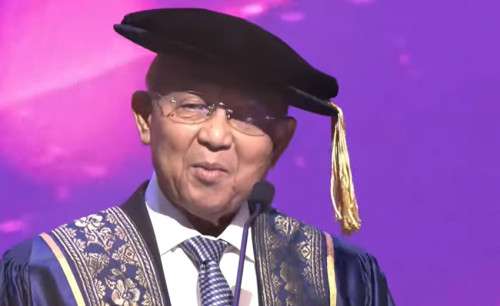
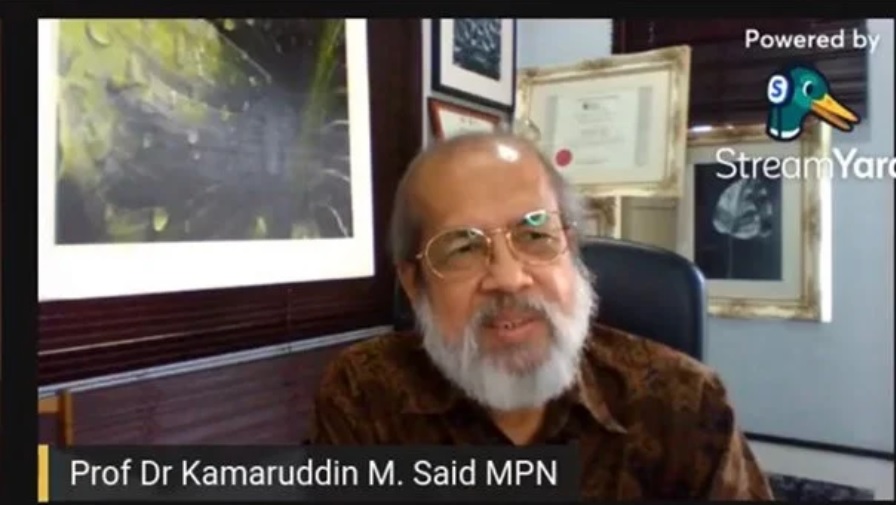
“Which language will be the ‘mothership’? Which will be the ‘escort ship’ and the ‘submarine’? To me, there are three types of ships in a fleet which help one another,” said MPN deputy president Prof Kamaruddin M. Said.
“The main ship must be protected by the escort ships and submarines. If any vessel is absent, the other two would be attacked,” he said in a talk entitled “Bahasa Melayu-Bahasa Indonesia as an International Language” yesterday.
The programme was aired on MPN’s Facebook page yesterday, and reported on by The Vibes’ Malay-language sister portal Getaran.
Therefore, Kamaruddin said the two countries must deliberate on the matter to reach a consensus and find the best strategy for the mission to be a success.
However, the decision should be made on the basis of mutual respect and understanding of each other’s position, in accordance with the number of people using both tongues.
Meanwhile, he said other languages in the region should also partake in this mission to elevate the Malay language at the international level.
“Languages from the region should also work together. This is not a matter of language nationalism.
“If we want equality, it is not possible. The language spoken by many will certainly be the leader in this journey and the main language – Bahasa Indonesia – is not yet perfect.
“It needs the help from Bahasa Malaysia, Brunei, Thai, Filipino and others.”
Although it may be difficult for Malaysians to accept playing second-fiddle, Kamaruddin opined that other Asean nations would not share the same sentiments.
If the “unity of languages” concept were to be accepted and agreed upon, he said, the goal of making Malay the second language in Asean can soon be realised.
On March 23, Prime Minister Datuk Seri Ismail Sabri Yaakob had said that he would confer with Asean leaders to propose the use of Bahasa Melayu as the region’s second official language.
However, his efforts to promote the mother tongue have become the subject of a heated debate with Indonesia.
The republic’s Education, Culture, Research and Technology Minister Nadiem Makarim had opposed Ismail Sabri’s call, saying that Bahasa Indonesia is more suited for the role taking into account its historical, legal and linguistic “advantages”.
Nadiem stressed that Indonesia’s national language is present in 47 countries globally while its studies for non-Indonesians are being coordinated by 428 bodies – whether they are his ministry’s official agencies, individuals, or other leaders and bodies.
Change ‘Bahasa Melayu’ to ‘Bahasa Malaysia’
Meanwhile, Kamaruddin also suggested that the formal name of the national language be changed from “Bahasa Melayu” to “Bahasa Malaysia”, before it is promoted on the international stage.
He said the motion on the proposal must first be understood and supported by Malaysia’s authorities, including MPs.
He noted that Article 172 of the federal constitution stipulates that the national language is “Bahasa Melayu” and there is a need to add “Bahasa Malaysia” to the clause.
“If Bahasa Malaysia is added to the constitution, then everyone will accept the term.
“This is just like Bahasa Indonesia whose root language is Bahasa Melayu. But according to the constitution (of Indonesia), it should be called Bahasa Indonesia,” he explained.
There have been efforts to change the term in 2007 but to no avail, he said.
Elaborating on the matter, he said Bahasa Melayu was designated as the national language and enshrined in Article 152 in the constitution’s early period.
When Malaysia was established, the term was changed to Bahasa Malaysia.
However in 1986, he said, the term was reverted to Bahasa Melayu.
“The effect of the constant change of the name has caused confusion as many do not understand the context of Bahasa Melayu from the Indonesian perspective,” he said.
Asean currently recognises only English as an official language of correspondence among member nations. – The Vibes, April 8, 2022