.jpg)
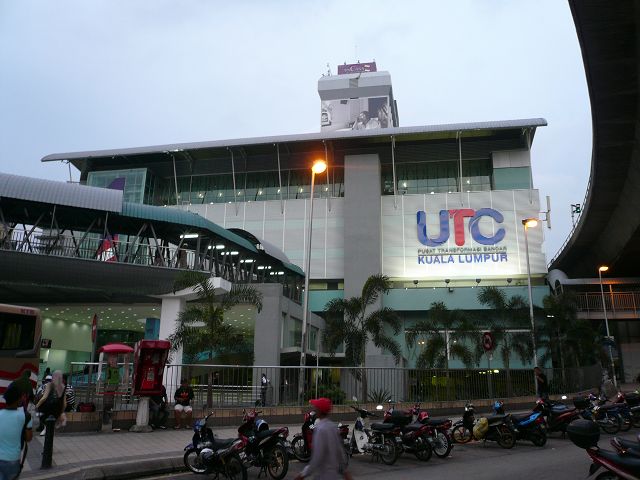
KUALA LUMPUR – The security guard who assaulted The Vibes journalist Qistina Nadia Dzulqarnain at the Pudu Urban Transformation Centre (UTC) appears to lack any kind of formal training required for security and defence forces.
This was the observation of the Malaysian Security Industry Association (PIKM) president Datuk Seri Ramli Yusuff from a video of the incident that went viral.
The former Bukit Aman Commercial Crimes director explained this was very likely, considering all formal training courses under the Certified Security Guards (CSG) training programme module have been postponed since March 2020 due to Covid-19 restrictions.
“Possibly, possibly (he was not trained); but we will have to verify those facts which are part of our ongoing investigations,” he told The Vibes when asked if the implicated security guard could have possibly reported for work without undergoing any prior training.
Ramli said the halt in training modules for the CSG programme would have affected all security companies across the country that hired new staff over the last two years, including the company engaged to provide security guards at the Pudu UTC.
Since Covid-19 hit us, all training modules have been postponed, even police have not been able to resume their training. They were halted to adhere to the National Security Council’s standard operating procedures (SOP) for the pandemic.”
However, Ramli said PIKM expects training sessions, which are usually held at the Police Training Centre for Kuala Lumpur trainees, to resume soon.
He also revealed that PIKM had in the past received complaints over the conduct of security guards deployed to government agency offices, agreeing to the notion that inadequately trained personnel have ended up on the front lines.
Ramli included how training within the CSG programme modules would cover training for personnel stationed at the front of the house, or for those dealing directly with customers.
He said a majority of these complaints were over the “rude” or “crude” conduct of guards.
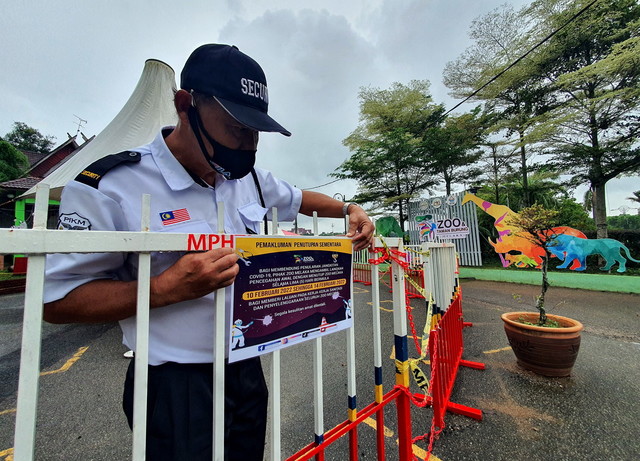
Security guards have SOPs, not discretion
Ramli said the security guard, in a viral video of the incident in Pudu, appeared to exercise his own discretion when dealing with the situation involving journalists, something security and defence forces are usually not allowed to do.
JUST IN
— TheVibes.com (@thevibesnews) May 14, 2022
Two reporters from The Vibes were subjected to a barrage of verbal intimidation and threats at the @imigresenmy office in UTC Pudu today.
The guard is heard yelling "This is UTC! Do you understand?! Get out!" despite the reporters identifying themselves as media. pic.twitter.com/IIGTFJBxYG
“Discretion is usually not conferred to the guards; discretion is a very serious matter and can also be very subjective. So usually, policemen, soldiers, and those in security forces – they are not supposed to exercise discretion; it’s normally not allowed.
“There are SOPs which have been relayed to them, so they are required to follow these SOPs.”
Procedurally, Ramli said the onus to inform and ensure guards adhere to SOPs and house rules of particular premises or organisations is on the employers – in this case, the Immigration Department.
The Immigration Department would have been responsible to spell out its expectations of the security company following engagement, who would then brief its staff of these requirements, he added.
“We believe at this juncture, it could be a situation where the guard was told not to allow reporters to come in, but this has yet to be verified.
“If there was such an instruction, these guards, who are usually straightforward people, are not supposed to exercise much discretion. So, it then boils down to the individual, the security guard, and how he chooses to manage it.
You might have a guard that tells reporters nicely they are not allowed to enter, but you also may find another guard who does not think much and exercises his own way of justice to the guests,” he explained.
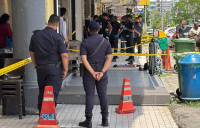
The assault happened on Saturday, May 14, when Qistina Nadia and Lancelot Theseira visited the Pudu UTC to look into public complaints of long queues at immigration counters for the renewal of travel documents.
The viral video of the incident showed the guard shouting aggressively at her, preventing her from talking to members of the public. He also snatched her mobile phone.
A police report was subsequently lodged by both parties on the same day, although The Vibes was later informed that police would not pursue the case further for “lack of criminal elements”.
A day later, Kuala Lumpur Criminal Investigations Department chief Habibi Majinji said the case has been reclassified under Section 160 of the Penal Code for committing affray or commotion.
Last Friday, police explained that they would not be pursuing the case further as the deputy public prosecutor had said there was “inconclusive evidence”.
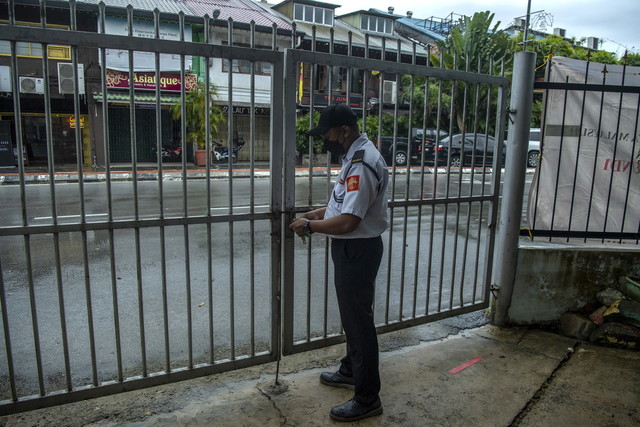
Of soft skills and occupational safety hazards
Also chiming in was the Malaysian Society for Occupational Safety and Health (MSOSH) president Shawaludin Husin, who agreed the security guard in question appeared to lack the proper soft skills to handle situations of conflict.
However, he said methods to circumvent or control such conflicts should, by right, have been spelt out in the contract between the Immigration Department and the security company when the latter’s services were engaged.
He said the contract should have details that all forms of conduct by security personnel must comply with the Occupational Safety and Health Act 1994 (Osha), and should include training on anger management, conflict and negotiation skills, and conflict resolution skills.
The MSOSH head said these would be labelled as forms of hazards within the contract, with the assault against Qistina Nadia defined under potential psychosocial hazards.
“Psychosocial hazards relate to violence, crowd control, treatment of people, potential discrimination, bullying and such. So, in this case, we see the guard became angry to the point of being out of control.
So, we must establish if the contract between the employers and the third-party security company stated that staff from the private company must comply with Osha laws,” he told The Vibes.
He said the Immigration Department should have anticipated a situation where guards on duty would endure highly stressful situations as an effect of long working hours and subsequently taken preemptive steps on ways to handle it.
He added that the Immigration Department should also be held responsible over the guard’s conduct as the main premises operators in the UTC, with the responsibility to ensure all staff behave accordingly.
“They (Immigration Department) cannot just wash their hands clean; they must undertake the required risk assessments and plan out mitigating steps in line with their own house rules.
“When these are overlooked, this will happen where the guard solves the issue based on his experience, which (in this case) evidently was to pick a fight with people, and that was not a correct decision by a guard who is supposed to be well-trained for his role.” – The Vibes, May 27, 2022