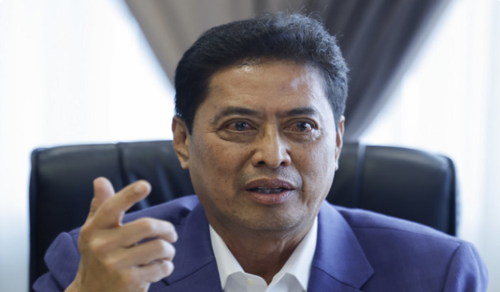

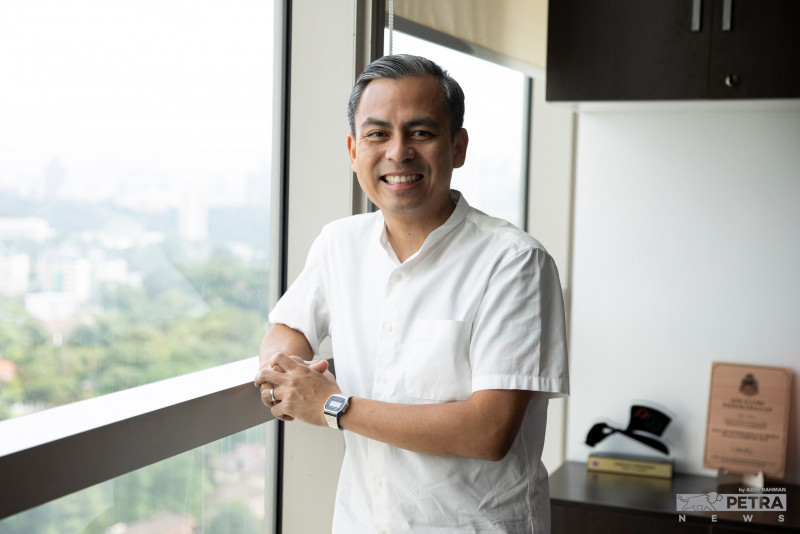
KUALA LUMPUR – In the lead-up to his victory in the Lembah Pantai parliamentary race in the last election of 2018, Fahmi Fadzil had famously highlighted the predicament of low-income folk, especially those in the Kg Kerinchi low-cost area.
His assertion provoked much attention, particularly as the area seemed to contrast starkly with the more affluent Bangsar also in the constituency.
Having served the constituents for a full term, Fahmi now assesses that Kg Kerinchi and Bangsar should no longer be perceived as two disparate areas.
Asked by The Vibes if he has different political approaches for the two areas, he said that they are not as contrasting and segregated from each other as people may assume.
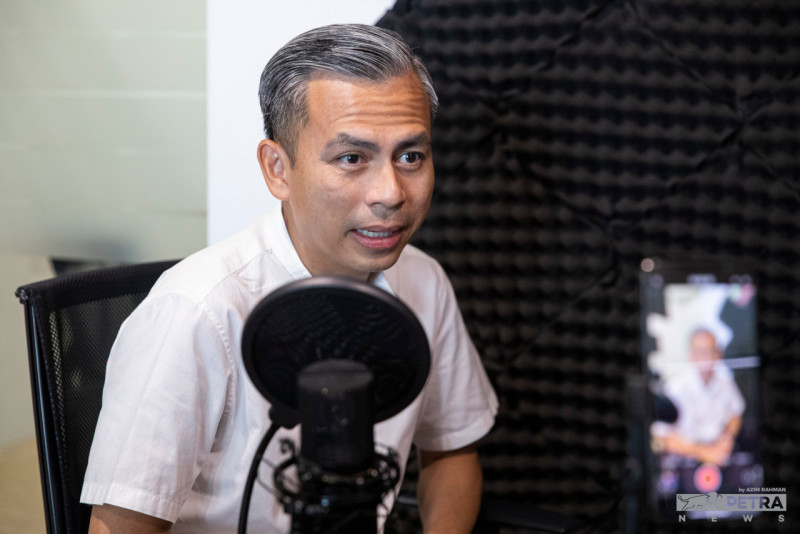
“The dichotomy between Bangsar and Kg Kerinchi doesn’t entirely exist anymore,” Fahmi said in a podcast.
“The idea about Bangsar being affluent and Kg Kerinchi being B40 is no longer true,” he added.
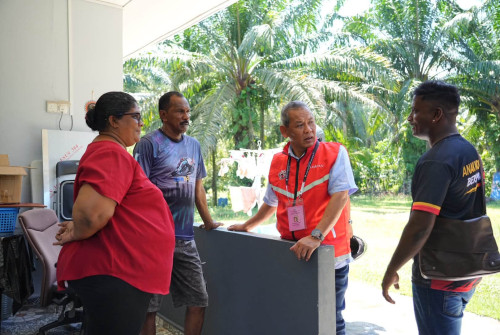
He related an encounter he had with a local Kg Kerinchi woman, who impressed him by conversing in crisp English while pushing for the betterment of her residence.
The people in both areas have been affected during the pandemic. There were those in Bangsar who resorted to raising white flags, an act not expected within the community.
Fahmi advocated against the erasure of Kg Kerinchi and pledged to protect its identity when he first campaigned in the 2018 election.
At that time, there was a perception that Kg Kerinchi was under threat of being gentrified by property developers to make way for the new name “Bangsar South”.
PKR has announced that Fahmi would defend his Lembah Pantai constituency for the upcoming 15th general election on November 19.
Policies needed for urban poor
Since becoming an MP, Fahmi has aimed to be the bridge between the two areas. He stressed that he has taken the effort to contact corporations to undertake programmes for the communities.
Nonetheless, he still believes that he could have provided more assistance to the locals during his duration as an MP.
“I definitely could’ve done more, because when the first government change happened, it was the lockdown period.
“We tried our best to independently raise funds and help as many people. But towards the end, we could get more things done because of the MoU (signed by the opposition and Prime Minister Datuk Seri Ismail Sabri Yaakob’s government).
He added that the urban poor only need solutions to their bread-and-butter issues, where they seek better salaries and cost-of-living management, among other basic needs.
“These can all be remedied by policies at the federal level, given that in Kuala Lumpur we do not have state governments or local councils,” he said
“But I could have done more. This is something I want to work on if I’m given a second chance (for another term),” he added.
Asked to comment on Ismail Sabri’s objective of wanting Barisan Nasional (BN) candidates vetted by the religious departments to ensure they are clean, Fahmi said certain internal party decisions can tackle this.
While the party could act on its prerogative, Fahmi said that the method of moral policing does not apply to PKR, which is a more diverse party with non-Muslim candidates.
He added that instead of the external vetting processes, PKR already consistently strives to present candidates who possess clean consciences and are suited for the political landscape. – The Vibes, October 30, 2022




_twitter_pic_01022021.PNG)