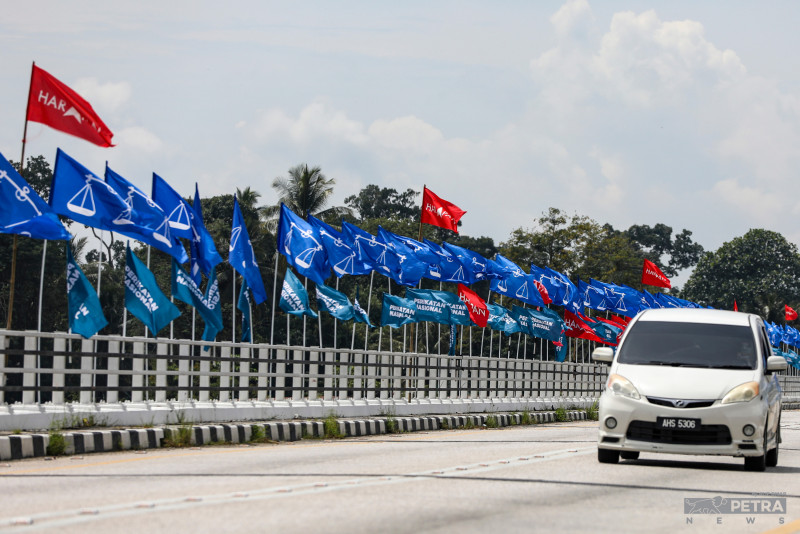

KUALA LUMPUR – 2023 will be significant for the three main coalitions as they confront six state elections amid a new and uncertain political landscape – which could determine their future as well as the country’s.
Pakatan Harapan (PH), Barisan Nasional (BN) and Perikatan Nasional (PN) will all toss their hats into the ring when Pakatan Harapan (PH)-led states Penang, Selangor and Negri Sembilan, as well as PAS-led Kelantan, Terengganu and Kedah, call for elections sometime before the middle of next year.
These polls will be pivotal for the coalitions as just over a month ago, Malaysia faced a historic general election (GE15) that resulted in a hung Parliament and the eventual appointment of Datuk Seri Anwar Ibrahim as the country’s 10th prime minister.
In fact, some politicians may argue that upcoming state polls bear greater significance than the recently concluded GE15, as they will provide a clearer picture of where the coalitions stand in the eyes of voters.

For PH, the state polls can offer further insight into whether Anwar’s premiership has managed to influence support in its favour and serves as a litmus test of the PKR president’s public endorsement.
For BN, the Umno-led coalition will be able to find out the extent of the damage, if any, ensuing from its decision to cooperate with PH to form the government, and if the grassroots remain steadfast with the party.
As for PN, the coming elections will be an indication of how far-reaching its “green wave” truly is after performing admirably in the federal polls, securing a handsome 74 seats.
Political cooperation to benefit PH-BN?
But unlike GE15, one unique factor almost coming into play and possibly influencing the results of the state polls is an electoral pact between PH and BN.
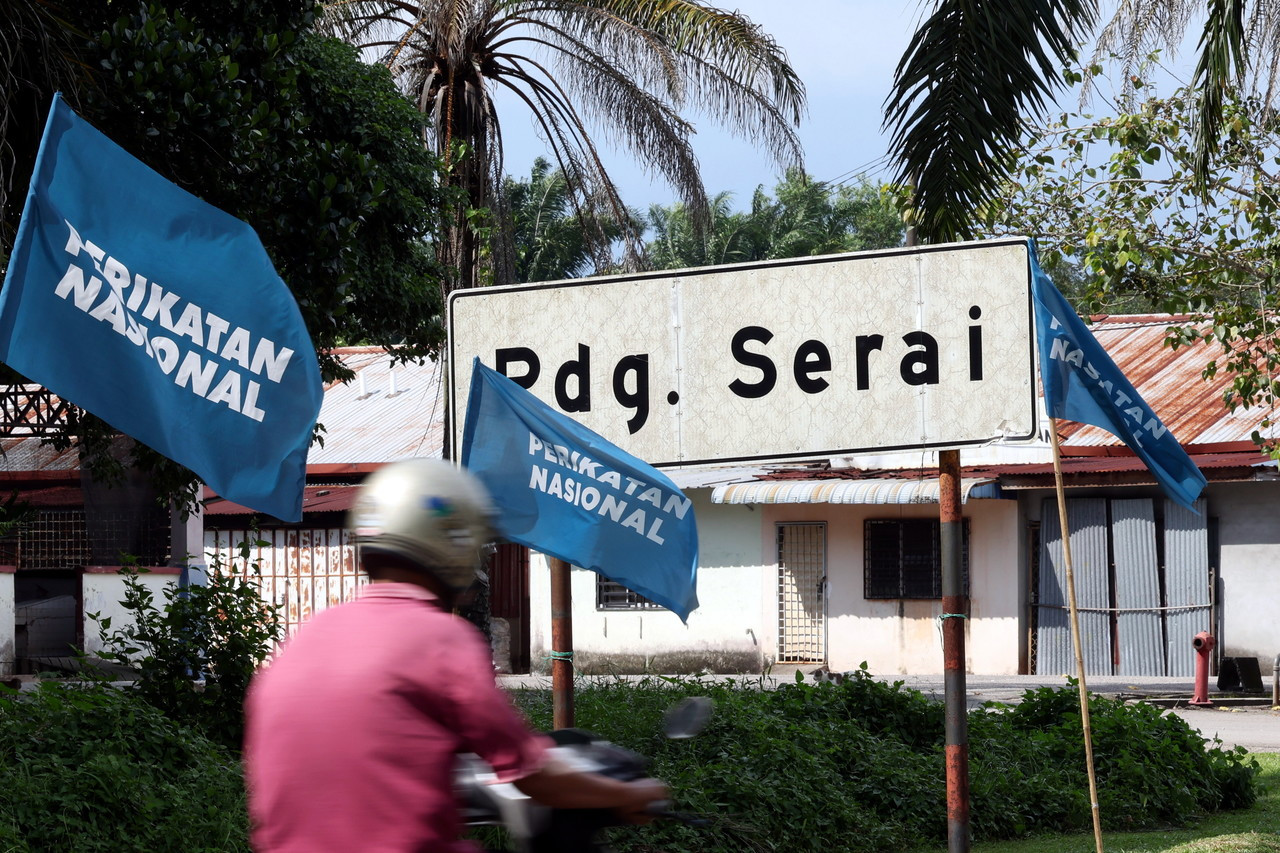
This was already evident when the two unlikely bedfellows – fresh from inking an agreement to form the federal government – banded together for the Tioman and Padang Serai by-elections, the clearest indication yet of the direction the two coalitions will be taking.
On paper, combined support for PH and BN should have served them well – but if PN’s win in Padang Serai is any indication, it is clear that nothing is set in stone yet.
How much the PH-BN cooperation will benefit them will depend on how far they can leverage each others’ strengths, the groundwork they do between now and the state elections, as well as the federal government’s performance during this period.
Political analyst Mohd Azizuddin Mohd Sani said: “Convince people you are a worthy combination and expect to find yourself in a comfortable position.”
The Universiti Utara Malaysia academician told The Vibes the upcoming tabling of the federal budget next month, could, to an extent, also influence support. He also added that PH and BN’s priority at the moment should be to convince fence-sitters who voted for PN in GE15.
If all goes to plan, Azizuddin predicts, the PH-BN pact will defend Penang, Selangor, and Negri Sembilan, while making positive inroads in three other PAS-led states, namely Kelantan, Terengganu, and Kedah.

“Kelantan is a tough nut to crack, but I see the possibility of Kedah and Terengganu falling. PH, for instance, already has a rather strong presence in Kedah – while the same can be said about Umno in Terengganu, although to a lesser extent presently.
“If they can iron out any niggling issues in the two states, then I think they have a chance. Even if they don’t win, I believe they can at least clinch more seats.”
In the 2018 election, PH formed the Kedah state government after winning 18 of the 36 seats, with PAS and BN then securing 15 and three seats respectively.
However, a federal-level political crisis in early 2020 saw the collapse of the PH-led Kedah administration and ushered PAS into power through the support of Bersatu under the then PN government.
Terengganu, meanwhile, saw PAS winning 22 seats over Umno’s 10 in 2018, although the state has been traditionally the latter’s stronghold.
Seat negotiations biggest challenge
According to an Umno insider, there is currently a silent understanding that PH and BN will enter into the state elections as a team, although formal discussions, including seat negotiations, have yet to properly begin.
These negotiations are particularly crucial to avoid any discontent among the two entities, as seat distributions are likely to mean that the respective component parties will have fewer constituencies to contest in.

The main challenge for the coalitions now will be to decide on a formula that could appease all parties.
One method is to distribute the seats based on the racial demography and urban-rural make-up of the constituencies, with PH contesting in more mixed, urban seats, and BN in the others.
Another formula is to allow parties that won a particular seat in the last state election to defend it, although this poses a new problem – what happens to seats neither won by PH nor BN?
For Universiti Malaya’s Awang Azman Awang Pawi, the solution is simple – the party that emerged second in that election should be accorded the right to place a candidate there.
This way, he said, it leaves little room for argument, although some dissatisfaction and dissenting voices are always to be expected whenever a candidate is overlooked.
“It (discontent) happens everywhere because certain individuals believe they are more popular although they finished third or worse in the previous polls. In the end, they need to be more rational and act for the good of their parties.
“But if you have a clear formula like this, it minimises overlapping of candidates and the issue of scrambling for seats among parties.”
Using this method, Awang Azman said, the public can expect to see more PH candidates in states currently held by the coalition, namely Penang, Selangor and Negri Sembilan, while a larger number of BN representation can be projected in the northern and east coast states – The Vibes, December 31, 2022


.jpg)