WASHINGTON – The US military warned yesterday its warships would be "more assertive" in responding to violations of international law, citing in particular Beijing, which has expansionist ambitions in the South China Sea.
In a document setting objectives for the US Navy, Marines and Coast Guard for the coming years, the Pentagon stressed that several countries, notably Russia and China, "are contesting the balance of power in key regions and seeking to undermine the existing world order".
"Our globally deployed naval forces interact with Chinese and Russian warships and aircraft daily," the document said, noting their "growing aggressiveness" and calling China "the most pressing, long-term strategic threat".
The latest incident between the US and China naval forces took place in late August, when Beijing said it had driven an American warship from the disputed Paracel archipelago.
The Asian power claims almost all of the islands of the South China Sea, territorial claims disputed by other countries in the region including Malaysia, Vietnam, the Philippines and Brunei.
To counter China, the US has been sending ships to the region more frequently to carry out what it calls "freedom of navigation" operations.
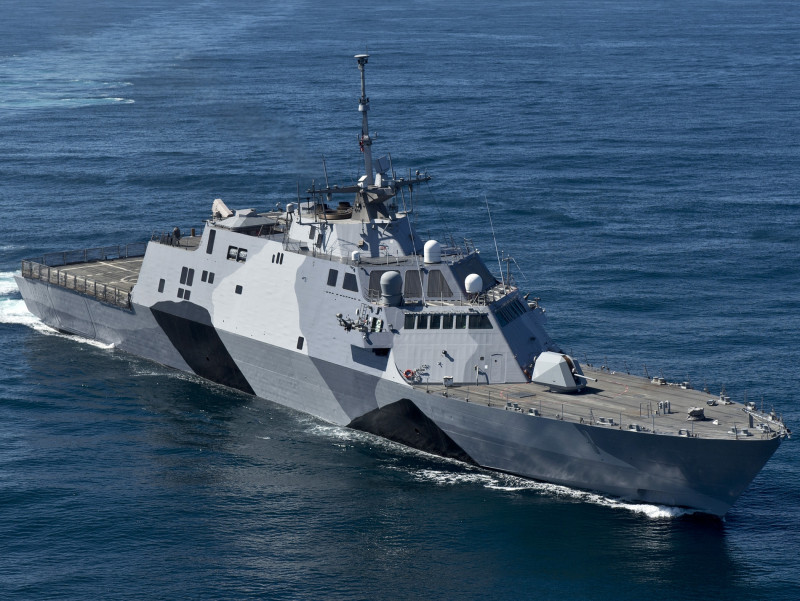
To maintain strategic advantage over the Chinese Navy whose "battle force has more than tripled in size in only two decades", the US Navy plans to modernise with smaller, more agile and even remotely piloted ships.
US ships will also "accept calculated tactical risks and adopt a more assertive posture in our day-to-day operations", the statement said.
For Navy Rear Admiral Jay Bynum that means being "more responsive, more assertive".
"In the past, our behaviour was de-escalation. We would turn away and would minimise risk in those individual contacts," he said, noting that the Navy "might be ceding ground" with the approach.
The Pentagon document specified that the US Navy will also be more visible in the Pacific, where it will "detect and document our rivals' actions that violate international law, steal resources, and infringe upon the sovereignty of other nations". – AFP, December 18, 2020