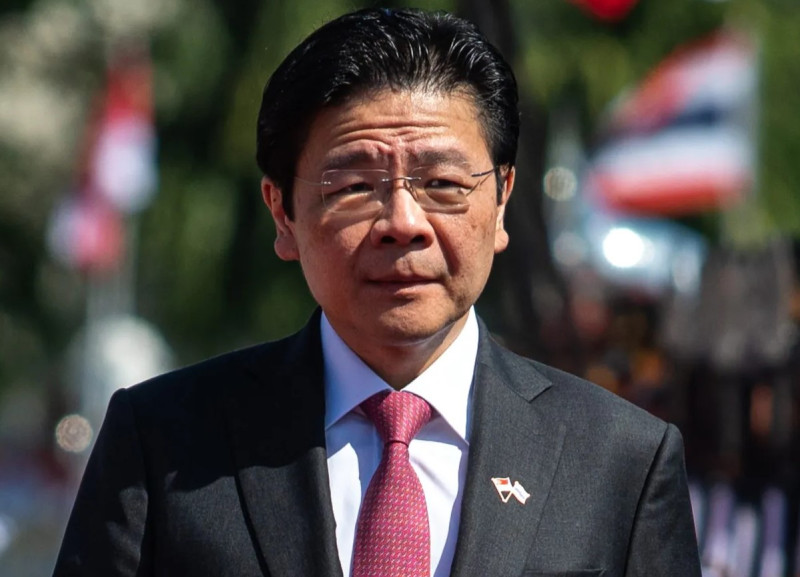
SINGAPORE will form a national task force to support businesses and workers in response to sweeping new US tariffs that could slow economic growth and impact jobs and wages, Prime Minister Lawrence Wong announced on Tuesday (Apr 8).
The task force, chaired by Deputy Prime Minister and Minister for Trade and Industry Gan Kim Yong, will include representatives from Singapore's economic agencies, the Singapore Business Federation, the Singapore National Employers Federation and the National Trades Union Congress.
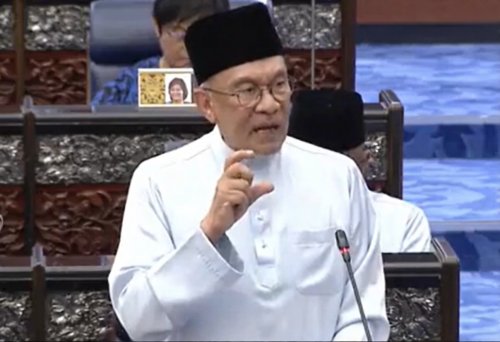
Describing the global situation as “fluid”, Wong said in a ministerial statement in parliament that the task force will help businesses and workers address immediate uncertainties, strengthen resilience and adapt to a new economic landscape, CNA reported today.
The tariffs are expected to dampen global growth in the near term, which will hit external demand for Singapore's export-reliant sectors such as manufacturing and wholesale trade. The global uncertainty and dampened sentiment will also impact some services industries, including finance and insurance, said Wong, who is also finance minister.
While Singapore “may or may not” slip into recession this year, the economy will be significantly impacted, the prime minister said. The Ministry of Trade and Industry is reviewing its 2025 growth forecast of 1 to 3 per cent, with a likely downward revision.
“Slower growth will mean fewer job opportunities and smaller wage increases for workers. And if more companies face difficulties or relocate their operations back to the US, there will be higher retrenchments and job losses,” he said.
Beyond immediate concerns, Wong said the tariffs confirm the stark reality that “the era of rules-based globalisation and free trade is over”.
Rising to speak after Wong, Gan said it is “still early days” and time will be needed to get a better understanding of the tariffs’ impact on the Singapore economy.
The newly formed task force is still working out the details of its composition and key tasks, but one of its focuses will likely be on communication and information sharing, he added.
For example, the union is included in the task force given expectations that jobs might be affected in the medium to long term, alongside a major restructuring of the economy. Private-sector representatives will also help the task force to engage firms and better understand challenges on the ground.
At the same time, the government has reached out to Singapore’s trading partners to share its assessment of the situation and find different ways of working together, said Gan.
US Tariffs: “A Fundamental Rejection” of WTO Rules
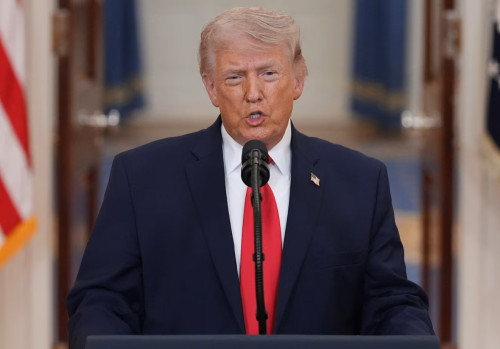
The tariffs, announced by US President Donald Trump on Apr 2, impose a universal 10 per cent tariff on all imports into the country, with higher rates for countries deemed to have treated the US "unfairly".
Singapore, which currently imposes zero tariffs on US imports, is still subject to the baseline 10 per cent rate.
“If the tariffs were truly reciprocal and if they were meant to target only those with trade surpluses, then the tariff for Singapore should be zero. But still we are being subjected to the 10 per cent tariff,” said Wong, pointing out that Singapore runs a trade deficit with the US and maintains open trade through its bilateral free trade agreement.
“We are very disappointed by the US move, especially considering the deep and long-standing friendship between our two countries. These are not actions one does to a friend,” the prime minister added.
“According to the administration, the sweeping tariffs are needed to fix America’s trade imbalances but there is nothing inherently wrong about running a trade deficit,” Wong said.
“It simply means that American consumers are buying more from the world than the world is buying from America.”
The US' focus on the trading of goods “only gives a partial picture”, as the US runs a surplus with many of its trading partners in services, he added. These include the exporting of software services, education, entertainment, financial and business services to the world.
Wong criticised the US approach as a "fundamental rejection" of World Trade Organization principles, such as the Most Favoured Nation (MFN) rule, which states that every member must treat all other members equally.
The principle has “long been the bedrock of the multilateral trading system” in ensuring a level playing field for both big and small countries, he said.
The US move, he said, undermines this principle and opens “the door to selective country-by-country trade relationships, based on unilateral preferences”.
If other countries adopt the same approach, the rules-based trading system will unravel – a reality that will spell trouble for all nations, especially for smaller countries like Singapore, he said.
“Small countries have limited bargaining power in one-on-one bilateral negotiations so the major powers will dictate the terms and we risk being marginalised and sidelined.”
Risk Of Full-Blown Trade War
The likelihood of a full-blown global trade war is growing, the prime minister cautioned. While Singapore will not impose retaliatory tariffs, other countries may. China has already announced countermeasures and the European Union is evaluating its response.
Wong said there is “a brief window” for countries to negotiate with the US before the higher tariff rates take effect on Apr 9.
“It may be possible for some rates to be lowered, but we have to be realistic,” he told the House.
“Once trade barriers go up, they tend to stay up. Rolling them back is much harder, even after the original rationale no longer applies. Even if some partial accommodations are eventually worked out, the uncertainty generated by such a drastic move will dampen global confidence and growth.”
The baseline 10 per cent tariff also does not appear to be negotiable, he added. – April 8, 2025